
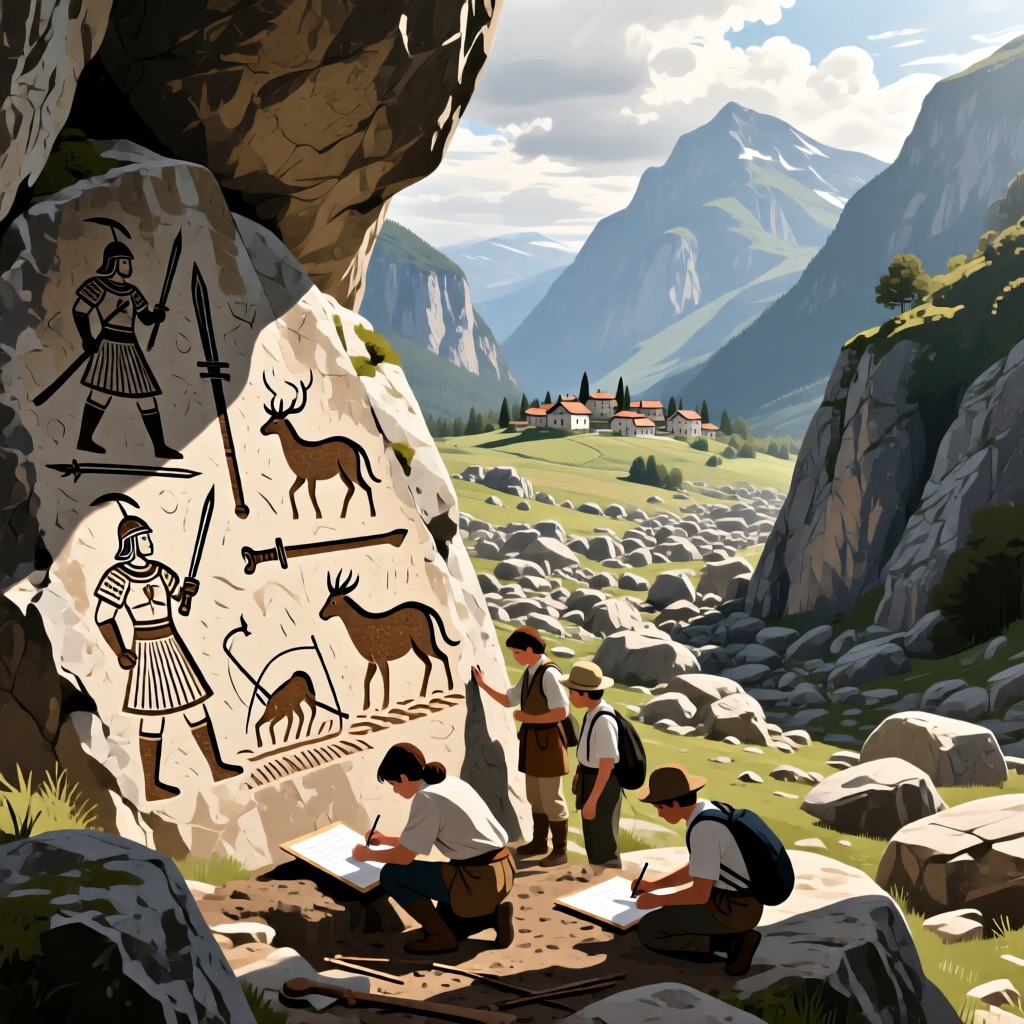

How did our ancestors record their history? In places like Val Camonica in Italy and Tam in Sweden, thousands of rock carvings reveal insights into early human life. These engravings depict not only warriors, weapons, and animals but also scenes of hunting and farming. Despite many unresolved mysteries surrounding these symbols, they provide crucial clues for understanding prehistoric societies.
The rock carvings in Val Camonica, known as "Pietroti," meaning dolls, see new discoveries each year. These carvings include warriors, wild animals, and weapons, along with depictions of hunting and farming. The artistry is sophisticated, showcasing diverse styles and rich content. Occasionally, new figures are found close to or even overlapping older images, creating a complex historical tapestry.
Over time, the content of the rock carvings has evolved from simple symbolic representations to forms that tell specific stories. For instance, in the Tam area, we can see carvings of warriors and deer, reflecting the social culture of that era. Some engravings seem to commemorate the achievements of the deceased or pay homage to myths, demonstrating the respect people had for their ancestors and heroes.
However, these precious cultural heritages are under threat. In Portugal and Italy, many rock carvings have been submerged underwater or buried due to the construction of hydropower plants. In Val Camonica, ongoing tunnel construction and high-voltage power lines also pose risks to these carvings. The invaluable treasures of humanity face the danger of being destroyed through ignorance.