
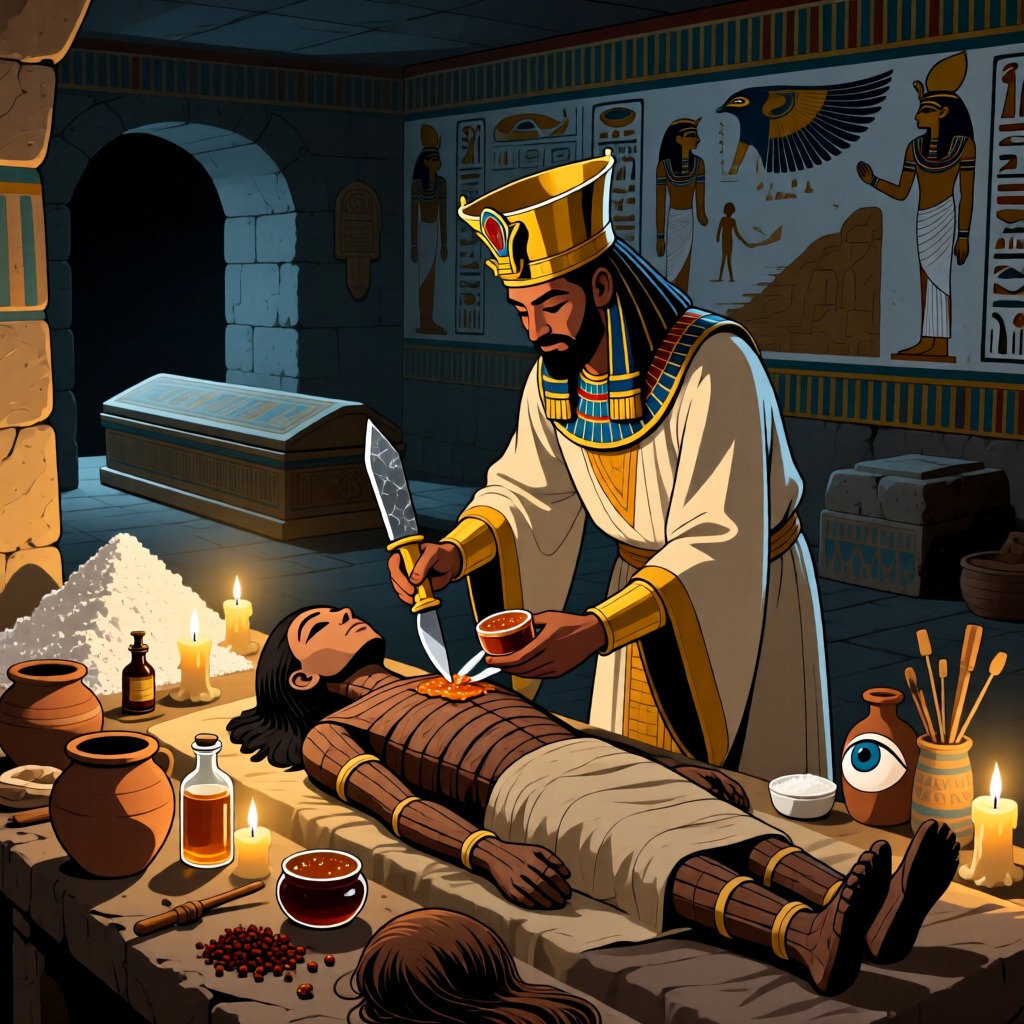

The art of mummification in ancient Egypt is a complex and intricate practice. As early as 2600 BC during the Old Kingdom, pharaohs began employing preservation techniques to safeguard their bodies. By the time of the 21st Dynasty, this craft reached its zenith. Embalmers followed a series of elaborate steps, including the removal of internal organs, cleansing the body, and using natron and spices for preservation, ultimately transforming the body into a mummy. Over time, the role of embalmers evolved from mere preservation to achieving aesthetic perfection, even performing 'cosmetic' procedures to restore the deceased's appearance as they were in life. The entire process took about 70 days, reflecting the ancient Egyptians' reverence for death and their yearning for eternal life.
During this process, embalmers not only needed to master exceptional skills but also required extensive medical knowledge. They utilized various tools and materials, such as flint knives, cedar oil, resin ointments, artificial eyes, and wigs to complete each step. These embalmers held a prestigious position in ancient Egyptian society, as they possessed the secrets of life and death, helping both nobles and commoners preserve their likeness until the afterlife.
The development of this craft reflects the ancient Egyptians' unique understanding of life and death, as well as their beliefs about the afterlife.