
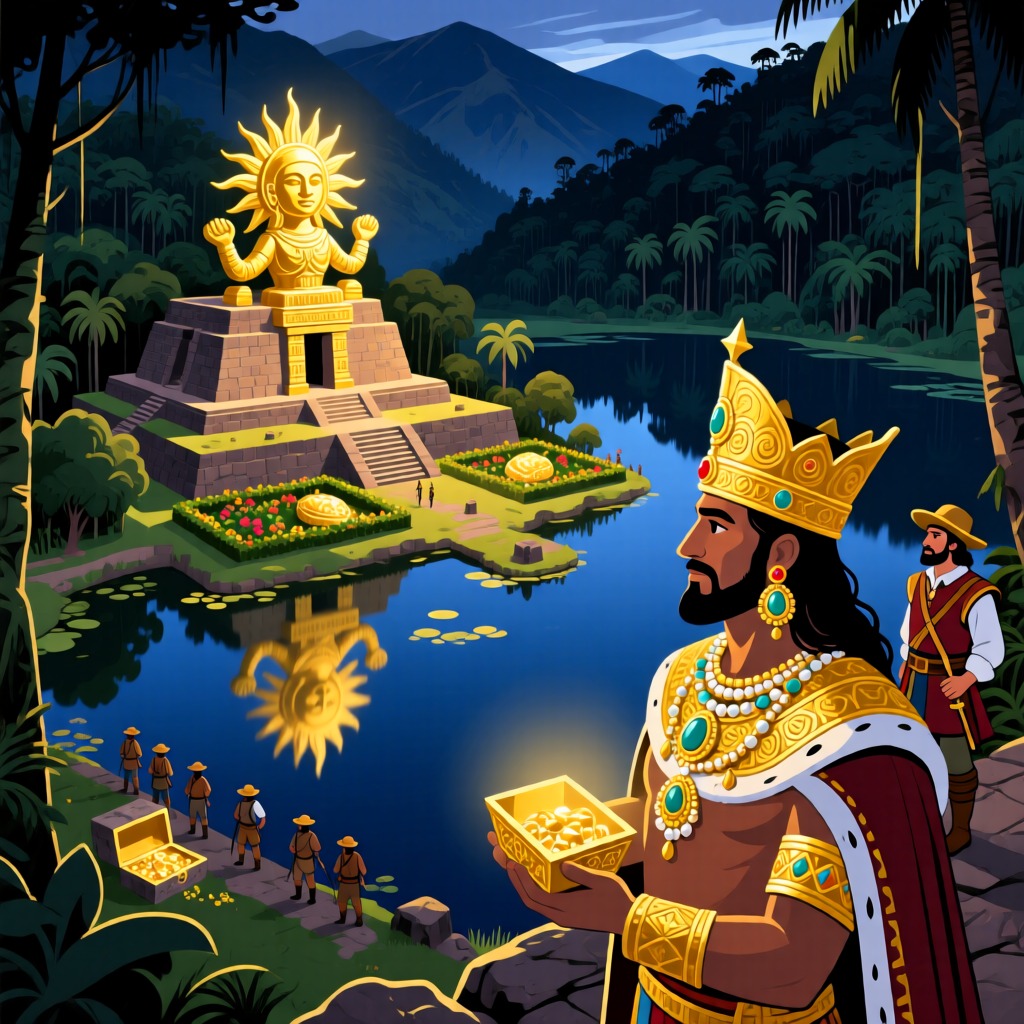

The Incas, who once thrived on the South American continent, had already created a magnificent civilization long before Columbus discovered the New World. The architecture of the Inca Empire was often adorned with vast amounts of gold, as seen in the capital city of Cusco with its Temple of the Sun and the Garden of Gold. In 1533, Spanish conquistador Francisco Pizarro led 180 soldiers across the Andes and defeated an Inca army of over 40,000 at Cajamarca, exploiting their numbers to achieve victory. Pizarro not only plundered a significant amount of gold but also extorted more, ultimately leading to the execution of the Inca king Atahualpa. The legendary "Treasure of the Little Fish" and the "Lake of Gold" have attracted countless treasure hunters, yet the true treasures remain unfound to this day.
The fabled Lake of Gold is located at Guatavita Lake in Colombia, where it is said that the coronation ceremonies of Inca kings took place, with the lake purportedly holding vast quantities of gold and silver treasures. In 1545, a Spanish expedition recovered hundreds of gold artifacts from the lake, further validating the legend of the Lake of Gold. In 1911, a British company attempted to drain the lake to access the treasure but was unsuccessful. Today, the Colombian government prohibits any salvage operations in the lake to protect these legendary treasures.
The tales of the Inca Empire's golden treasures continue to captivate many, but faced with the dangers of the Amazon rainforest, most adventurers can only "gaze at the forest with longing." The amount of gold possessed by the Incas was equivalent to the total gold found in other parts of the world at that time, yet these treasures remain hidden to this day.