
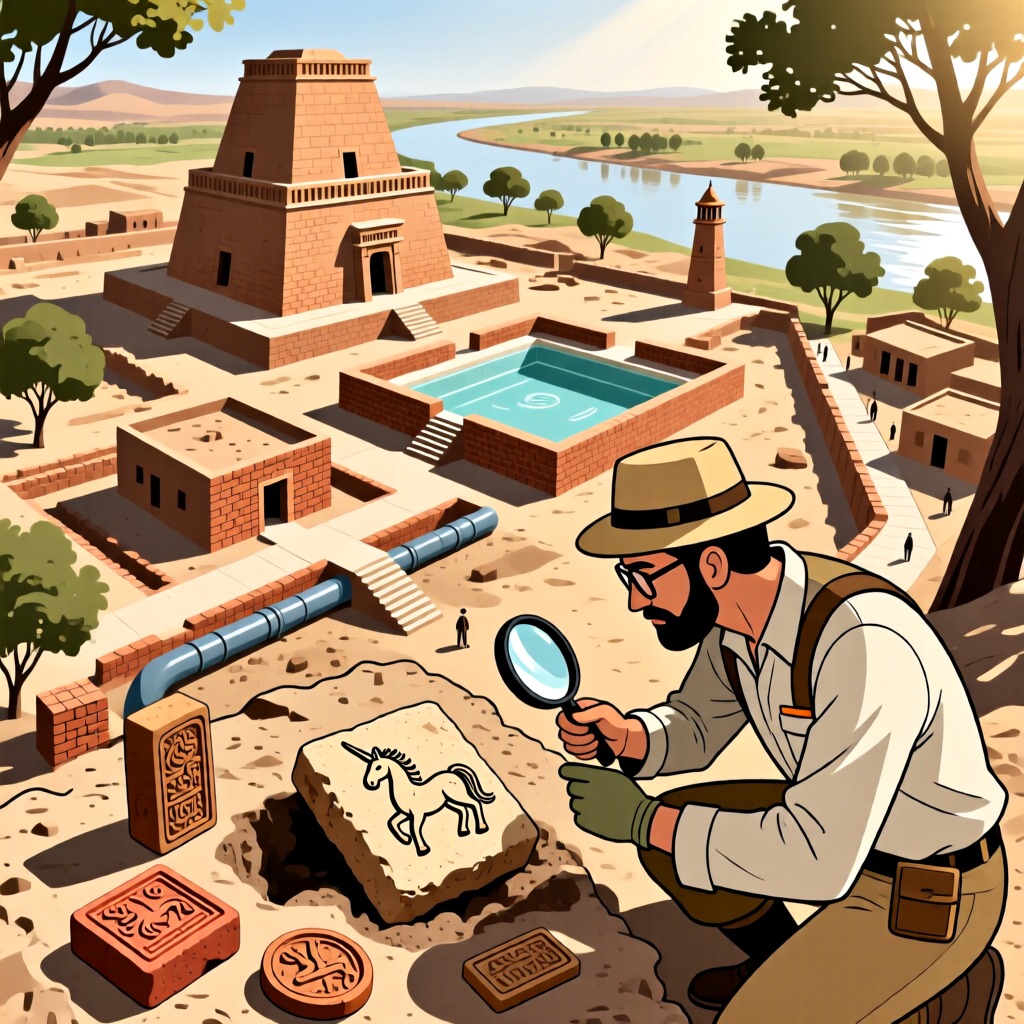

The Indus Civilization first drew attention in the 18th century with the excavation of the Harappa site. In the mid-19th century, archaeologist Alexander Cunningham excavated again and discovered a peculiar seal, but it went largely unrecognized. It wasn't until 1922, with the discovery of Mohenjo-Daro, that people began to reevaluate these two sites. Both Harappa and Mohenjo-Daro are extensive and ancient, yet they exhibit significant differences in living standards, which is puzzling. Although the script on the seals remains undeciphered, archaeologists speculate that these sites were urban centers reflecting a highly organized society of the time.
Mohenjo-Daro features intricate architectural layouts, with streets that are well-planned, and residents enjoyed advanced public facilities and drainage systems, which is truly remarkable. However, there are no palaces or temples, and all residences are of similar quality, setting it apart from the civilizations of the ancient Incas, Mesopotamia, and Egypt. Furthermore, no clear evidence of rulers has been found at the site, adding to the enigma surrounding the governance of the Indus Civilization. Ultimately, there are many theories about the origins and decline of the Indus Civilization, but its uniqueness and mystery make it an essential part of human history.
