
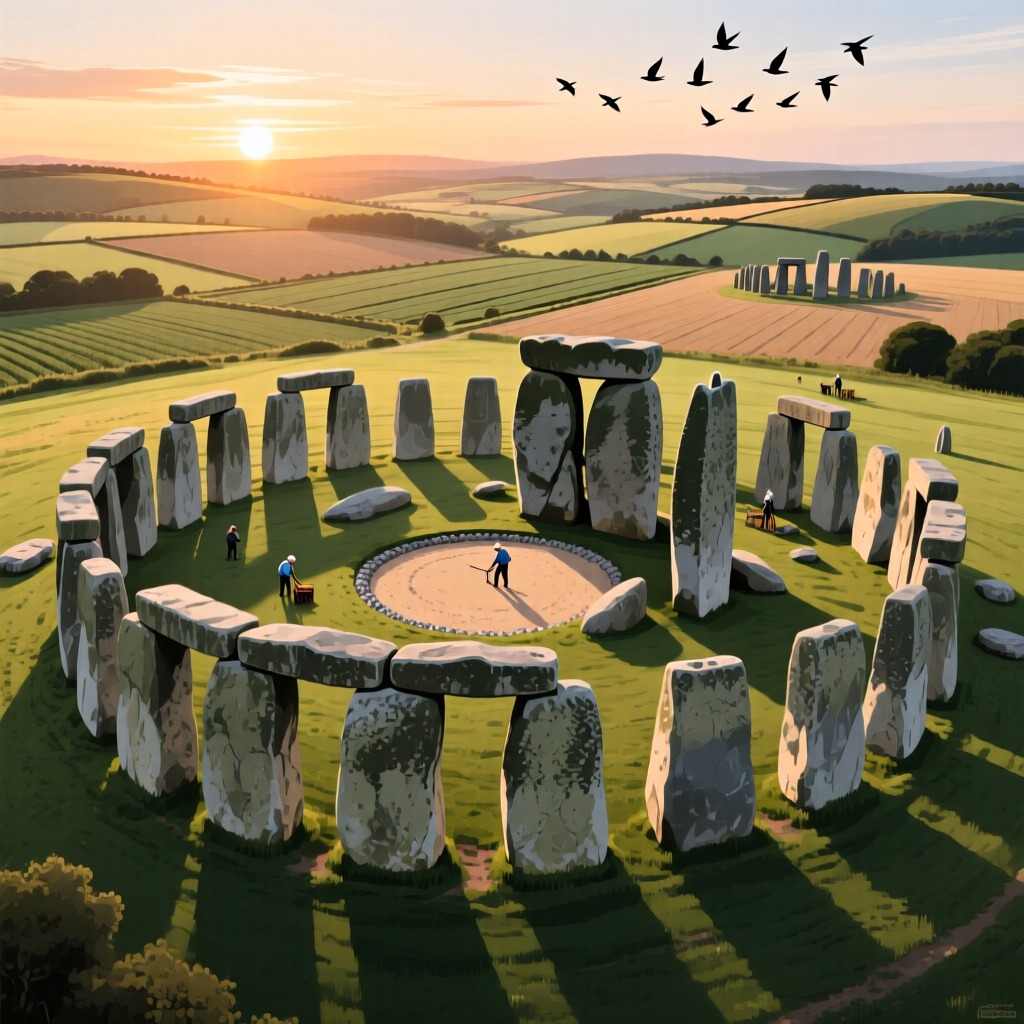

In the plains of southern England stands the enigmatic ruins of Stonehenge. These massive stone pillars are arranged in multiple concentric circles, seemingly telling ancient secrets. Meanwhile, in Brittany, France, the site of Carnac also hides a mysterious stone alignment. The builders and purpose of Stonehenge remain unsolved mysteries, attracting countless scholars for research and speculation.
Stonehenge was constructed during the late Neolithic period, around 2800 BC. It consists of bluestone pillars and sandstone towers, with the central stone circle and arches being particularly spectacular. The sight during the summer and winter solstices at sunrise adds an extra layer of mystery. Carnac's stone alignment, which is said to have originally had 10,000 stones, still displays 2,471 stones today, arranged in an orderly fashion as if awaiting some kind of ritual.
Regarding the builders of Stonehenge, some believe they were the Celts, ancient Romans, or Danes, but there is no conclusive evidence. Scholars speculate that the construction of Stonehenge required 1.5 million man-hours, and it was achieved without the use of wheeled vehicles or animals. The purpose of Stonehenge is also widely debated; some consider it an astronomical observatory, others a hunting trap, and still others view it as a religious site or cultural symbol.
The mysteries surrounding Stonehenge and the Carnac stones ignite curiosity about ancient civilizations and lead people into endless contemplation and exploration.
