

The Atlantic is said to have once harbored a prosperous continent that mysteriously vanished overnight, a catastrophe that befell the enigmatic Atlantis. Plato recorded the tale of Atlantis in the 4th century BC, over a thousand years after the legend had begun, steeped in ancient myth.
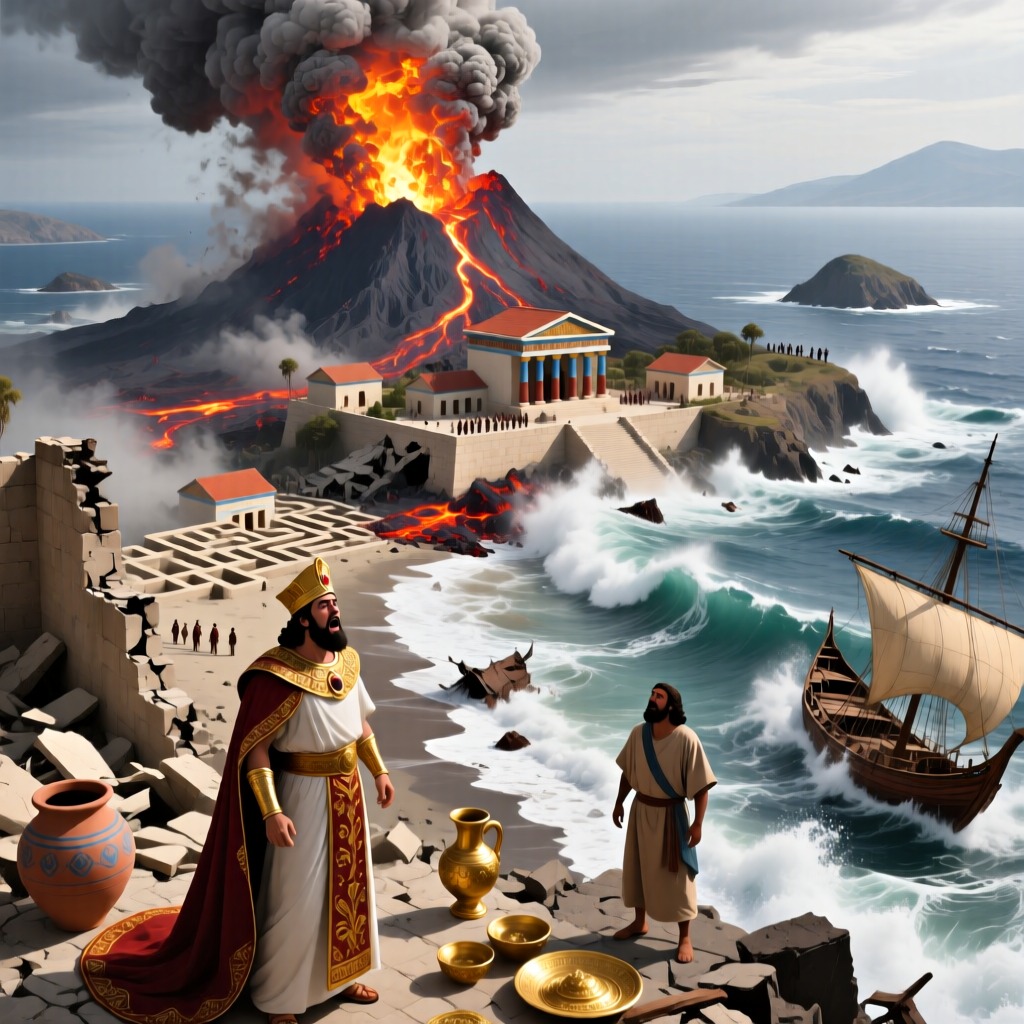
Today, the island known as Santorini, formerly Thera, is located 110 kilometers north of Crete in the Mediterranean. Around 3,500 years ago, this island was the rim of a sunken volcano. Around 1500 BC, this volcano erupted violently, causing one of the greatest disasters in Western history, even more intense than the eruption of Krakatoa off the coast of Java in 1883. This eruption had a profound impact on Crete, leading to the sudden disappearance of the great Minoan civilization by the end of the 15th century BC.
The Minoans were known for creating one of the earliest forms of writing and were skilled seafarers, with their influence spreading across the Mediterranean, reaching its peak in the 16th century BC. However, their civilization vanished in just a few decades, the reasons for which remain unclear. Some experts suggest earthquakes and foreign invasions as possible explanations, but these theories do not convince all historians. Many believe that the eruption of Thera is more likely to have caused the decline of Minoan civilization, as volcanic ash and toxic sulfur fumes severely impacted the Cretans, followed by massive tidal waves sweeping over Crete.
The "Exodus" in the Bible also recounts a historical phenomenon related to this. The natural disasters described in the Old Testament, such as flies, pestilence, hail, locusts, and darkness, are all phenomena associated with intense volcanic activity. When the Hebrews left Egypt, they may have witnessed the giant waves of a tsunami sweeping away the Egyptian army. A stone inscription recording significant events during the reign of Queen Hatshepsut also mentions the Hebrews' departure from Egypt, while another account suggests they were allowed to leave during the reign of Ramses II. These historical events and legends intertwine, creating a perplexing narrative.