
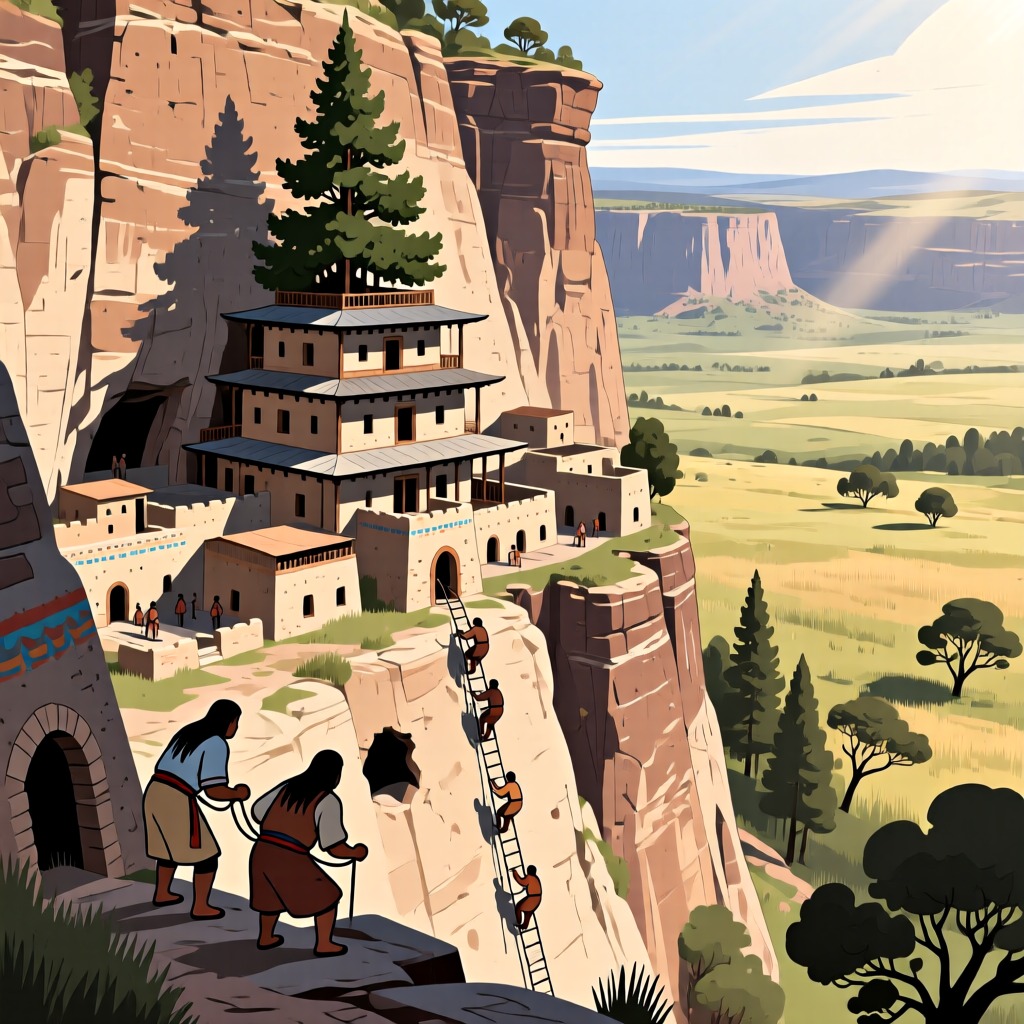

In the winter of 1888, two shepherds stumbled upon a mysterious architectural complex in the southwestern plateau of Colorado, which later became known as Cliff Palace. The layered houses on the cliff, with a massive 'palace' at the forefront, astonished the shepherds. Over time, this discovery attracted worldwide attention, leading adventurers to seek treasures, which unfortunately resulted in the destruction of many precious artifacts. Eventually, the U.S. Congress passed a protection act, designating the area as 'Mesa Verde National Park.'
At Mesa Verde, over 300 Puebloan village sites, dating back 1,300 years, were discovered, covering a total area of 210.7 square kilometers. This region once housed tens of thousands of people, with each village being relatively independent yet mutually supportive. Each village served as a collective dwelling for families, featuring unique architectural structures that mimicked the cliff-dwelling ways of their ancestors. The Spruce Tree House is one of the most spectacular buildings, measuring 203 meters in length, 84 meters in width, and containing 150 residential rooms and 23 ceremonial kivas. Surrounded by steep cliffs, villagers relied on small carved holes to climb in and out, facilitating daily life while enhancing their defensive capabilities.
The discovery of Mesa Verde changed the traditional perception of Native Americans in North America. These villages showcase the remarkable architectural skills of the indigenous people and their ingenious use of the geographical environment. Although these villages were later abandoned due to natural disasters, the remnants they left behind continue to amaze visitors to this day.