
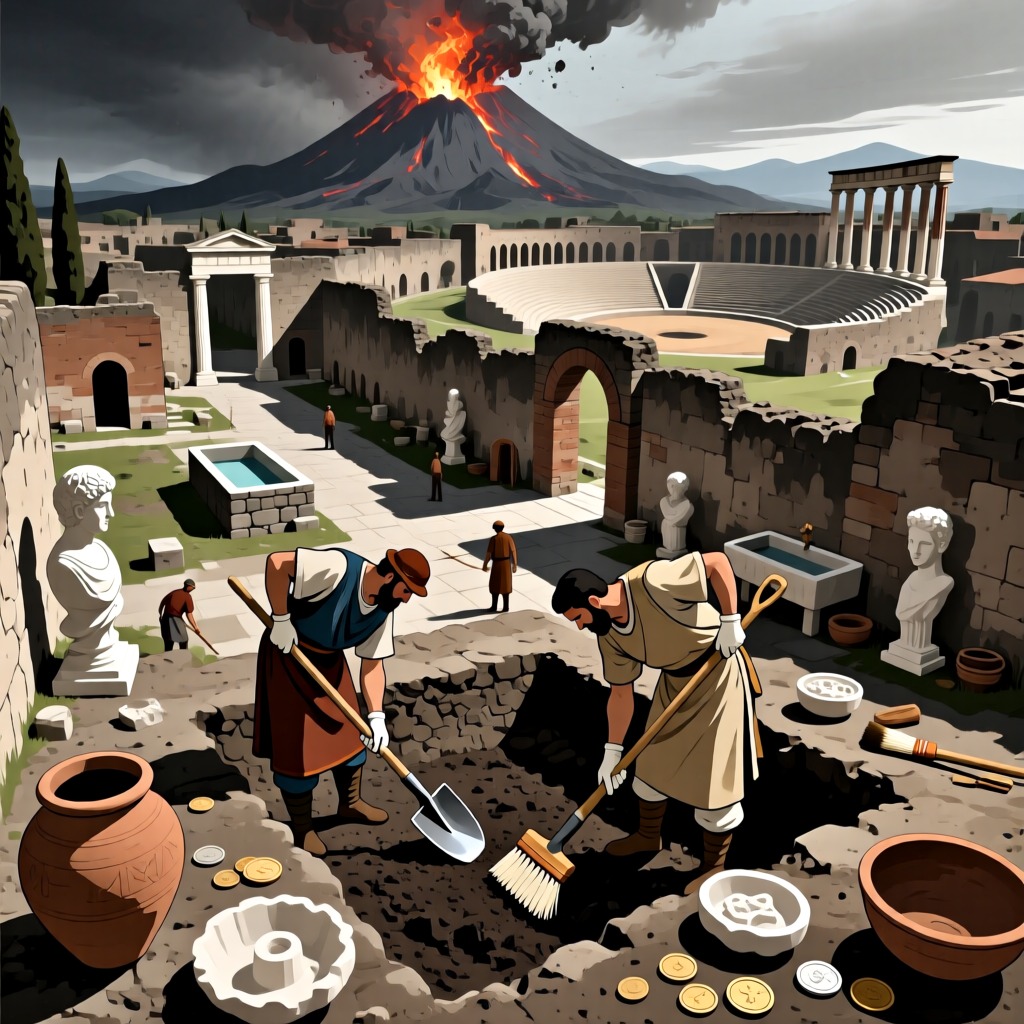

On a fateful afternoon in 79 AD, the roar of Mount Vesuvius shattered the tranquility of Pompeii. Thick smoke billowed, and volcanic ash fell like torrential rain, instantly engulfing this bustling city. Archaeologists have uncovered secrets of this disaster through layers of ash and remains. Once a playground for the elite of the Roman Empire, Pompeii has now become a 'fossil city.'
Within the ruins of Pompeii, many precious frescoes have been discovered. These artworks not only document the daily life of the time but also showcase various styles of Roman painting. For instance, the Second Style fresco titled 'The Secret Sacrifice' uses delicate colors and perspective techniques to depict a clandestine offering to the god Dionysus.
Why were the residents of Pompeii unable to escape in time? This question has long puzzled historians. Some believe that the eruption lasted for eight days and nights, providing residents with ample time to flee. However, the second major eruption caught them off guard. In this disaster, most of Pompeii's inhabitants vanished, and the ancient city was ultimately covered by ash and mud flows, becoming a witness to the passage of time.