

In the winter of 1888, two shepherds unexpectedly discovered the mysterious "Cliff Palace" on the highlands of Colorado. This seemingly desolate land hides layers of houses, with a particularly striking "palace" among them. Their discovery captured worldwide attention, attracting adventurers eager to find treasure, which unfortunately led to the destruction of many precious artifacts. It wasn't until 1906 that the U.S. Congress passed a law to protect these sites, designating them as Mesa Verde National Park. In 1909, the largest village site was officially excavated, and in 1979, it was listed as a World Heritage Site.
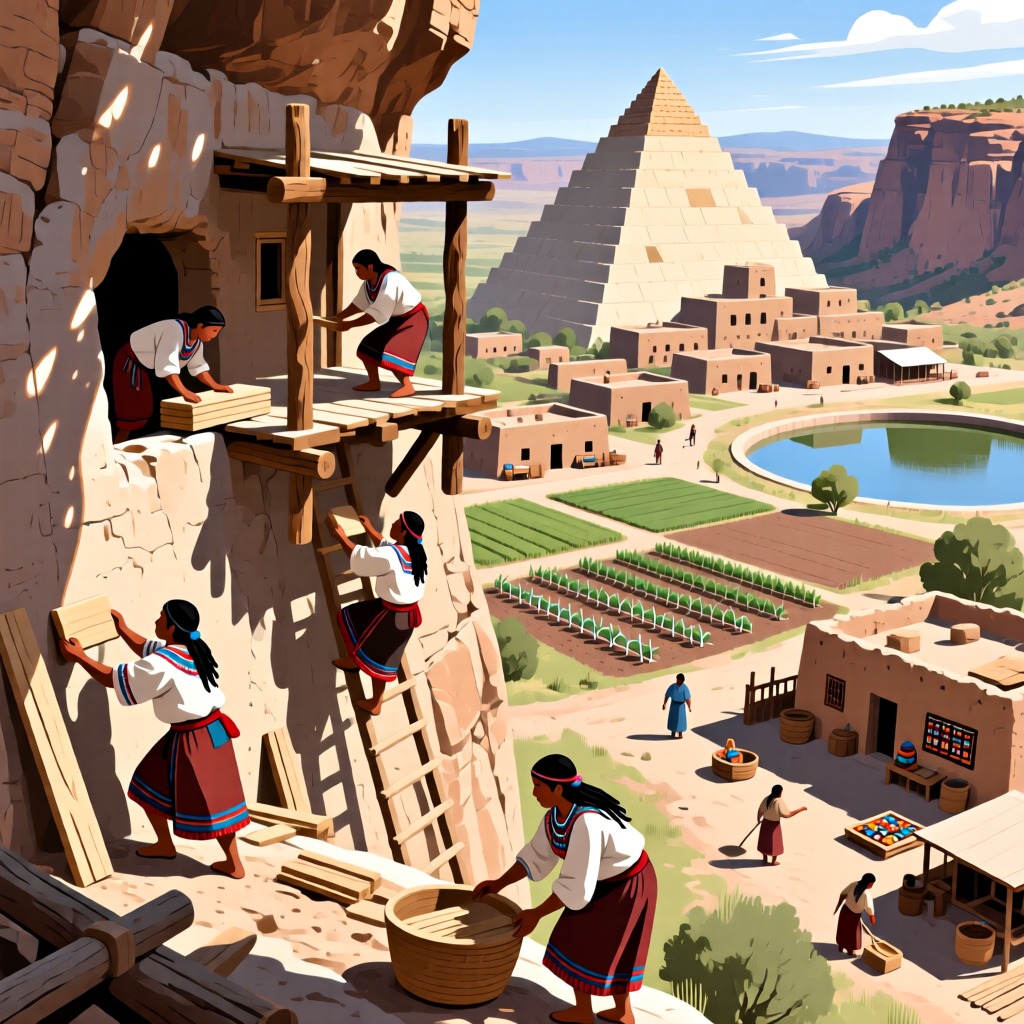
The village sites on Mesa Verde have a history of over 1,300 years, covering 210.7 square kilometers, and were home to the Pueblo people. Each village served as a communal living space for families, surrounded by adobe walls, with multi-story housing arranged tightly, mimicking original cliff dwellings. The Spruce Tree House is the most spectacular structure, measuring 203 meters long and 84 meters wide, containing 114 housing units. The villages are surrounded by steep cliffs, with small openings for entry and exit to protect against invaders. Additionally, the village features an irrigation system for agriculture and workshops for handicrafts, showcasing the wisdom and civilization of the Pueblo people.
The Pueblo people of Mesa Verde, known as the ancient "basket makers," relied on farming corn, pottery making, and weaving, settling in this area around the 7th century. By the 12th century, this community reached its peak. However, what caused them to abandon these meticulously constructed villages?
