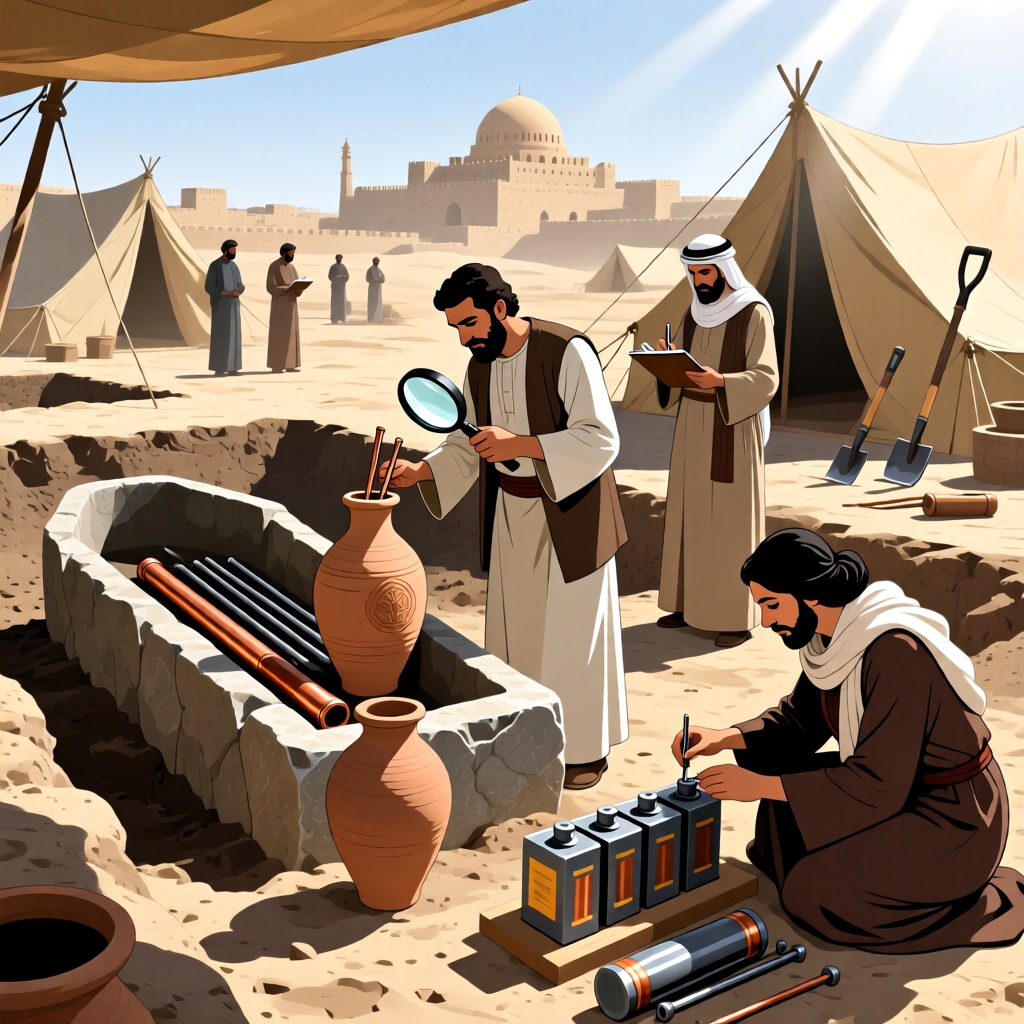
In the summer of 1936, outside the capital of Iraq, Baghdad, construction workers unexpectedly discovered an ancient stone sarcophagus while building a railway. Inside the sarcophagus, along with valuable gold and silver artifacts, were some copper tubes, iron rods, and pottery. These strange items caught the attention of German archaeologist Walther Ammann-Kavinig. After conducting research, he announced that these items were ancient chemical batteries capable of generating electric current through acidic or alkaline water. However, his discovery did not receive immediate recognition. It wasn't until later that German scholar Ailin Aijebalicht created replicas and conducted experiments that verified the battery's ability to generate electricity. This not only proved that ancient Persians had mastered the application of electricity but also sparked new discussions about ancient smelting techniques.
The Mysterious Battery of Baghdad