
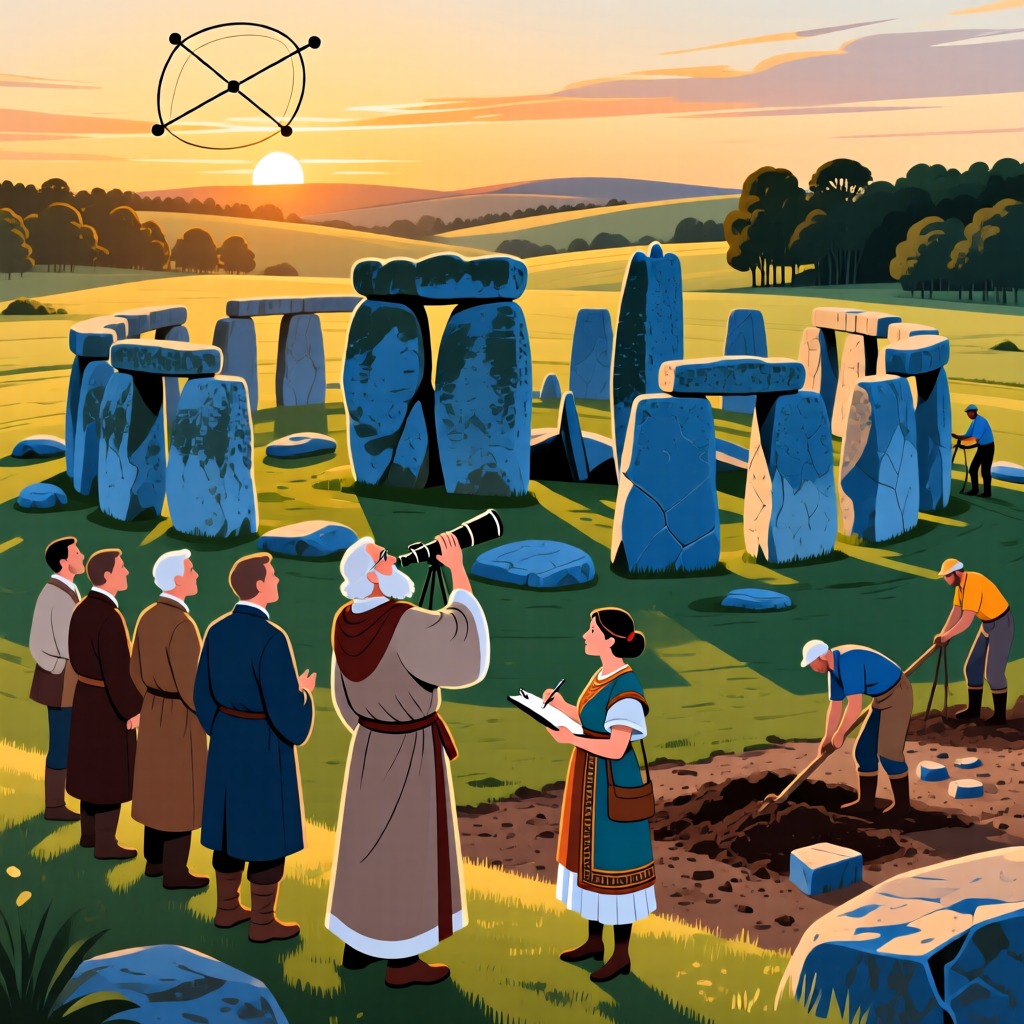

The mystery of Stonehenge: a symphony of humanity, nature, society, and culture.
In the wilderness of southern England stands a perplexing stone monument—Stonehenge. These massive stones are arranged in complex geometric patterns, having withstood the test of time for thousands of years. Stonehenge is not only an archaeological enigma but also a convergence point of nature, society, and culture, igniting the curiosity of countless scholars.
At the center of Stonehenge lies a ring made of blue sandstone, surrounded by an even older ring of sandstone, along with a series of meticulously designed pits and pathways. The origins of these stones remain a mystery: how were they transported here, and how were they so precisely placed? These questions add to the mystique of Stonehenge.
There are many theories regarding the purpose of Stonehenge. Some believe it served as an astronomical observatory, others think it was a hunting trap, while some consider it a religious site. Each theory is backed by a rich historical context and social cultural significance. Stonehenge not only bears witness to the development of human civilization but also reflects the beliefs and lifestyles of ancient peoples.
