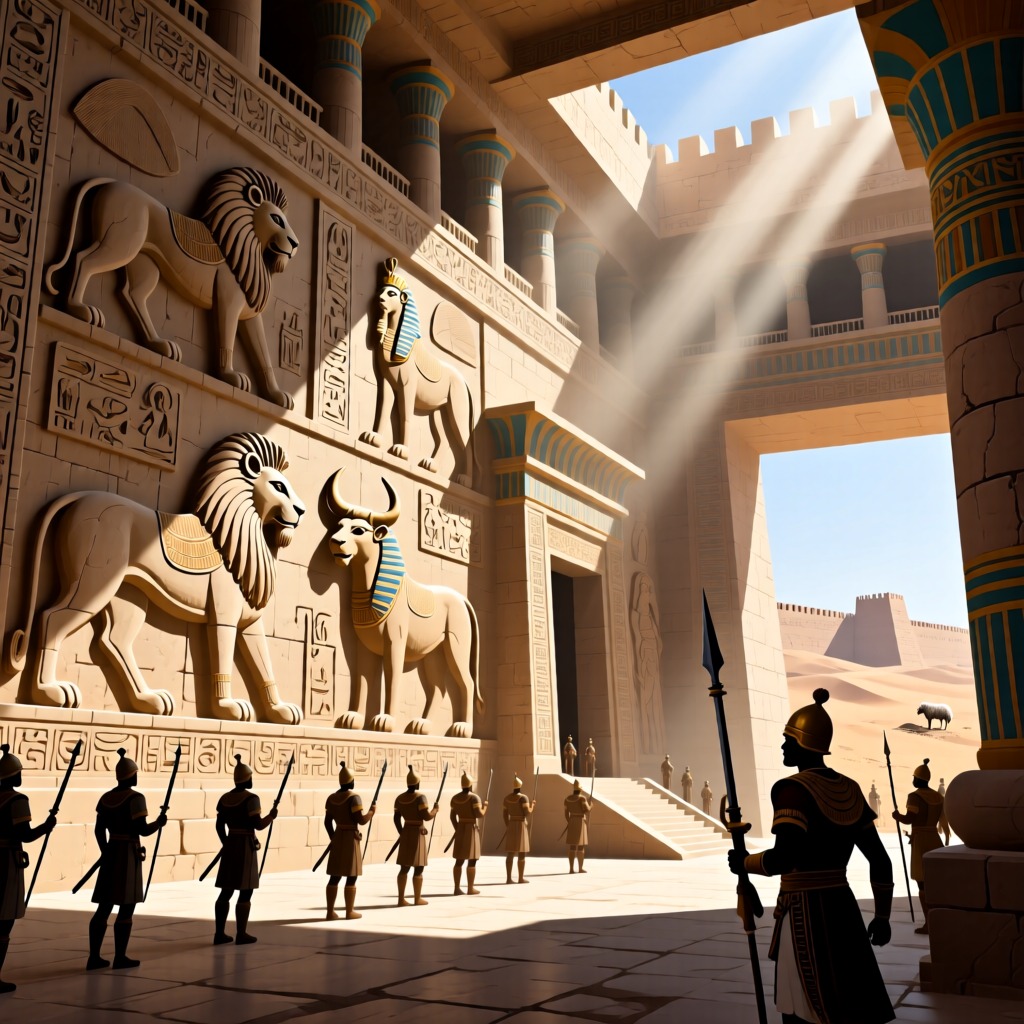
Nineveh, the capital of the Assyrian Empire in the late 8th century BC, was once a cultural center of Mesopotamia. It was not only the preaching ground of the prophet Jonah mentioned in the Bible but also a witness to Assyrian history and mythology. During the reigns of Sennacherib and Ashurbanipal, Nineveh reached its peak, with massive reliefs on palaces and murals documenting its glorious history. However, in 612 BC, the city was sacked and burned by the coalition of the Neo-Babylonians and Medes, leading to the disappearance of these reliefs. Centuries later, in the 19th century, explorers finally uncovered the secrets of Nineveh, discovering a wealth of precious artifacts, including Ashurbanipal's library and the reliefs of the 'Royal Hunt'. These reliefs not only showcase the artistic achievements of ancient Assyria but also reveal the harsh realities of slavery, providing a glimpse into the ancient world.
The Secrets of the Reliefs in Nineveh