
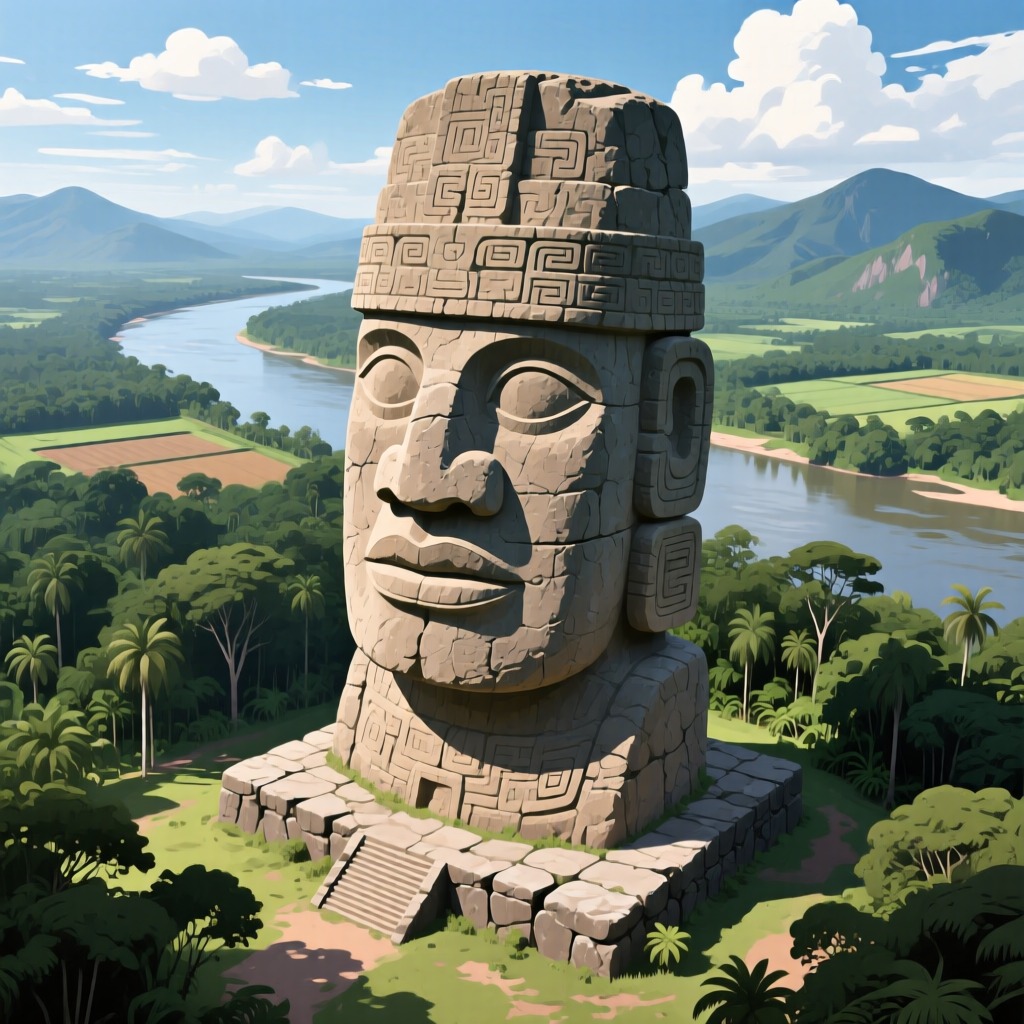

The mystery of the Olmec statues dates back to a civilization whose history can be traced to around 2000 BC. However, this ancient culture vanished 1500 years before the rise of the Aztec Empire. The colossal head sculptures and giant stone monuments left by the Olmecs spark curiosity about their origins and cultural background.
The heads carved by the Olmecs weigh up to 30 tons and exhibit features reminiscent of African men, such as broad noses and prominent eyebrows. These statues were meticulously carved from massive basalt blocks, showcasing exceptional sculpting skills. Yet, the question remains: why were these enormous statues intentionally buried, and what stories lie behind them?
Some speculate that these statues are self-portraits of the Olmecs, while others believe they may not have been created by the Olmecs at all. Some scholars even suggest that these statues represent 'slaves' brought by the Phoenicians, who crossed the Atlantic to reach America before 1000 BC. However, this theory lacks solid evidence, and the unique artistic style of these statues seems to belong to no known cultural system.
These enigmatic statues have ignited endless imagination about the Olmec civilization. Their existence raises profound questions about the origins of the Olmec culture and its eventual decline—mysteries that remain unsolved to this day.
