
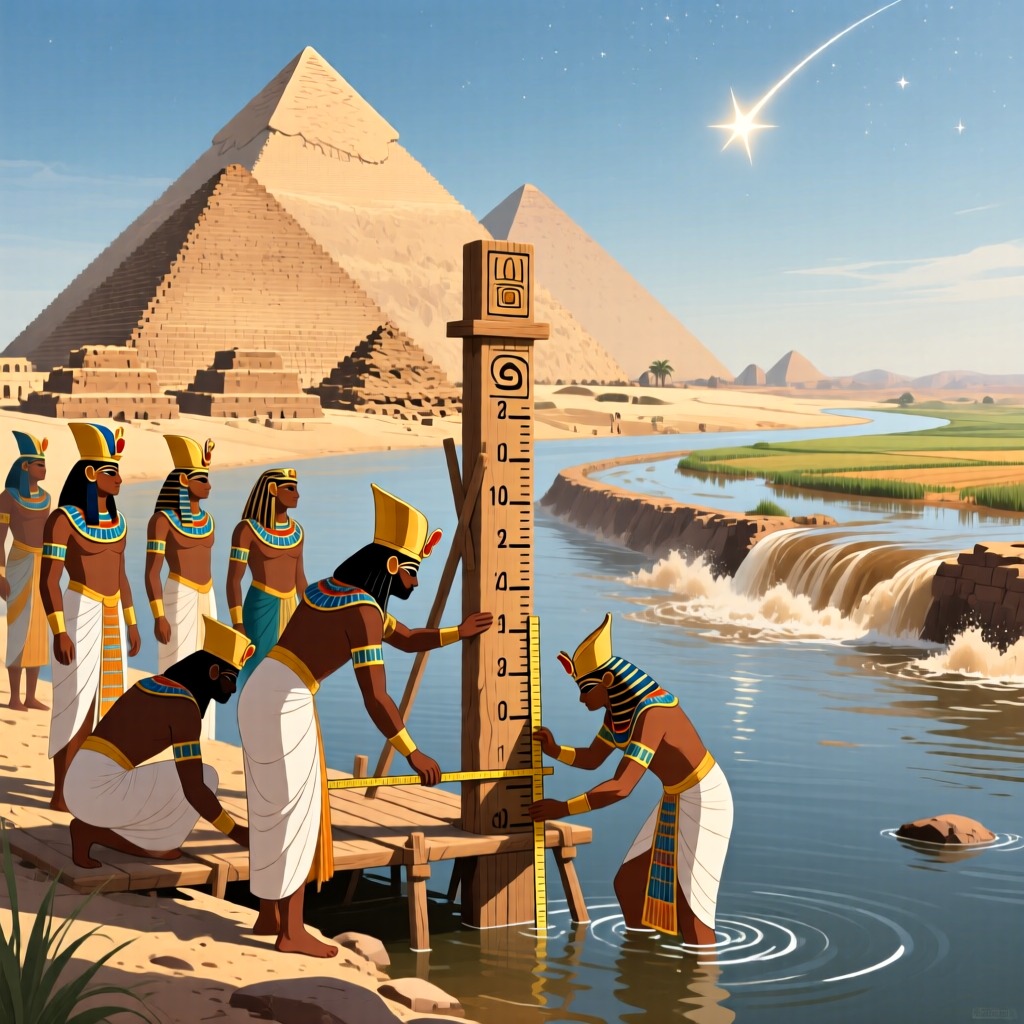

The Nile River, the longest river in the world, has nourished the ancient Egyptian civilization, becoming a model of harmonious coexistence between humanity and nature. Stretching 6,437 kilometers from Lake Victoria to the Mediterranean Sea, the Nile's seasonal floods have shaped Egypt's unique agricultural culture and social structure. The ancient Egyptians measured water levels with precision, dividing the year into three seasons and creating a practical calendar to predict future harvests. The Nile not only brought fertile land but also nurtured a rich tapestry of culture and religious beliefs. Each year, the flooding was revered as 'Hapi,' seen as a deity symbolizing the revival of life and abundance.
The ancient Egyptians revered the mysterious power of the Nile, viewing it as the source of life. They believed that the floods were driven by the forces of the primordial sea of 'Nourishment' underground, with Osiris symbolizing the Nile, serving as the guardian of fertile land and the ruler of the underworld. This sense of reverence made the Nile a miracle in the hearts of the Egyptians and an essential part of their culture.
