
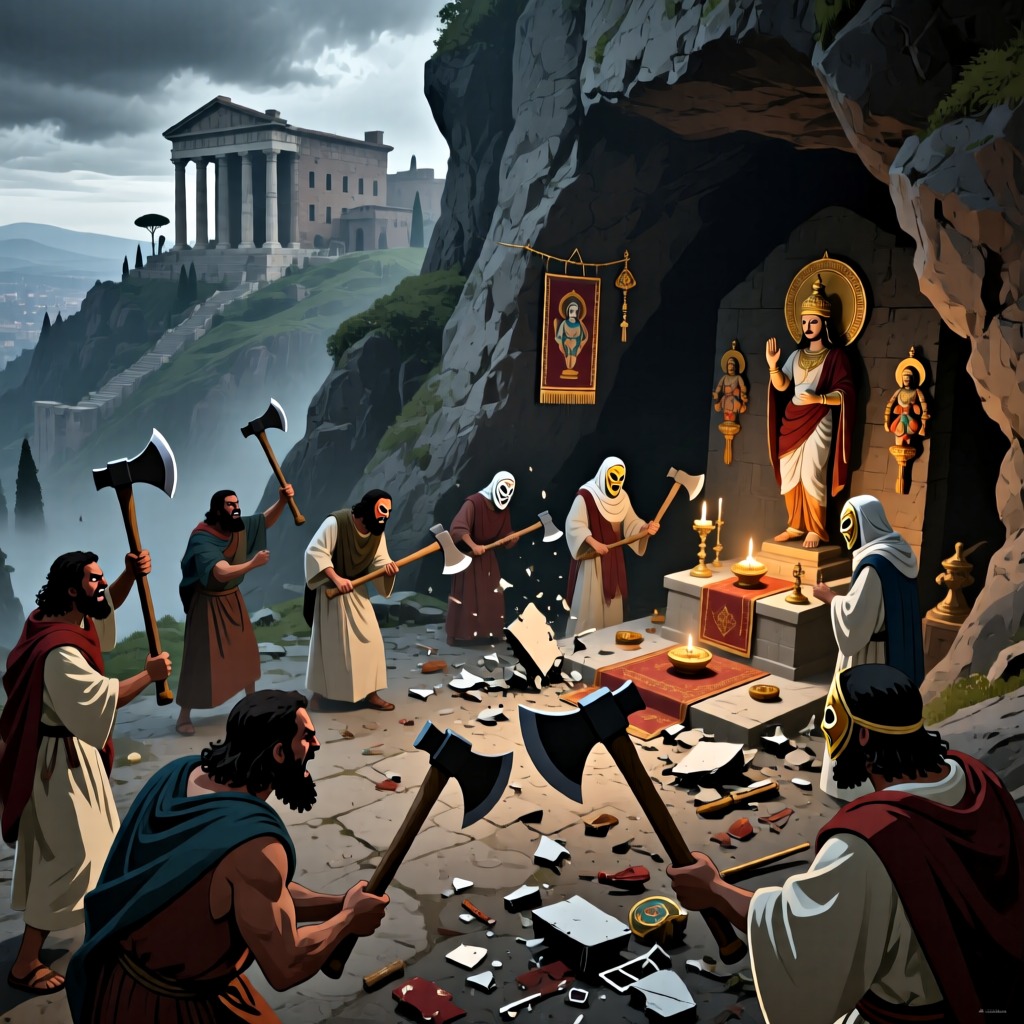

Mithraism emerged in ancient Persia around the 15th century BCE. This religion was exclusively for men, and only the strongest could pass the rigorous initiation rituals. Before joining, candidates had to endure twelve trials, including fire, water, hunger, cold, and whipping, with the entire process lasting between two to seven weeks. Those who qualified became 'brothers' and were led by a 'father', ascending through ranks that symbolized the soul's ascent to heaven. Mithraism spread widely throughout the Roman Empire, particularly favored by soldiers and sailors for its emphasis on discipline, bravery, and self-sacrifice. However, with the rise of Christianity, Mithraism gradually declined, ultimately fading away by the end of the 4th century.
Mithraism shares many similarities with Christianity; both believe in a savior who descends from heaven, atones for sins through blood, and resurrects after death. Mithraic priests even performed baptisms for converts. As a result, early Christians viewed Mithraism as a threat to their faith, leading to a series of events that resulted in the destruction of Mithraic altars. Eventually, Christianity became the state religion of the Roman Empire, and Mithraism disappeared.
