
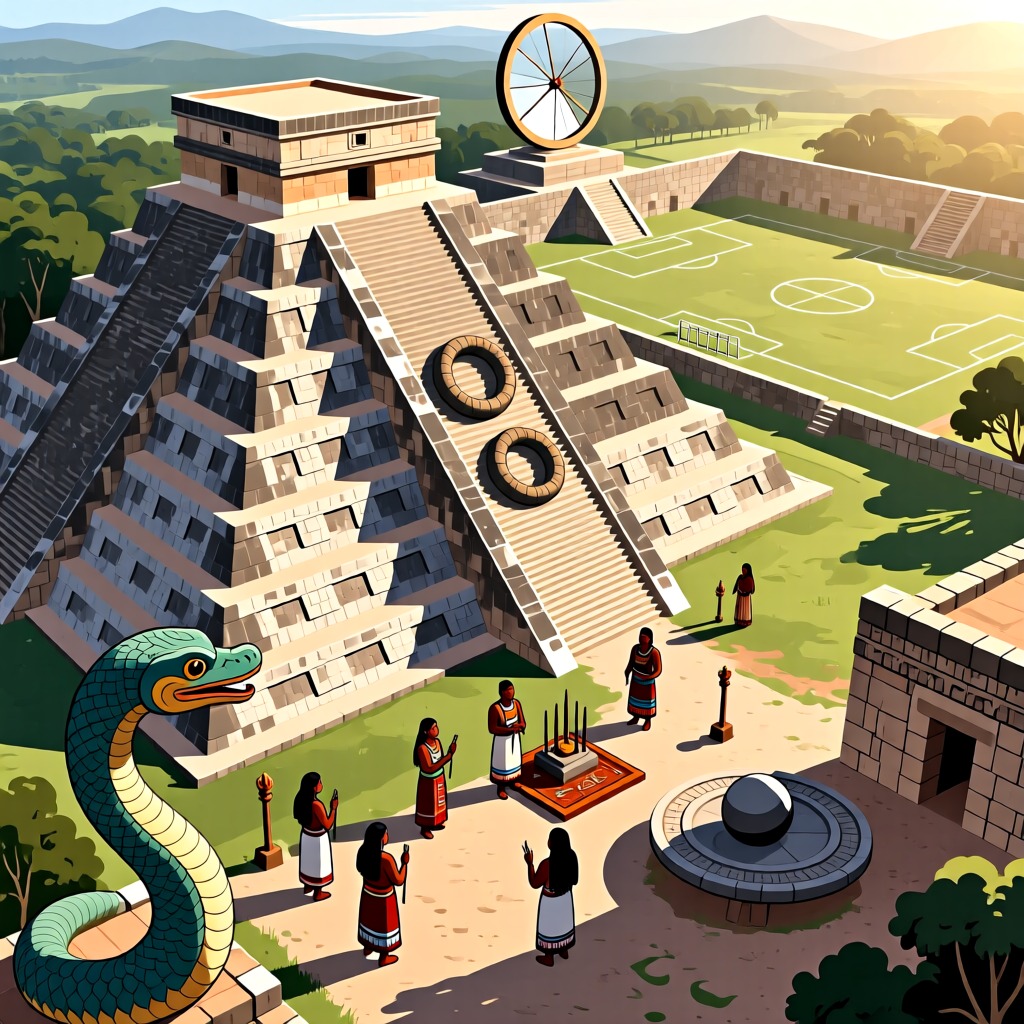

The astronomical observatory at Chichen Itza is located at the center of the site, with the Castillo Pyramid serving as a cleverly designed astronomical platform. This pyramid stands 24 meters tall and consists of nine tiers, with symmetrical sides each measuring 75 meters at the base. Each side features 364 steps leading to the top, plus an additional step at the base, totaling 365 steps to symbolize the days of the year. The top is a flat-roofed temple with three entrances, and the south side includes a window. During the spring and autumn equinoxes, sunlight creates a stunning 'serpent of light' effect between the columns of the feathered serpent. Ancient Mayans celebrated spring planting and autumn harvests here with songs and dances.
About 1.5 kilometers from the site, there are two massive cenotes and a marble pyramid. The base of the pyramid next to the cenote measures 60 meters on each side and 30 meters wide, topped with a temple. A stone pathway, 4.5 meters wide and 60 meters long, connects the pyramid to the sacred cenote, which is considered a holy site for the Mayans, believed to be the dwelling place of the rain god. Archaeologists have discovered numerous valuable artifacts and human remains here, confirming the Mayan practice of human sacrifice to appease the rain god.
Chichen Itza also features several ball courts, the largest of which spans 22,576 square meters. At both ends of the court are stone walls adorned with rings for scoring. The Mayans held life-and-death basketball matches, where victors were rewarded while the losers could face execution. The court is decorated with reliefs depicting these brutal competitions.
The Maya civilization reached its peak between the 6th and 9th centuries but rapidly declined after the 10th century. Scholars speculate that this decline may have been due to self-destruction, as excessive deforestation led to soil erosion, a population surge exceeded the land's capacity, and the superstition surrounding human sacrifice ultimately led to their downfall.