
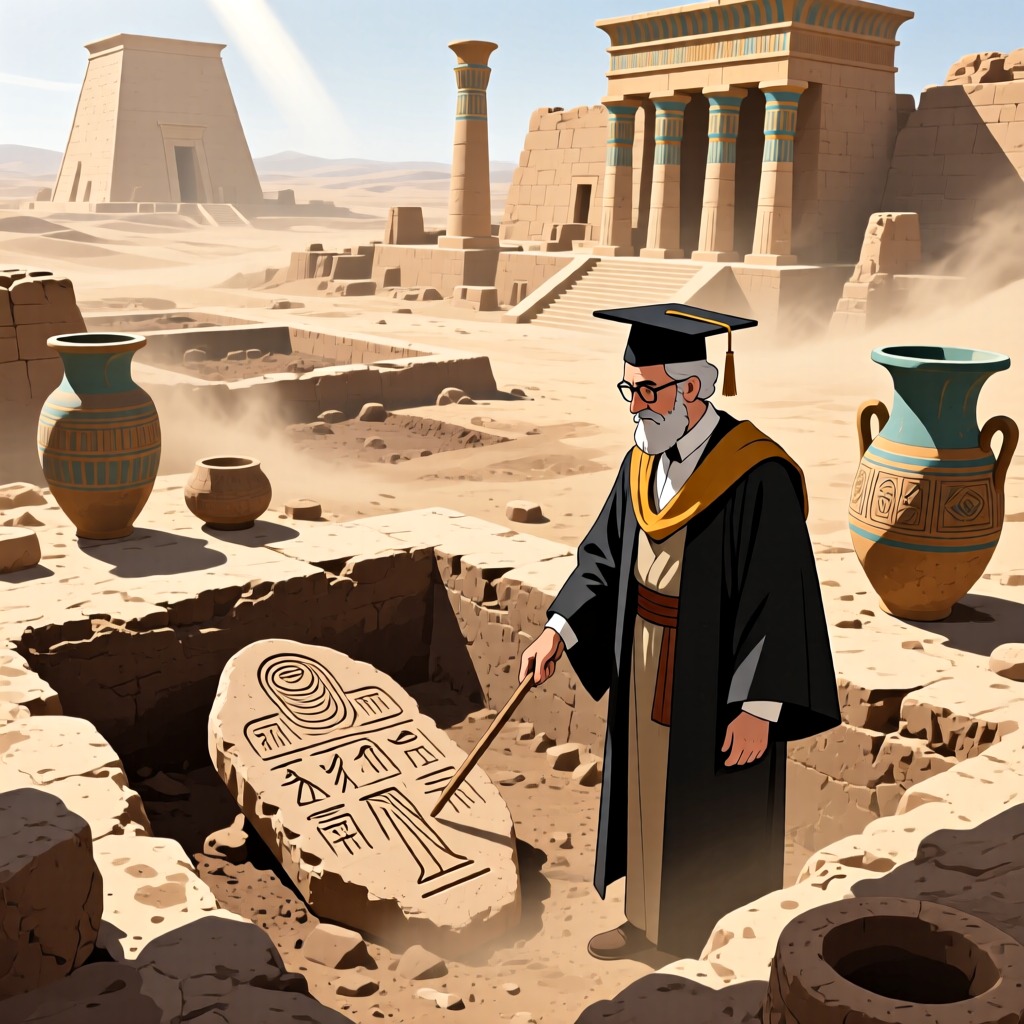

Around 4000 BC, the dawn of human civilization began to emerge in Mesopotamia, the land between the Tigris and Euphrates rivers. The Sumerians established numerous city-states, marking the beginning of humanity's earliest chapters of civilization. It wasn't until the 19th century, through the relentless efforts of archaeologists, that this lost civilization gradually came to be recognized by the world.
In the 19th century, German scholar Georg Friedrich Grotefend and British scholar Henry Rawlinson succeeded in deciphering cuneiform script, opening the door to understanding the history of the ancient Mesopotamian region. Between 1848 and 1879, European archaeological teams conducted extensive excavations in Nineveh, uncovering a wealth of precious artifacts that provided invaluable material for the study of ancient Mesopotamian civilization.
The cuneiform script created by the Sumerians evolved from simple pictographs into a complex system of symbols. This writing not only recorded daily life but also encompassed areas such as religion, history, literature, and law. With the rise of the Babylonian and Assyrian empires, the use of cuneiform expanded further, having a profound impact on surrounding regions.
The literary works of ancient Mesopotamia were rich and varied, reflecting social life and philosophical ideas. Works such as "The Dialogue of Master and Slave" showcased deep social insights. Additionally, significant achievements in astronomy, mathematics, and architectural arts were made during this period, especially with the New Babylonian period's "Hanging Gardens," which displayed the unique charm of ancient Mesopotamian architectural art.