
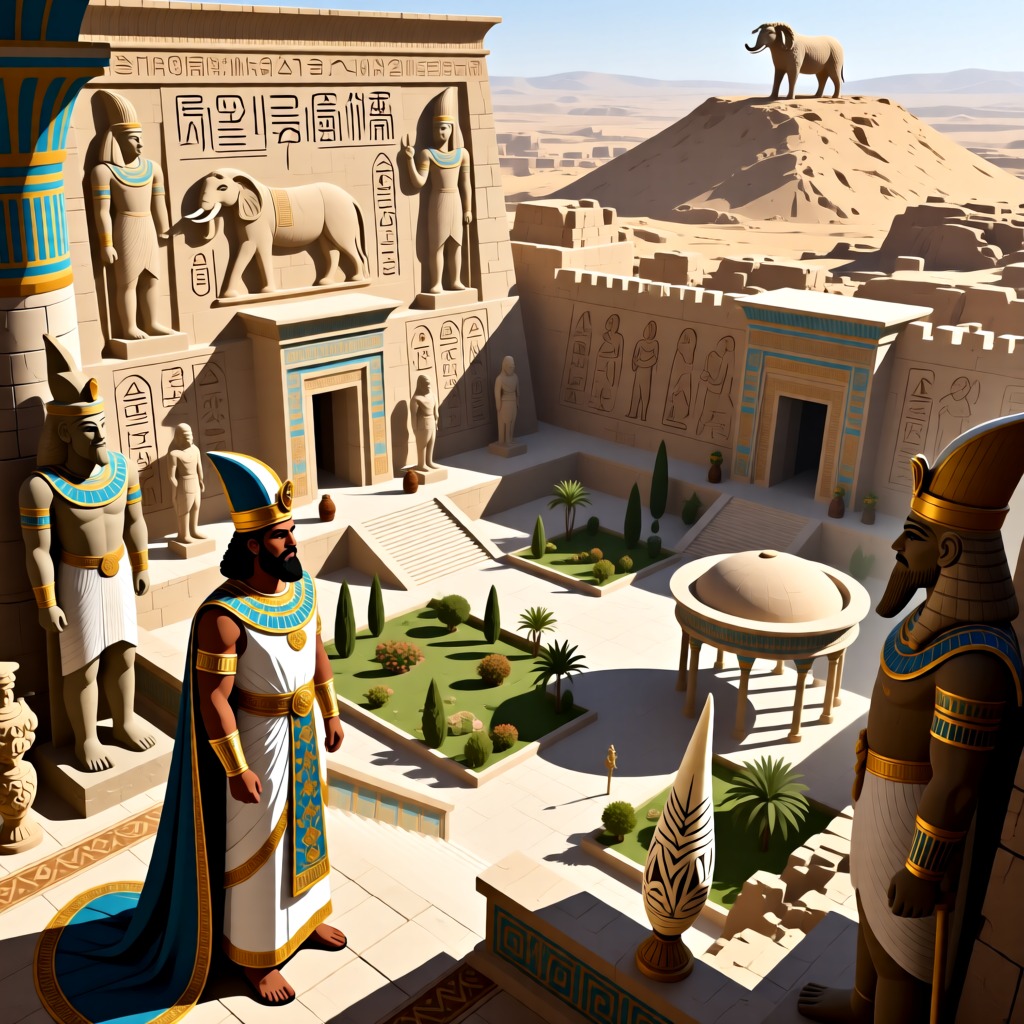

Nineveh was once the magnificent capital of the Assyrian Empire. During its peak in the 3rd century BC, it served not only as a cultural center of Mesopotamia but also as the preaching ground for the prophet Jonah mentioned in the Bible. Under the reign of Kings Sennacherib and Ashurbanipal, the palaces and murals of Nineveh were adorned with massive relief sculptures that chronicled humanity's mysterious and glorious history. However, in 612 BC, Nineveh was destroyed by the coalition of the Neo-Babylonian and Median armies, vanishing into the dust of history. Today, thousands of years later, we can only glimpse the splendor of this ancient city through the excavations of archaeologists.
The sculptures of Nineveh not only showcase the might of the Assyrian Empire but also reveal the art and wisdom of the ancient world. The reliefs in King Sennacherib's palace extend for 3,000 meters, depicting scenes of war, mythology, and daily life. In King Ashurbanipal's library, shelves were filled with clay tablets inscribed with cuneiform writing, documenting the history, laws, religion, and literature of ancient Assyria, serving as vital resources for studying the history of that era.