Easter Island, located deep in the South Pacific, is surrounded by endless ocean and sky, home to a group of mysterious people. They seem to be listening to some kind of voice; although they do not know what it is, they can always feel a sacred presence beyond ordinary understanding.
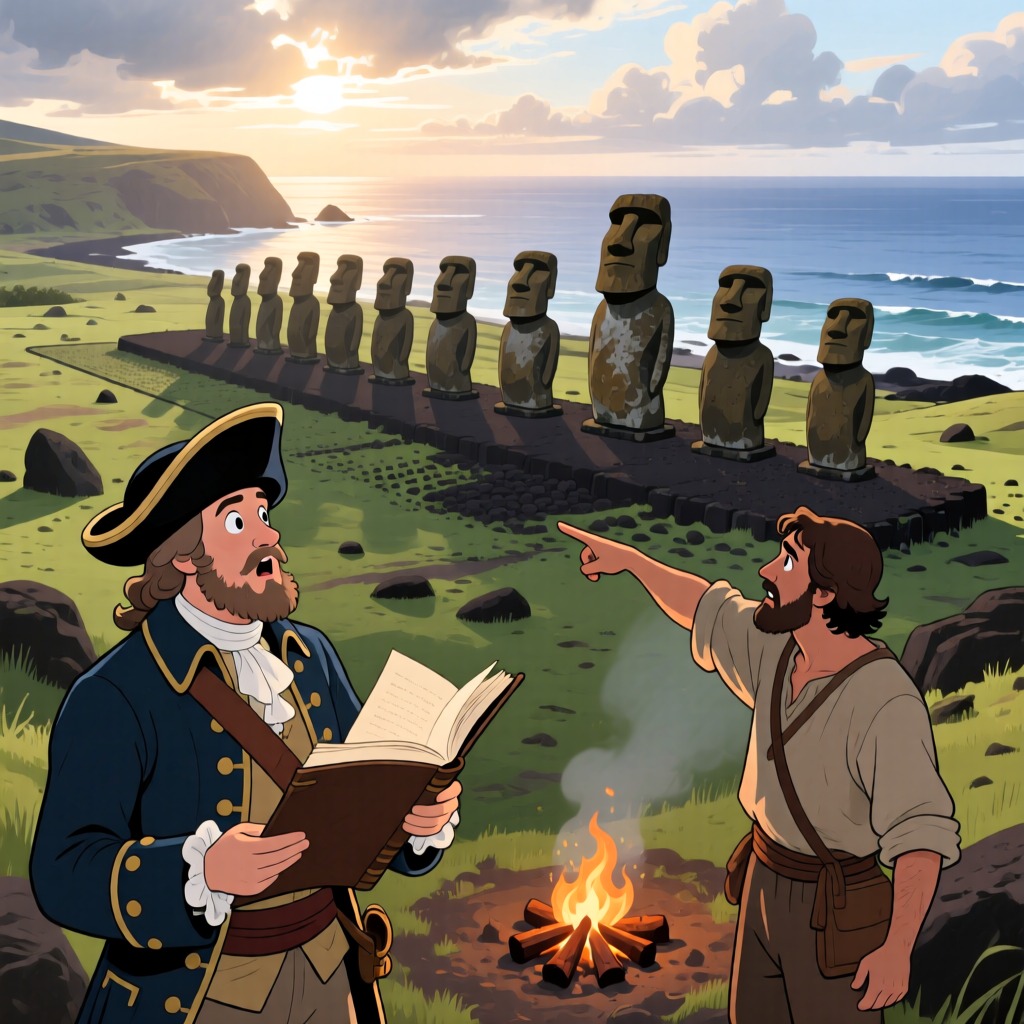
In April 1722, Dutch explorer Jacob Roggeveen and his crew stumbled upon this island during their expedition and named it Easter Island. The next morning, Roggeveen's assistant suddenly exclaimed at an incredible phenomenon on the island. The indigenous people were conducting a solemn religious ceremony, lighting bonfires, prostrating on the ground, and praying devoutly to the enormous stone statues. These statues, approximately 9 meters tall, are carved from massive stones, with serious faces and indifferent expressions, as if guarding the secrets of this land.
Scattered across the island are numerous such statues, with astonishing numbers. In one location alone, there are over 40, while on the slopes of Rano Raraku, there are as many as 300! Some statues stand side by side, while others stand alone, each weighing over 30 tons. Faced with this magnificent sight, Roggeveen and his companions were filled with questions: Who carved these statues? Why do they stand here? What history and legends lie behind them?
Although Roggeveen and his crew could not answer these questions, their discovery sparked a long-standing interest among European scholars. The mystery of the statues of Easter Island has become a focal point of academic discussion for centuries.