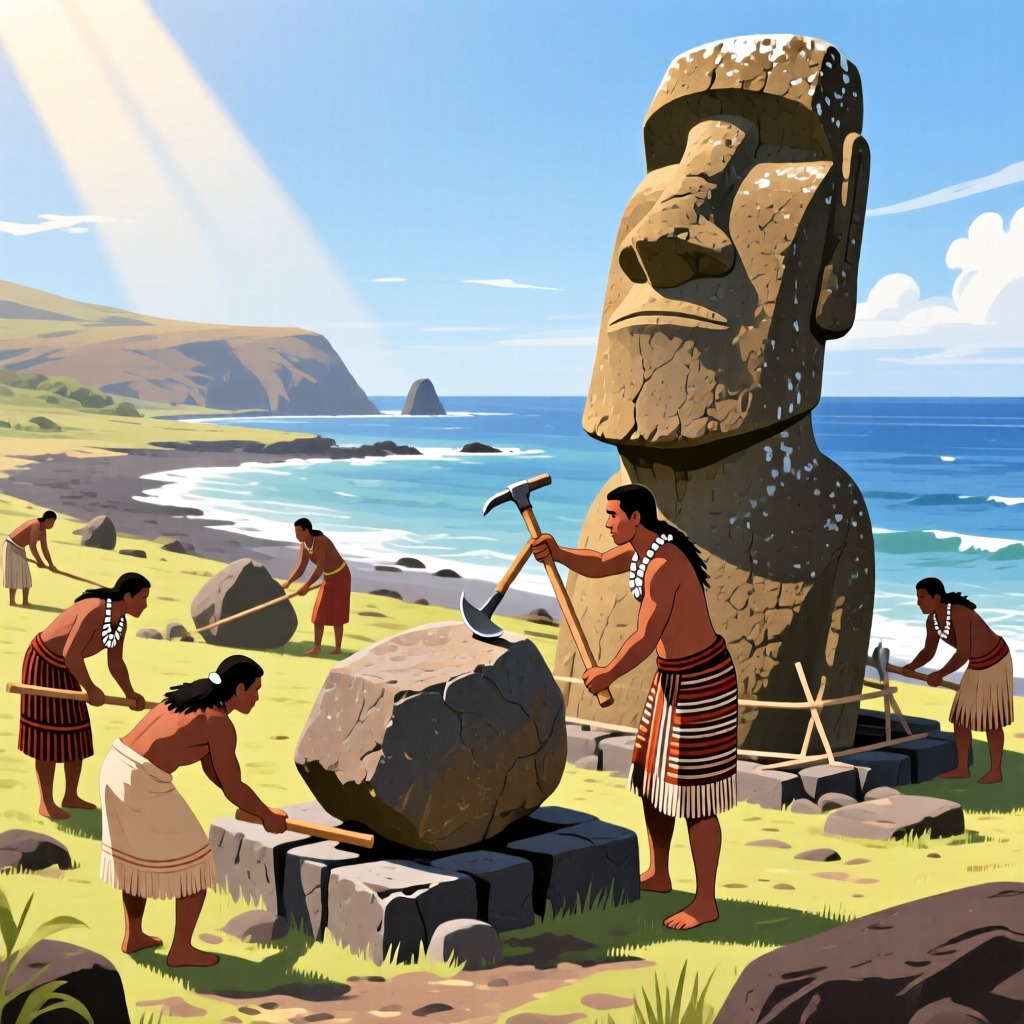

Easter Island, located in the South Pacific, is a remote island situated 3,600 kilometers from the coast of Chile. The island lacks forests, rivers, and fertile land, yet it is home to over 450 massive stone statues, each standing about 10 meters tall and weighing over 90 tons. The origins and purpose of these statues have sparked significant interest among researchers and the public alike.
Regarding the origins of these statues, British scholar James proposed a theory of ancient continental civilization, suggesting that these statues are remnants of such a civilization. However, modern science has proven that these statues were constructed in the 5th century, contradicting James's claims. Norwegian anthropologist Thor Heyerdahl believed that these statues were built by immigrants from South America, possibly descendants of the ancient Maya. Polynesians have also been mentioned in research, as they may have settled on the island around the 12th century and begun constructing these statues.
The motivations behind the construction of these statues remain puzzling. Some believe they were built to honor ancestors, while others think they were created to seek spiritual solace or to deter invaders. Regardless, the existence of these statues continues to evoke awe and curiosity.