
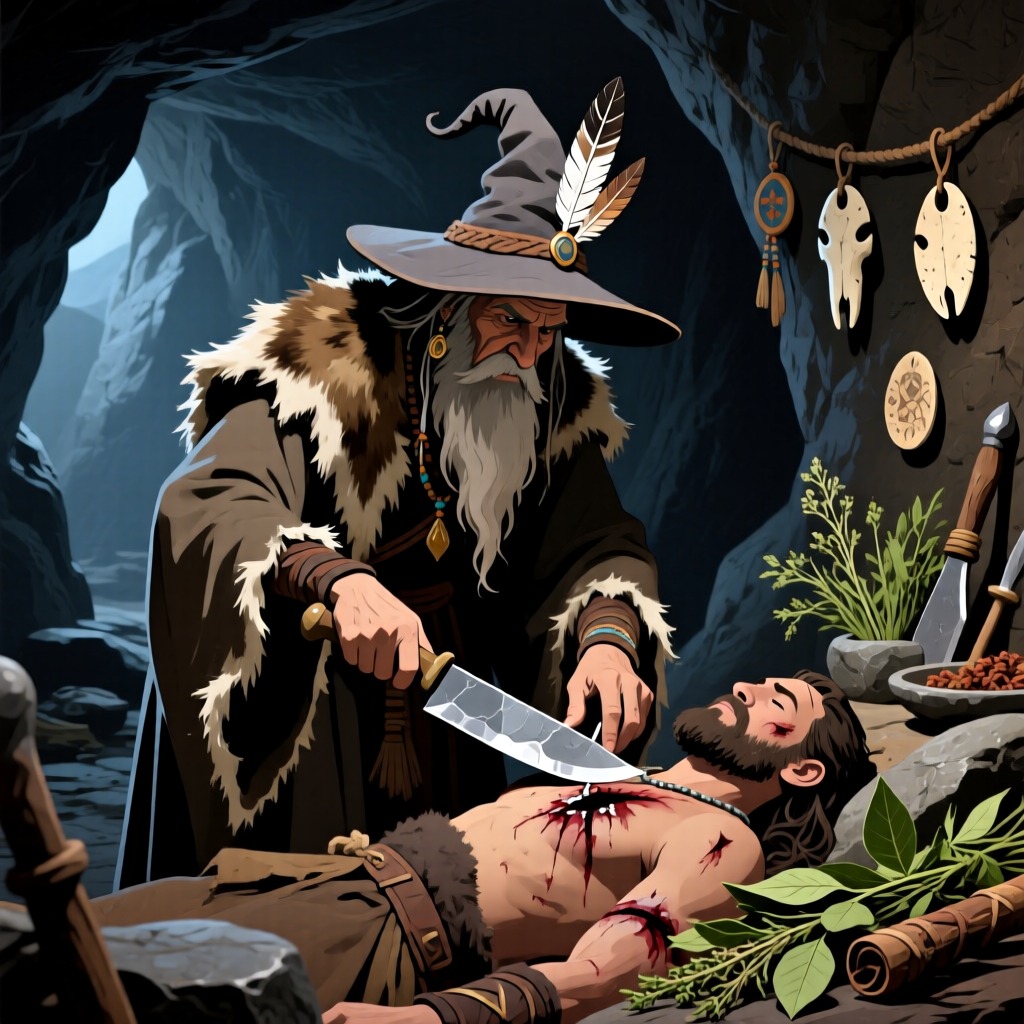

Why did prehistoric humans perform trepanation surgery? How did they manage to carry out such complex procedures without modern medical equipment? In the 1860s, American diplomat and anthropologist E. H. Squier discovered a Stone Age human skull in Peru, marked with fine grooves that proved prehistoric humans had mastered the technique of trepanation. Researchers found that these surgeries were not performed to treat diseases but to expel evil spirits believed to cause various ailments. Prehistoric humans believed that by performing surgery, they could remove these spirits from the skull, thereby healing the patient.
Trepanation was not exclusive to the Americas; archaeological findings from Europe to Asia also confirm its existence. For instance, two skulls discovered in Palestine in 1936 exhibited cutting patterns remarkably similar to those found in Peru. These surgeries were typically performed by shamans within tribes, who believed that this was the only way to restore the patient’s health.
Despite the high success rate of prehistoric surgeries, their techniques did not evolve with time. Trepanation gradually transformed into a form of witchcraft, sometimes even performed on the deceased. By the Middle Ages, the fear of vampires in Eastern Europe led to the practice of trepanation on corpses becoming a custom, which strayed far from its original intent. These findings reveal the unique understanding prehistoric humans had of brain function and their medical practices.