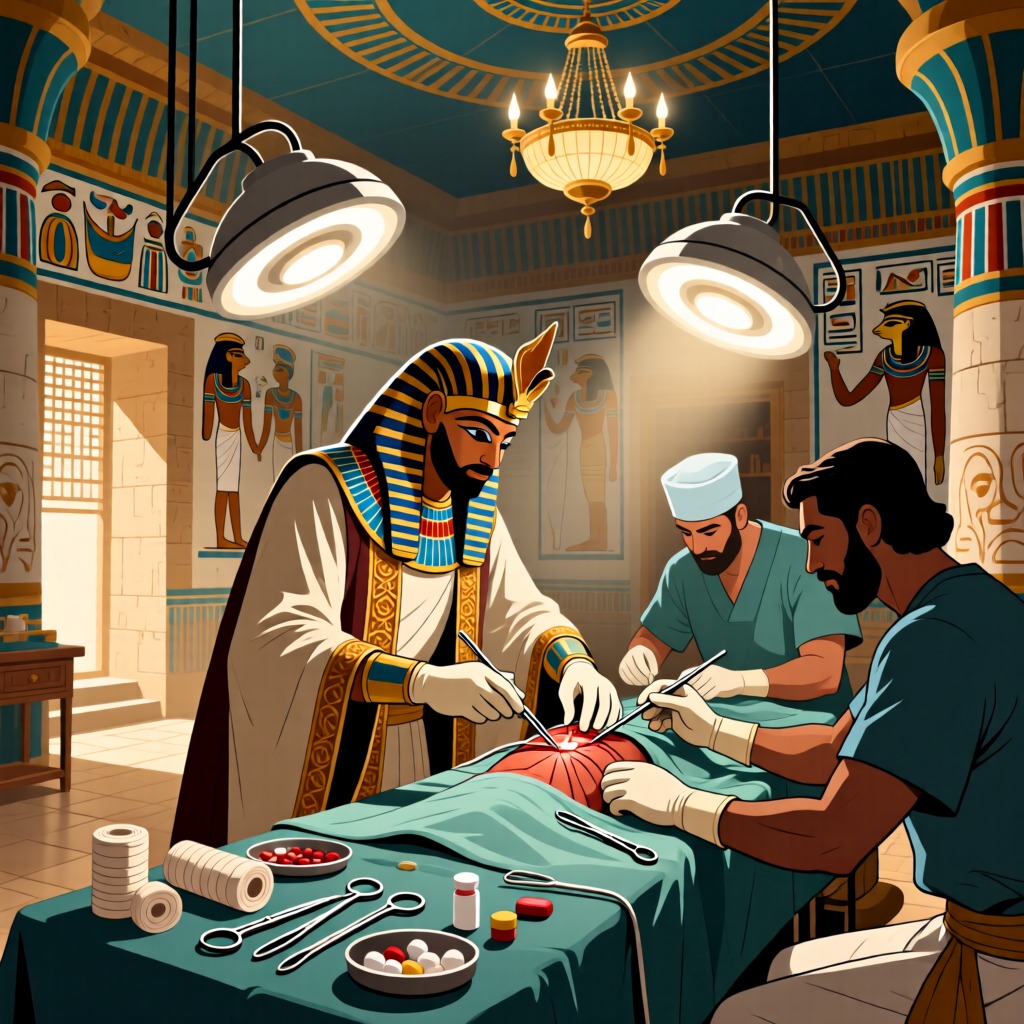

The mystery of ancient Egyptian healers has captivated scientists who, through the study of hundreds of Egyptian mummies, have discovered that surgical techniques used over 4,000 years ago were surprisingly more advanced than many modern practices. Physiologists, through anatomical studies of mummies, have confirmed that ancient Egyptian doctors performed complex procedures such as heart separation, organ transplants, cosmetic surgery, and even gender reassignment surgery. Even more astonishing is their ability to carry out intricate surgeries that modern medicine struggles to achieve, such as limb transplants and brain augmentation. These findings reveal a profound understanding of human organs and their functions by ancient Egyptian physicians.
Research on mummies indicates that 231 specimens dated between 2700 and 1250 BC underwent various surgical procedures. One mummy reportedly survived a head transplant, suggesting that ancient Egyptian doctors had mastered techniques to ensure compatibility between immune cells and foreign tissues—an area where modern medicine still faces challenges. Evidence of heart separation, tonsil and appendix removals, cosmetic surgeries, hair transplants, and traces of limbs transplanted from donors have all been found on these mummies. These discoveries have not only amazed archaeologists and historians but have also left the modern medical community in awe.
Scientists believe that around 1900 BC, ancient Egyptian medicine reached its peak, with medical practices widely accepted by pharaohs and nobles. However, following the conquest of Egypt by Alexander the Great in 332 BC, many advanced traditional medical techniques gradually faded into obscurity. Nevertheless, these mummies stand as testament to the fact that the ancient Egyptians were among the greatest healers in history.