
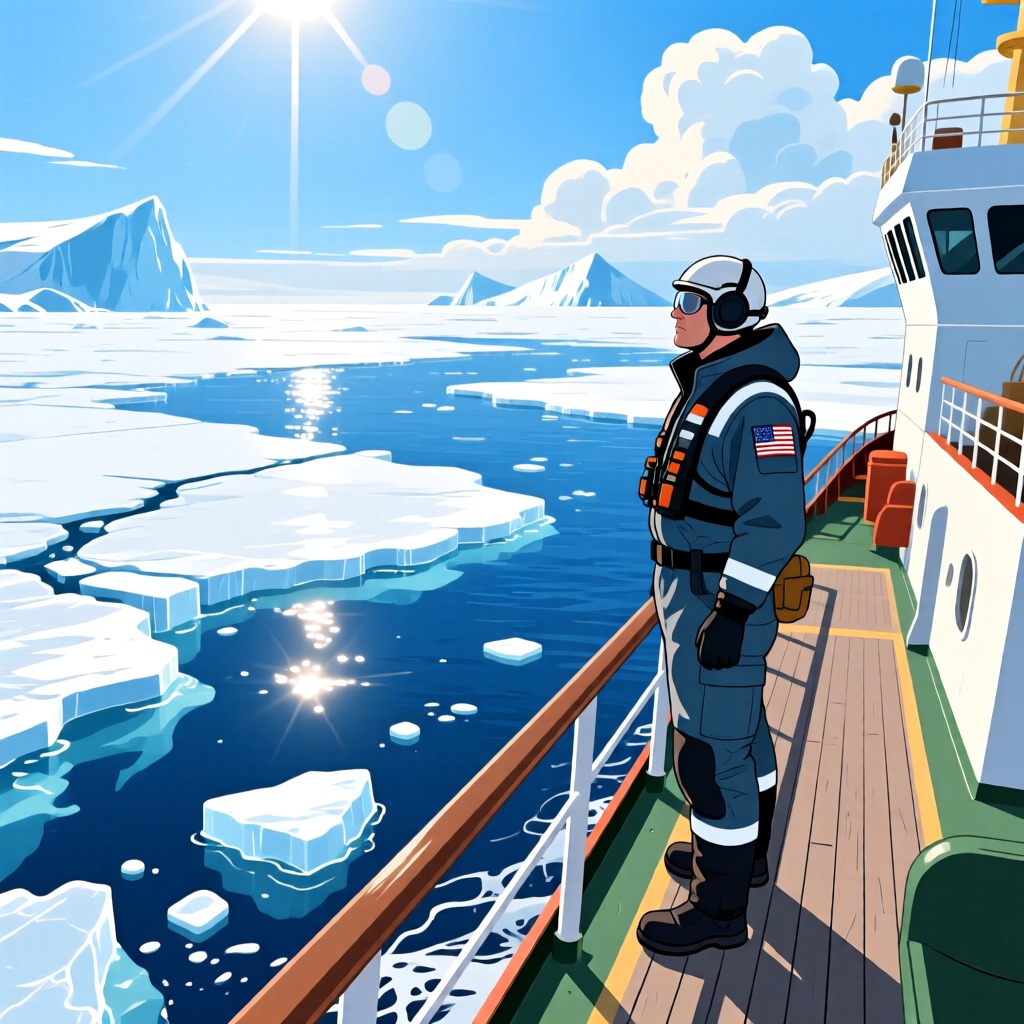

Over the past 20 years, temperatures in parts of Alaska, Siberia, and Canada have risen by an average of 4 degrees Celsius each year. The thickness of Arctic sea ice has decreased by 40%, and its coverage has shrunk by 6%. The permafrost is melting, leading to concerns that Arctic ice will gradually dissolve into the ocean.
In August 2000, American oceanographer McCarthy discovered that the ice layer at the North Pole, which typically reaches a thickness of 3 meters, had turned into seawater. While on a tourist expedition aboard a Russian icebreaker to the North Pole, he observed that the thick ice that once covered the pole had now transformed into a sea surface approximately 1 kilometer wide. This was a stark contrast to six years prior, when the icebreaker had to break through 2-3 meters of ice to reach the pole; now, the ice along the route was thin, and there was no ice left to break at the pole itself.
Meteorologists explain that this situation is not uncommon, as satellite monitoring shows that this phenomenon occurs almost every year. However, scientists have noted signs of warming in the Arctic, which could disrupt temperature circulation systems, thereby altering wind patterns, ocean currents, and rainfall.
If global warming continues, it could lead to a slowdown or even a halt of the "ocean conveyor belt," resulting in lower temperatures in regions such as Europe and North America. Historically, similar situations occurred during the ice age 12,000 years ago, leading to a 1,300-year cold period in Europe. Scientists warn that such a disaster could be a consequence of human actions, related to the increasing levels of greenhouse gas emissions.