
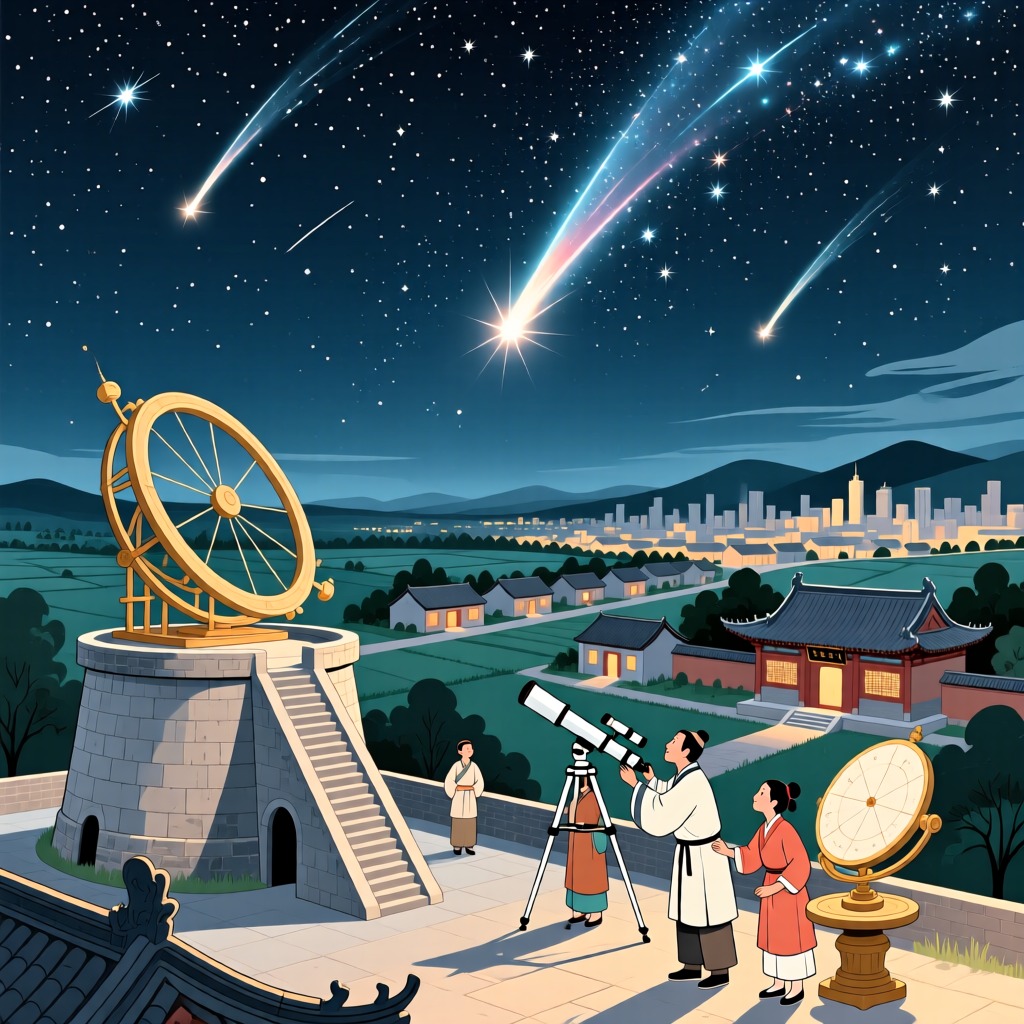

The most spectacular meteor shower of the 20th century, the Draconids, occurred on October 9, 1933, captivating audiences in Europe and Africa. This meteor shower lasted for about four and a half hours, with a peak of over 5,000 meteors per hour, creating a breathtaking cosmic display. People beat drums to ward off evil, and church bells tolled, making for a truly astonishing scene. In 1946, the same meteor shower returned, but on a smaller scale, highlighting the relationship between major meteor showers and the positions of Earth and comet orbits.
Another astronomical wonder is the Perseid meteor shower, visible every year from July to August, with peak rates reaching up to 70 meteors per hour. The parent comet, 1862 III, has not been observed since, leaving astronomy enthusiasts eager for further observations. The meteor showers associated with Halley's Comet, including the Eta Aquariids and the Orionids, occur at specific times each year, with consistent intensity and duration.
The Leonids meteor shower has left behind many mysterious records, from the first documentation by Chinese astronomers in 902 to observations by German scientist Humboldt in 1799, and the spectacular displays in North America in 1833. These records have fueled curiosity about meteor showers. But do meteor showers really pose a threat to Earth? Astronomers believe that since most meteoroids burn up in the atmosphere, only a few unburned meteors could cause minor damage. However, their impact on artificial satellites is more significant, necessitating advance warnings and orbital adjustments.
