
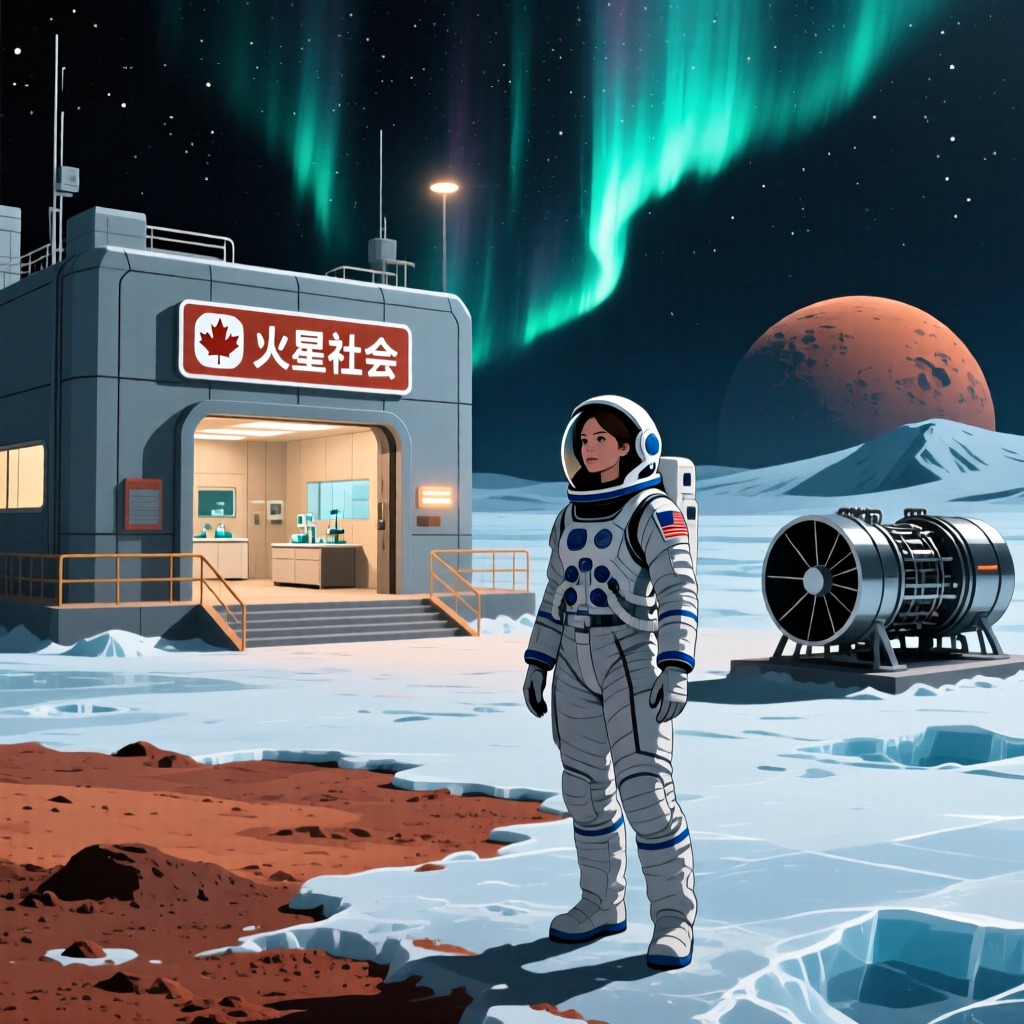

In the grand narrative of human exploration of the universe, NASA has undoubtedly been a leader. From the Apollo moon landings to the exploration of various planets in the solar system, and the shuttle missions, each breakthrough has left us in awe. Today, with rapid advancements in space technology, humanity is moving towards an even more distant goal: landing on Mars. Around 2003, Lu Yongxiang, then president of the Chinese Academy of Sciences, expressed optimism that humans could achieve this dream within that timeframe.
According to predictions from NASA and other space agencies, within the first 15 years of the 21st century, Earth's emissaries will set foot on the enchanting red planet. Scientists point out that the technological challenges of reaching Mars are being systematically addressed: from obtaining oxygen in space, to developing ion engines for long-distance travel, and methods for extracting oxygen from Mars' atmosphere, substantial progress has been made. The U.S. is training astronauts in sealed chambers on the ground to adapt to the demands of long-term space living and scientific exploration. Additionally, there are plans to send an all-female astronaut team on a three-week mission in 2001, marking a significant step for humanity towards Mars.
Moreover, scientists have proposed even bolder ideas: by introducing external resources, we could transform the Martian environment to make it more suitable for human habitation. Although these concepts are still in the theoretical stage, Mars colonization may no longer be an unattainable dream in the coming decades. To achieve this goal, a research group called "Mars Society" is constructing a base in the Canadian Arctic Circle that simulates the Martian environment to study how to achieve self-sufficiency in Mars' natural conditions.