
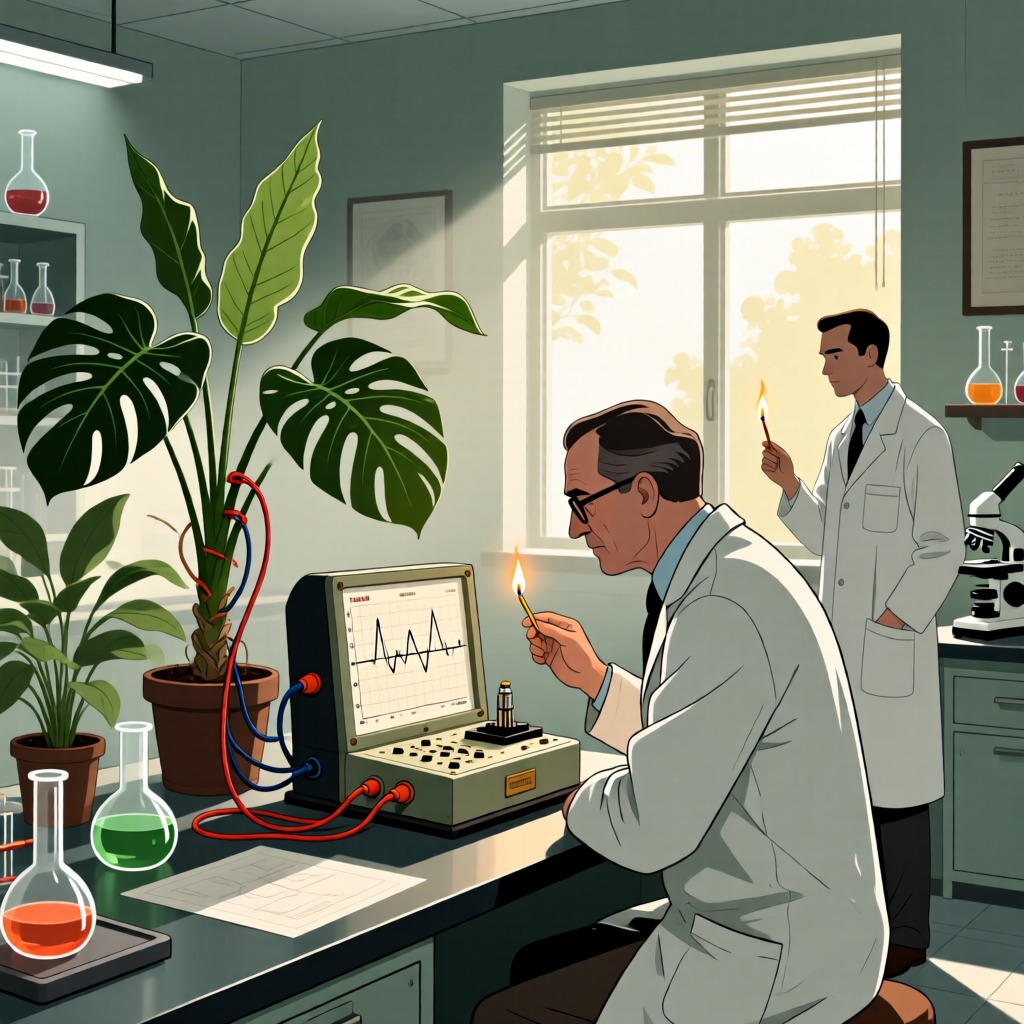

Plants seem to possess an extraordinary ability to sense human emotions and even intentions. In 1966, American psychologist Cleve Baxter explored the sensing capabilities of plants using a polygraph. He discovered that plants are extremely sensitive to human mental activities, even perceiving thoughts deep within a person's mind. Baxter's experiments demonstrated how plants can sense and respond to human intentions, showing that they can detect thoughts without direct contact. This phenomenon is not limited to plants; it includes other living beings, and specific technological methods can even convert human thoughts into measurable energy.
Further research indicates that there is a subtle connection between humans and plants that transcends traditional biological explanations. Scientists are attempting to understand the mechanisms behind this connection and have proposed astonishing hypotheses, such as the possibility that plant consciousness may be an extension of human consciousness, and that humans can communicate with plants in specific ways.