Niagara Falls is a world-renowned natural wonder located on the Niagara River, straddling the border between New York State and Canada. Originating from Lake Erie, it flows into Lake Ontario, showcasing breathtaking landscapes and a rich tapestry of cultural and historical narratives.
The falls are divided into two main sections: the American Falls and the Canadian Falls, which consist of three major waterfalls. The American Falls is famous for its distinctive horseshoe shape, known as the Horseshoe Falls, while the Canadian Falls is broader and is referred to as the Rainbow Falls and Bridal Veil Falls. Historically, Niagara Falls has been a focal point of contention between the two nations and a place where brave souls have tested their limits. In 1859, French tightrope walker Charles Blondin successfully performed an astonishing tightrope walk across the falls.
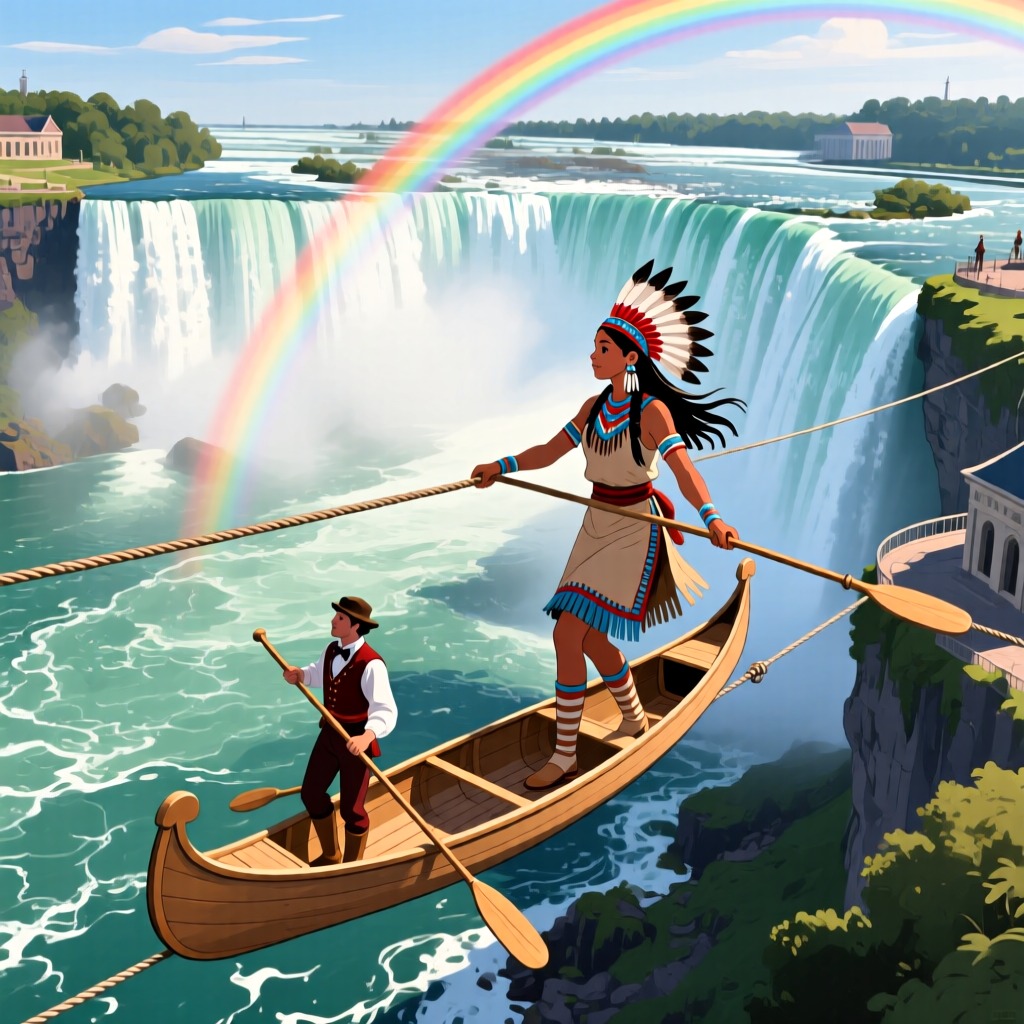
A beautiful legend surrounds Niagara Falls, telling of a Native American girl who refused to marry a chief. She set out alone in a boat to the edge of the falls and ultimately transformed into a beautiful spirit, often seen within the rainbows. Additionally, the name of the falls comes from the Native American language, meaning "thunder of waters." European explorers first documented this marvel in the 17th century, and its geological formation dates back to the Ice Age.
Niagara Falls is not just a natural wonder; it is also a testament to culture and history, attracting thousands of visitors each year who come to experience the awe-inspiring power of nature.