
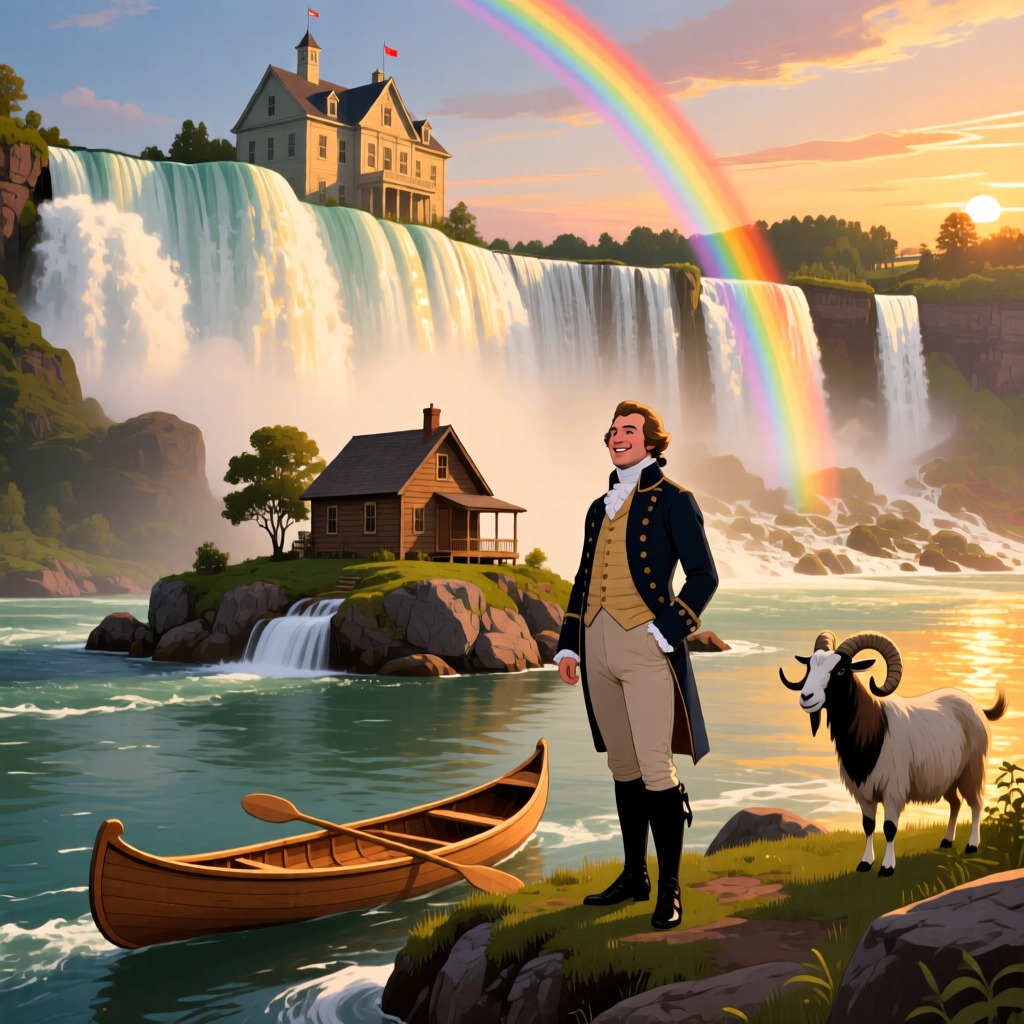

Niagara Falls is a world-renowned waterfall located on the Niagara River, which forms the border between New York State and Canada. The river originates from Lake Erie and flows into Lake Ontario. Despite its relatively short length of 58 kilometers, the river drops over 100 meters, creating a spectacular waterfall as it passes through a rocky gorge. The falls are divided by Goat Island into two sections: the Canadian Falls and the American Falls, which consist of three distinct cascades. The American Falls is also known as the Rainbow Falls and Bridal Veil Falls, while the Canadian Falls is referred to as the Horseshoe Falls due to its distinctive shape.
Historically, Niagara Falls has been a focal point of disputes between the two countries. During the War of 1812-1814, conflicts arose over this territory. It wasn't until the signing of the Treaty of Ghent that the falls became a shared border. Over 150 years ago, Jerome Bonaparte, Napoleon's brother, honeymooned here with his bride, setting a trend for tourism at the falls. Today, approximately 4 million visitors come to see the falls each year, many of whom are couples and romantics.
The name "Niagara" comes from the Native American language, meaning "thunder of waters." According to legend, a Native American girl jumped into the falls to avoid marrying a chief and transformed into a spirit, often seen in the rainbow above the falls. The first European to witness this magnificent sight was Father Hennepin in 1615, and in 1625, explorer La Salle recorded the name of the falls. The falls have about 10,000 years of history, formed by unique geological processes. During the last Ice Age, retreating glaciers exposed marble layers, which were eventually submerged by the torrents of Lake Erie, leading to the creation of the Niagara Falls we see today.
