

On a small island in Northeast China known as Snake Island, thousands of pit vipers reside. These snakes have triangular heads adorned with broad, dark brown eyebrows, dark ring patterns on their backs, and grayish-white bellies. Locals refer to them as "seven-inch snakes" or "main pine snakes." Not only are these vipers highly venomous, but they also grow to impressive sizes, often reaching around one meter in length.
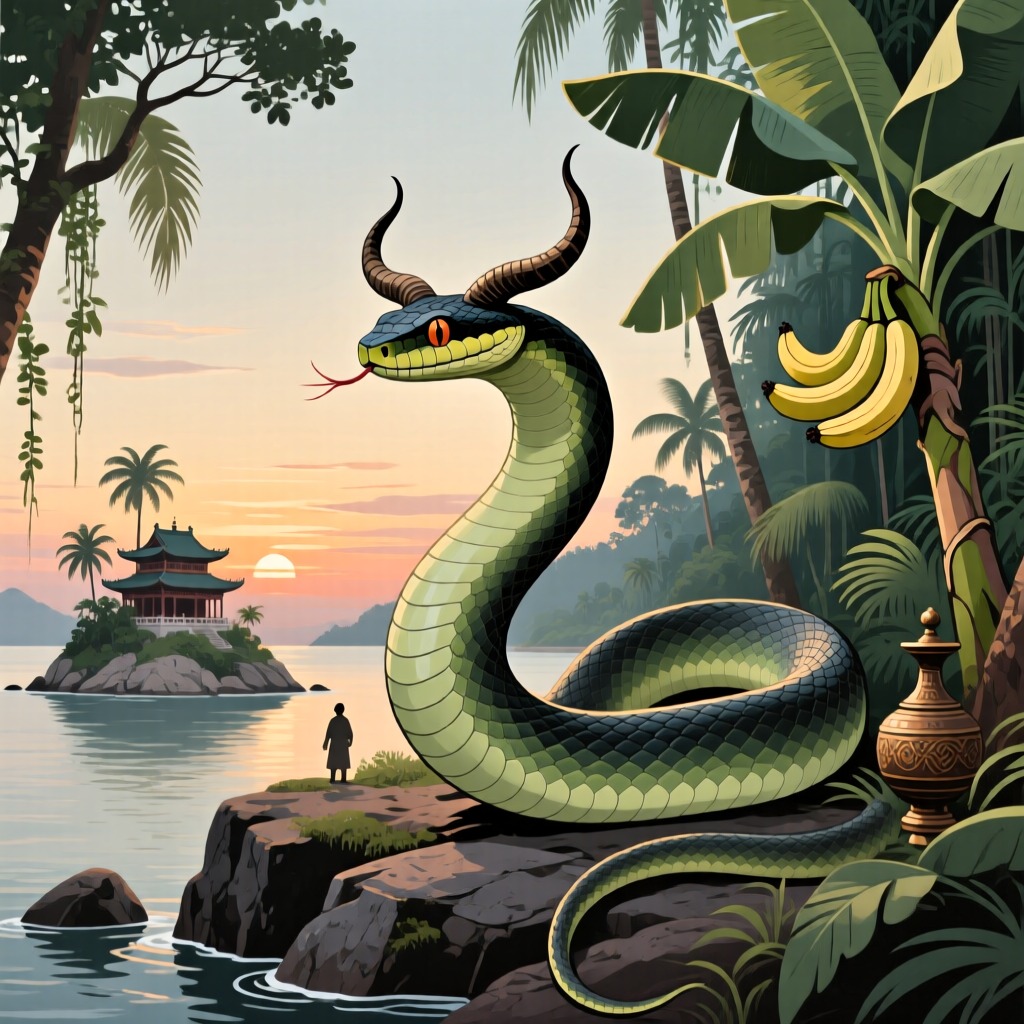
In the Americas, particularly in southern Colombia, there exists a fascinating species of viper known as the four-cornered viper or horned viper. This snake has a slender body with a short, thick tail, making it well-suited for climbing trees. Its head is heart-shaped, and its body is green, adorned with bright red spots, giving it a striking appearance. The four-cornered viper is also highly venomous and excels at camouflage, often residing in banana trees where its coloration closely resembles the bark, allowing it to hide and ambush prey. Local workers frequently fall victim to its disguise, suffering fatal injuries.
Despite their starkly different habitats—one thriving in the cold north and the other in the tropical south—both species exhibit remarkable adaptability and survival intelligence.