
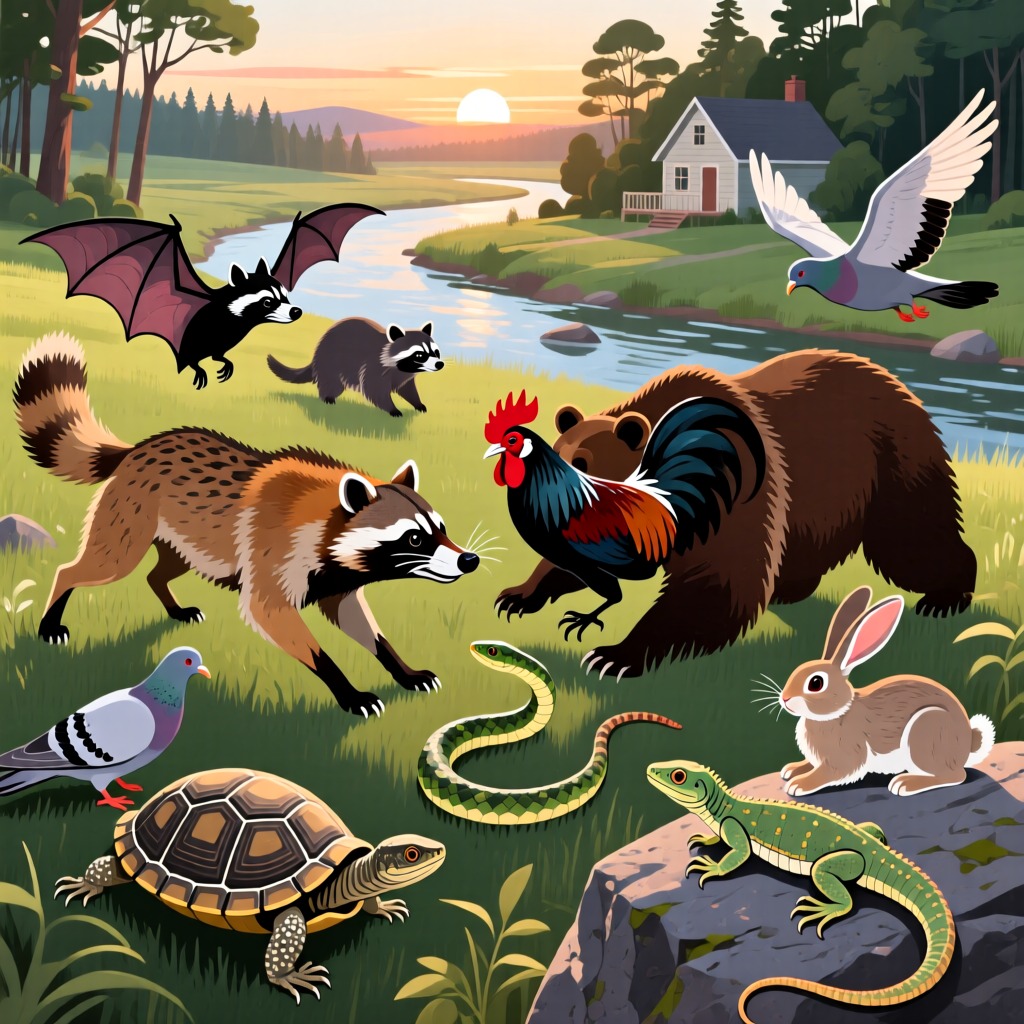

On Earth, apart from humans, the animal kingdom frequently witnesses various forms of conflict. For a long time, zoologists have generally believed that most animals do not kill their own kind. However, the phenomenon of fighting among animals is far more complex and interesting than we might imagine. These conflicts often arise over resources, territory, or mates, rather than being mere acts of violence.
For instance, coyotes living on the plains employ a relay method to compensate for physical exhaustion when hunting jackrabbits. When one coyote tires, another takes its place to continue the chase, allowing them to work together until the jackrabbit is worn out. This coexistence of cooperation and competition showcases the survival intelligence in the animal world.
Additionally, the long-nosed raccoons of Central and South America use a divide-and-conquer strategy to catch lizards that dwell in trees. One raccoon waits below while the other climbs the tree to drive the lizards down, and through their coordinated efforts, they successfully capture their prey. These examples illustrate that conflicts among animals are not merely about fighting; they also involve cooperation and strategy.
Scientists have discovered through long-term observation that there are certain rules governing animal conflicts. For example, bats will hang upside down on rocks and use their noses to express emotions during fights; snakes intertwine their tails and press against each other; male tortoises flip their opponents to determine the victor. The competition among birds also has its unique characteristics, with pigeons displaying their prowess through puffed feathers and strutting, while the red-browed black-capped chickadees use chirps and wing displays to settle disputes.
Among larger animals, the fighting style of brown bears is particularly unique. Male brown bears become exceptionally aggressive during mating season, fighting fiercely for mates and even attacking nearby homes. This intense manner of conflict highlights the brutality and survival laws of the animal kingdom.