
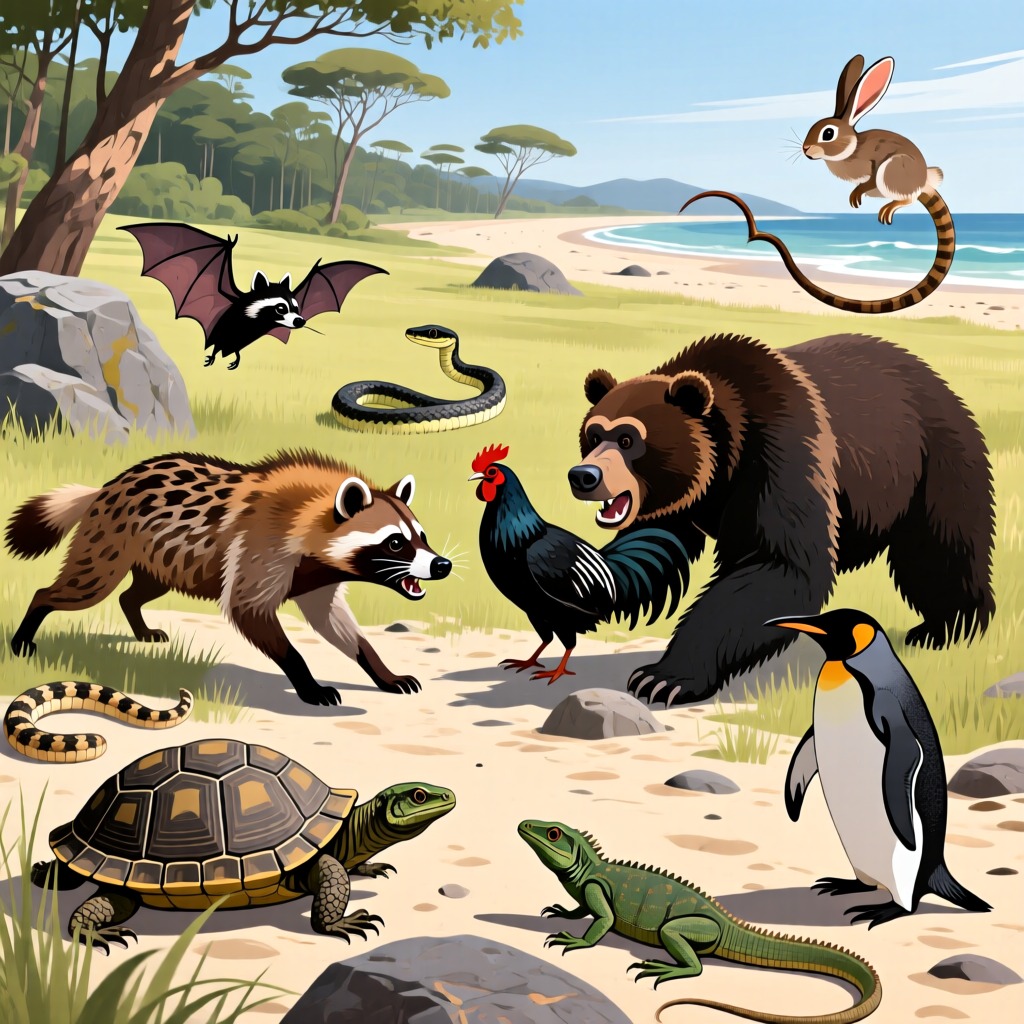

On Earth, aside from humans, the animal kingdom frequently experiences various conflicts, both big and small. Zoologists have discovered that these disputes among animals are not merely acts of violence; they serve specific purposes and follow certain rules. For instance, coyotes employ a relay method to compensate for their lack of stamina when hunting jackrabbits, while raccoons with long noses split into two groups—one waits at the base of a tree while the other climbs to flush out lizards. These instances of cooperation and conflict reveal the survival wisdom of animals.
Bats express their frustrations through nose collisions, while snakes engage in battles by entwining their tails. Male tortoises consider it a victory when they manage to flip their opponent onto its back. The competition among birds varies widely; for example, pigeons confront each other by ruffling their feathers and pacing, while male red-browed blackbirds engage in combat by chirping and spreading their wings. Large animals, such as grizzly bears, can become fierce when competing for mates, sometimes even attacking human dwellings.
Some conflicts among animals, like the deadly fights among chimpanzees for dominance or the self-destructive battles among penguins leading to significant fatalities, remain a mystery. Sociobiologists believe that animal conflicts primarily stem from selfish instincts aimed at passing on their genes, while zoologists suggest that these disputes might be accidental or triggered by external stimuli.
Although the conflicts and killings among animals can be brutal, they also hold positive ecological significance. Young and healthy animals that lose in battles may set the stage for future happiness, while those that perish in conflicts represent a form of natural selection. However, the true reasons behind these animal conflicts remain unknown to humanity.