
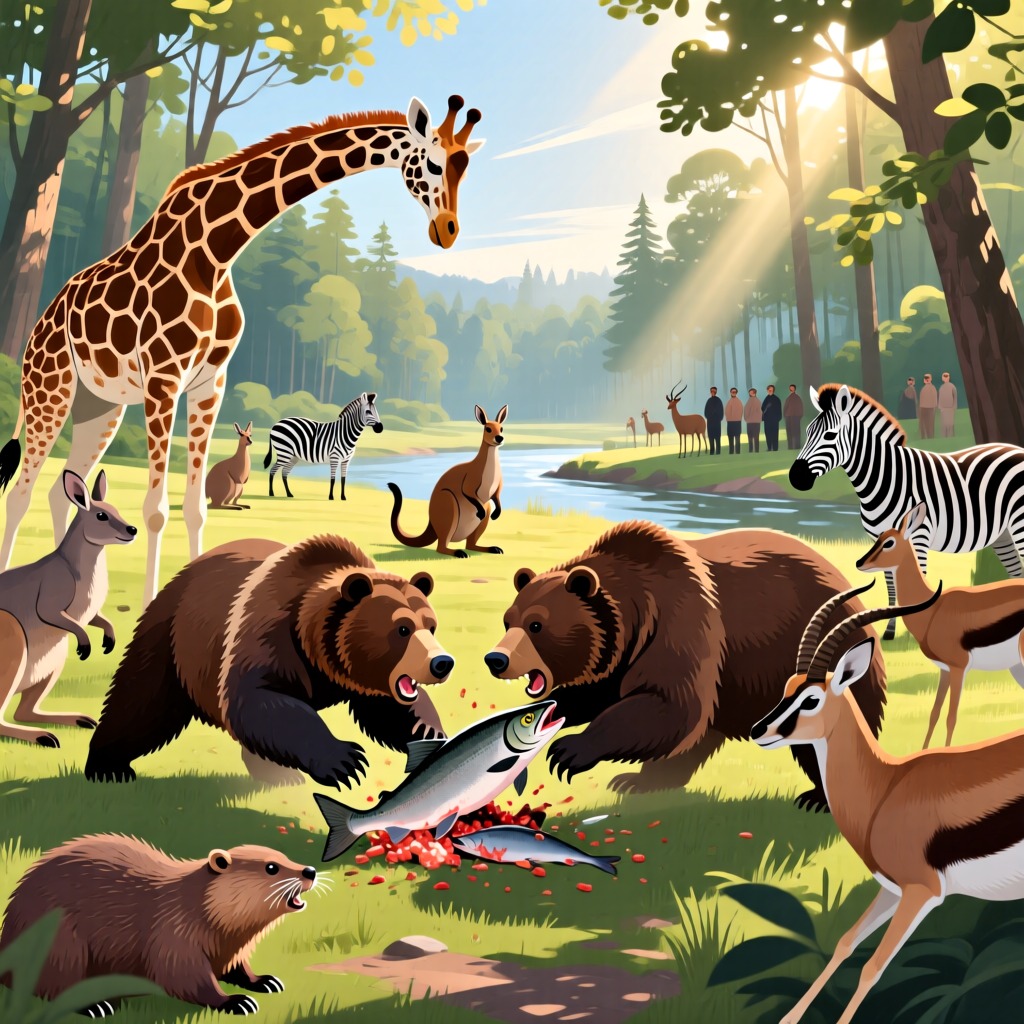

In the animal kingdom, conflicts arise among species such as giraffes, zebras, and antelopes, primarily to compete for mates, territory, or food. These confrontations typically result in a victor without necessarily leading to the death of the opponent. Animal conflicts are filled with intelligence and strategy, with different species employing their unique strengths as weapons. For instance, kangaroos use their front paws, beavers their tails, and giraffes their necks, while deer and moose utilize their antlers.
Sometimes, these conflicts can have brutal outcomes. For example, a group of chimpanzees may kill rivals in territorial disputes. Some zoologists argue that these confrontations stem from the animals' selfish instincts, aimed at ensuring the survival of their offspring. However, there are also conflicts whose causes remain unclear and difficult to explain.
Experts in sociobiology suggest that animal conflicts serve to pass on their genes. In situations lacking communication and methods, fights and killings may occur by chance. Zoologists generally agree that conflicts among animals have positive ecological implications. Through these struggles, younger and healthier animals can gain more opportunities, while those injured or killed in the process are part of natural selection. Yet, the true reasons behind these animal conflicts remain a mystery to humanity.
Conflicts among animals are not limited to land; they also occur underwater. For instance, two brown bears may fiercely compete for a prime spot in a river to catch salmon swimming upstream to spawn. Each year, salmon travel upstream to reproduce, and brown bears take advantage of this opportunity to hunt them.
