
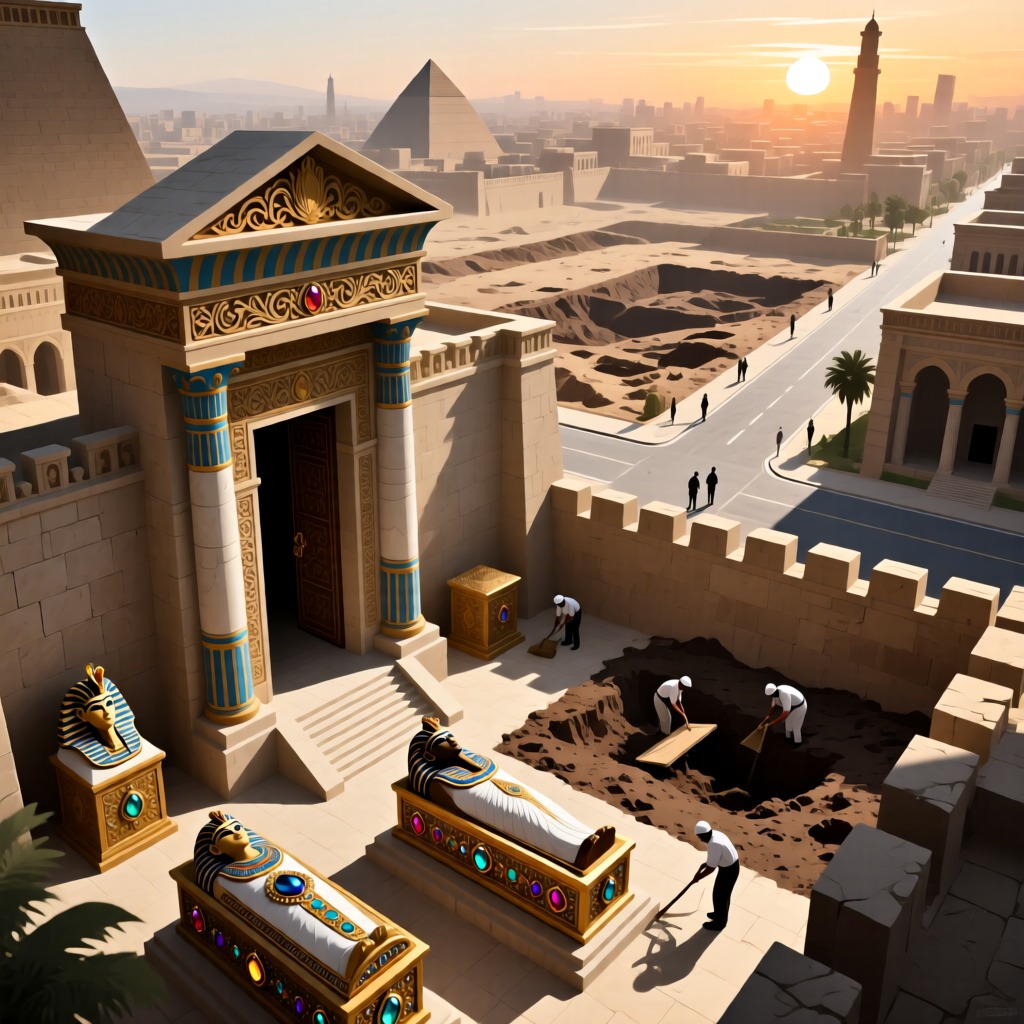

The mystery of Alexander's Tomb
Alexander the Great (356 BC – 323 BC) was the son of King Philip II of Macedonia. His short but illustrious life was filled with conquests and legends, yet the exact location of his tomb has remained a mystery for centuries. In 1964, a false report stirred excitement worldwide, but it ultimately proved to be nothing more than an illusion. Today, people are still searching for the true whereabouts of Alexander's tomb, hoping to uncover more secrets about this great ruler.
Numerous legends surround Alexander during his lifetime, and the cause of his death is widely debated. One theory suggests that he encountered ominous signs during his campaign in India, which ultimately led to his demise. Another theory posits that he may have died from poison. Regardless of which theory one believes, both add to his enigmatic persona. It is said that Alexander's body was transported to Egypt by General Ptolemy, where it was buried in Alexandria, complete with a lavish tomb.
As time passed, this tomb gradually faded into the dust of history. By the early 19th century, with the development of the city, the site of the tomb was forgotten and even destroyed. Nevertheless, some archaeologists continue to search for clues in hopes of unraveling the mystery of the tomb. In recent years, Polish archaeologists have proposed new theories based on studies of ancient lamps. However, the exact location of Alexander's tomb remains an unresolved mystery.