
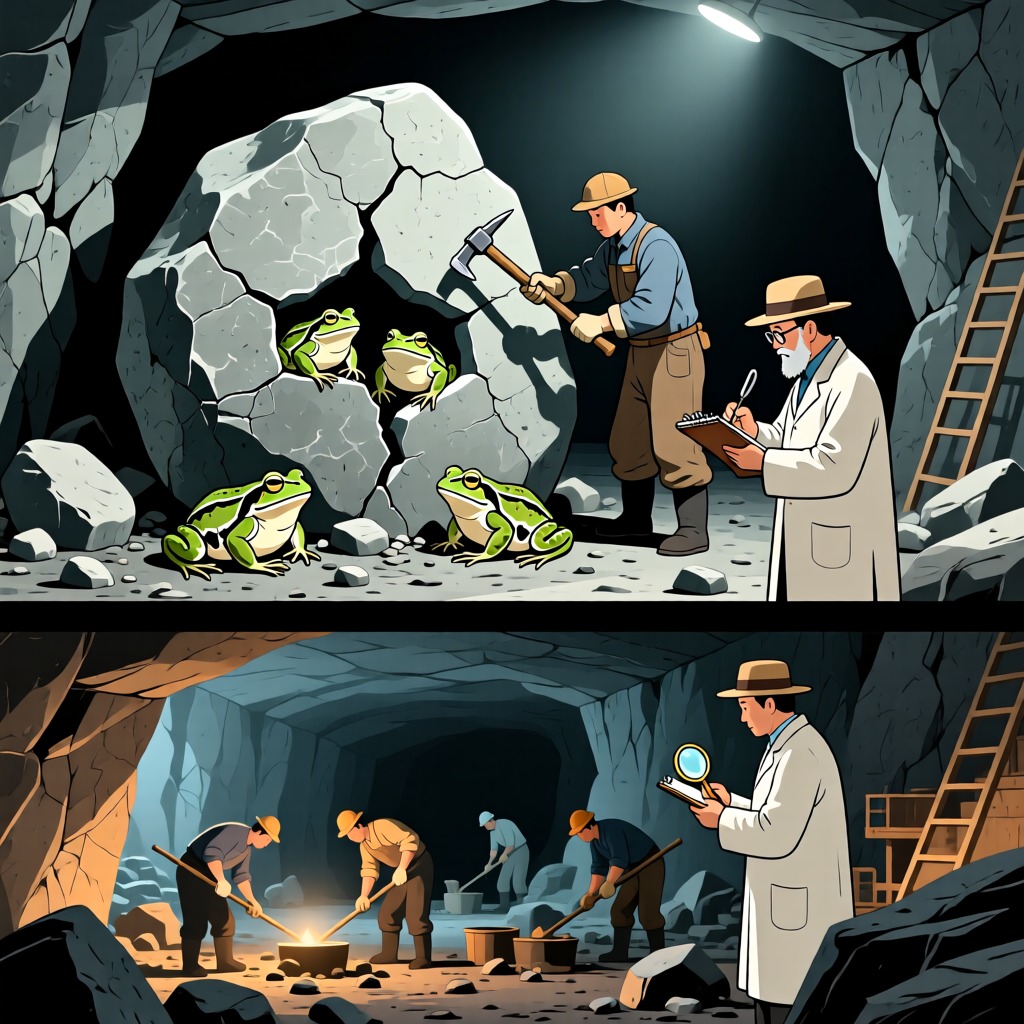

In 1946, a petroleum geologist discovered a hibernating frog in Mexico, buried within mineral layers formed over two million years ago, astonishingly alive after such a long time. The geologist dated the mineral deposit, confirming this miracle. Similarly, in 1782, a French worker found four living toads in underground limestone, which had hibernated within the rock for at least a million years. How can these amphibians survive such prolonged hibernation in rock and mineral layers without dying?
Many scientists speculate that these animals live within the rock and mineral layers, shielded from external environmental changes, especially temperature fluctuations. This stable environment allows their metabolism to nearly halt, conserving significant energy and extending their lifespan. However, the specific mechanisms remain an unsolved mystery. Dr. Sumi from the University of Minnesota discovered through experiments that certain frog species produce glycerol at low temperatures, which may be a key reason for their ability to hibernate for extended periods.
Currently, the question of how amphibians can survive for millions of years in rock and mineral layers continues to puzzle biologists. This enigma has attracted the attention of countless scientists, leading to the emergence of new theories. In the future, as biological sciences advance, we may unravel this mystery, providing new insights into human longevity research.
