
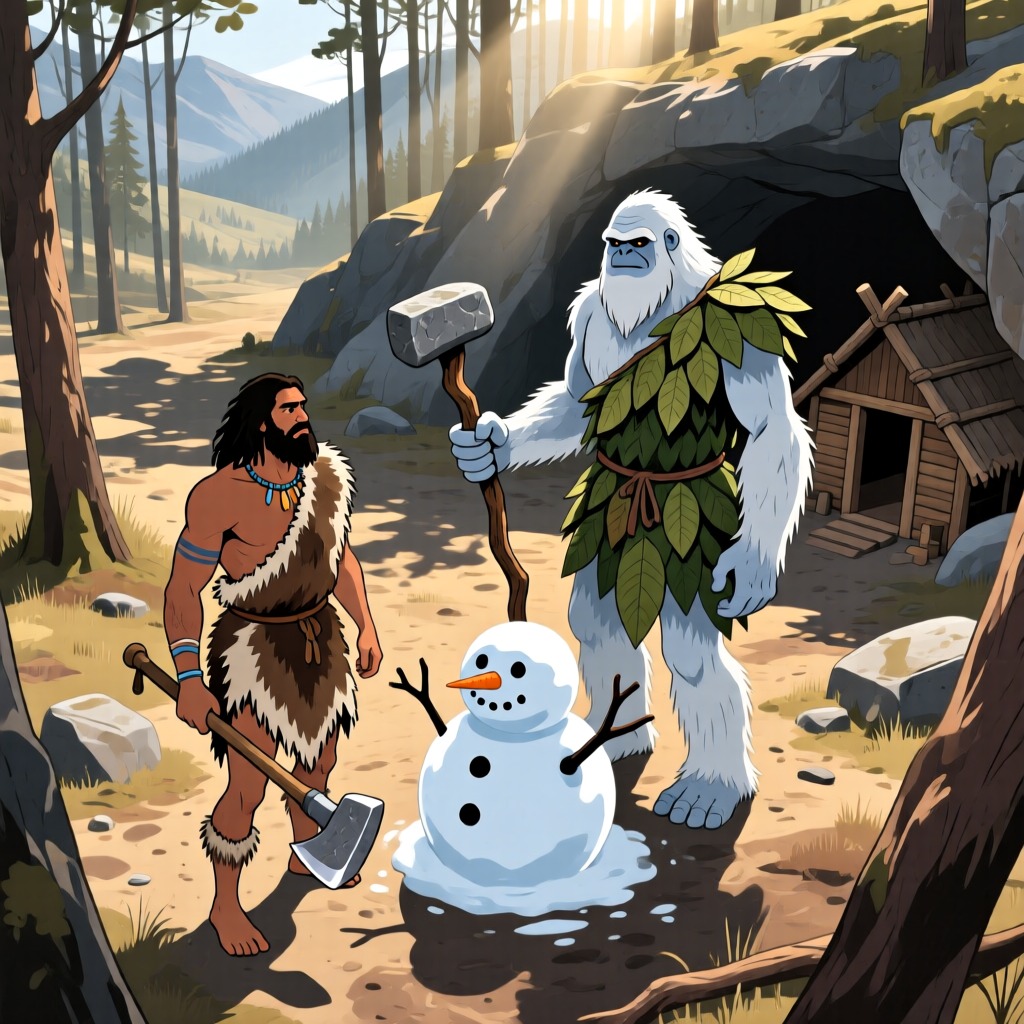

The role of the Yeti in human evolutionary history is perplexing. Typically, the path of species evolution can follow two routes: one involves competition with other species, while the other occurs within the same species. Both pathways drive species diversification, but in certain cases, a species may diverge into two distinctly different branches. This phenomenon is particularly evident in human evolutionary history, where approximately 50,000 to 10,000 years ago, two branches emerged among early humans: one leading to modern humans and the other to a species known as the 'Yeti.'
The Yeti displayed remarkable adaptability during early evolution, possessing greater strength, speed, agility, and perceptual systems. In contrast, humans began to decline in these biological aspects of evolution. With the advent of civilization, human social structures became more complex, while the Yeti continued to inhabit remote areas, avoiding direct competition. Despite their similar forms, Yetis are characterized by larger body sizes and unique cranial features, setting them apart in survival strategies.
Over time, humans gradually dominated the Earth, while the Yeti retreated into the background, hiding in seldom-visited places. This separation was not merely geographical but also a divergence in biological evolution. Even the smallest differences gradually expanded, ultimately leading to the differentiation of the two species. Today, the Yeti stands as a symbol of the evolutionary choices of our ancient ancestors, serving as a crucial clue to understanding human origins and evolution.
