
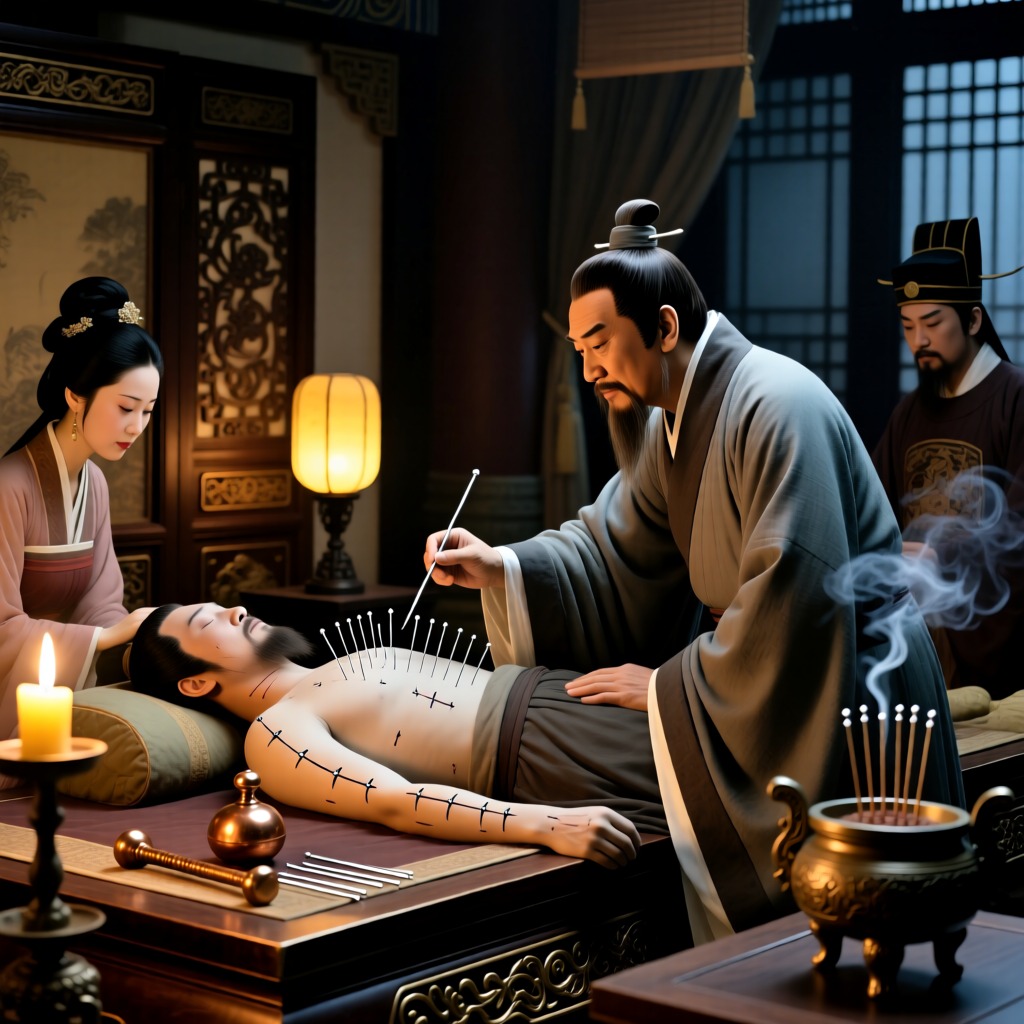

Over two thousand years ago, a doctor named Bian Que revived a dying Duke of Guo. The Duke was in a coma, and Bian Que used acupuncture to awaken him, a miraculous event that caused a great stir. According to the "Huangdi Neijing" (The Yellow Emperor's Classic of Medicine), acupuncture was widely practiced as early as the Spring and Autumn and Warring States periods. The text details various types of needles and their uses, as well as the distribution of acupuncture points in the human body. Acupuncture not only flourished in China but also spread to other regions; similar practices were found among the Eskimos, ancient Egyptians, and the Bantu people of Africa. Over time, acupuncture gradually made its way to the West, but for a long time, Westerners had little understanding of it. It wasn't until the late 18th century, when European doctors began to study acupuncture, that this ancient therapy started to gain recognition worldwide.
The principles behind acupuncture remain an unsolved mystery to this day. It is based on the body's meridian system, stimulating specific points to regulate bodily functions and alleviate pain. Although the scientific community has not fully understood the mechanisms of acupuncture, it has been widely applied in clinical practice, especially showing great potential in the field of anesthesia.