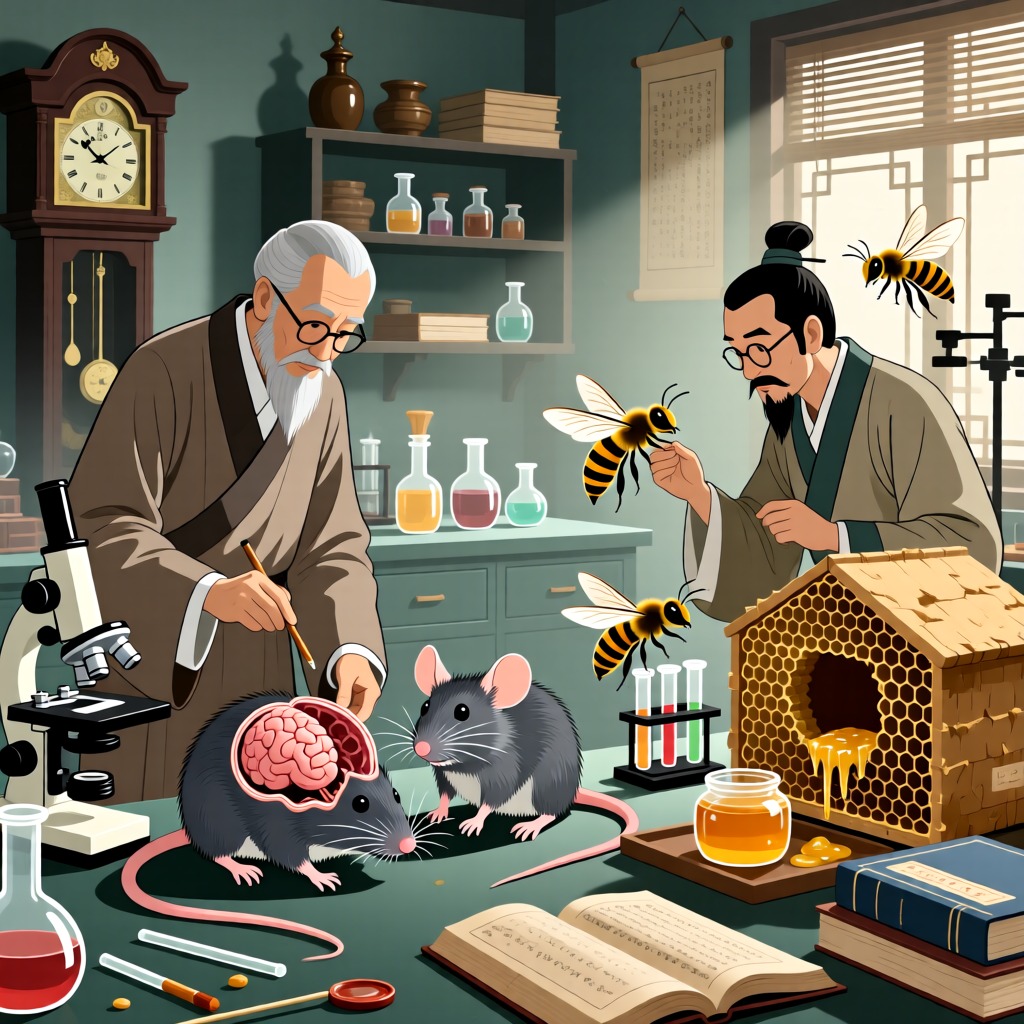

What secrets lie hidden within the human brain? How are memories formed and stored in our minds? Is it possible to transfer memories from one person's brain to another? These questions have long puzzled scientists. Dutch chemist David conducted experiments on mice to explore memory transplantation. He extracted certain memory substances from one mouse's brain and implanted them into another mouse's brain. The results showed that the recipient mouse's memory and sensory abilities changed, creating a sensation across Europe and exciting scientists everywhere.
As early as 1978, German biologist Martin began experimenting with memory transfer in bees. He selected two healthy bees as subjects, training them to fly out of their hive at a specific time each day to find a bowl of honey placed in another hive. After some time, these bees developed a habit of flying out at the same time daily. Martin then extracted a small amount of neural material from their brains and injected it into the nervous systems of two untrained bees. Miraculously, these two bees also began flying to the other hive at the same time each day, just like the trained ones. This demonstrated that the memories of the first two bees had been successfully transferred to the latter.
These experiments not only reveal the potential material basis of memory but also inspire scientists to consider the possibilities of memory transplantation. Although human memory transplantation has not yet been realized, researchers are exploring new ways to acquire knowledge, hoping to achieve shared brain resources and enrich human life.