
If a hurried traveler were to arrive in the river valley of the Viru in northern Peru, close to the coast, they might see only a vast expanse of arid, barren, and dusty land. However, this seemingly desolate place hides the remnants of the Moche people, also known as the Mocheca, who thrived over 2000 years ago. The Moche were a unique and mysterious Indian tribe, showcasing extraordinary distinctiveness in their religious beliefs, artistic creations, and burial customs.
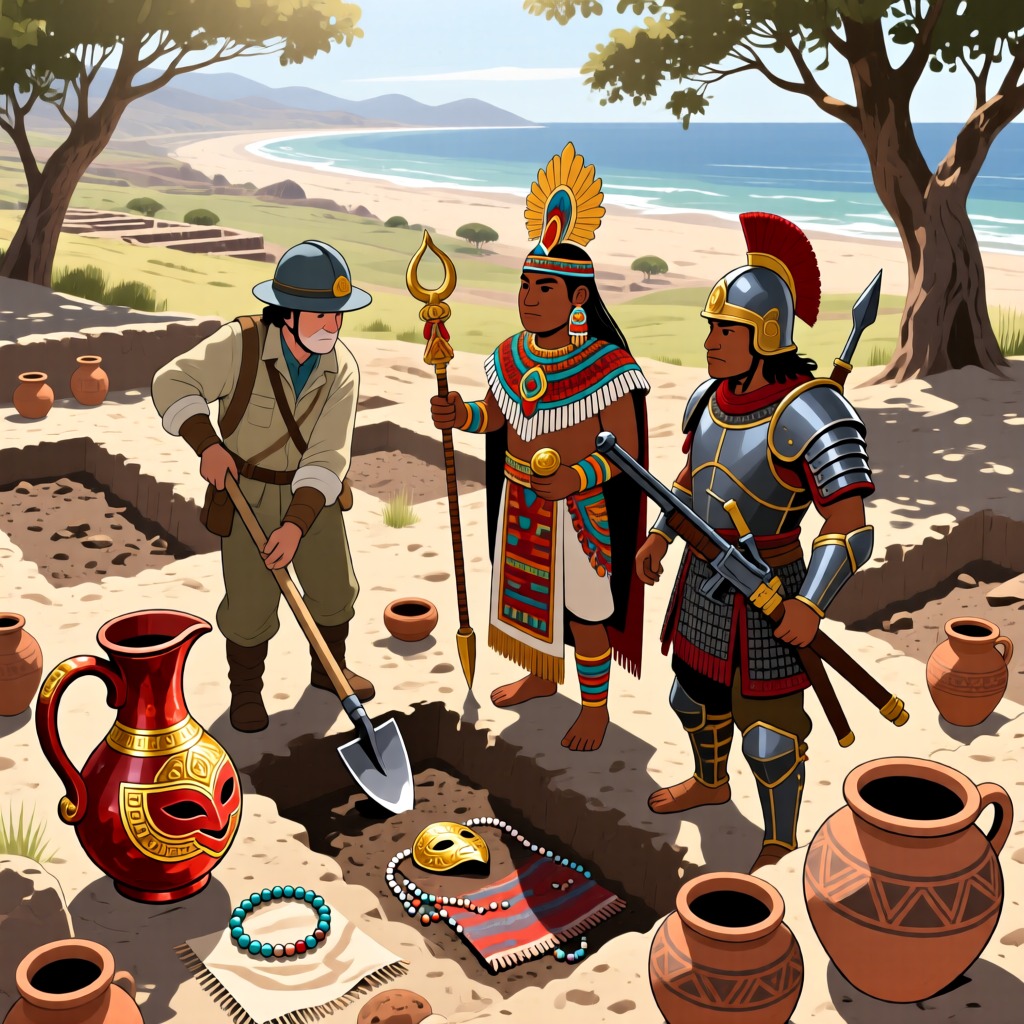
Archaeologists Strong and Evans unearthed the Viru valley site in 1946, revealing the rise and fall of Moche culture. They discovered a variety of burial pottery, including unique grave goods such as beads, cloth pieces, ceramic pots, and gold-plated copper masks. These artifacts not only showcase the artistic talents of the Moche but also reflect their beliefs about the afterlife.
The pottery of the Moche vividly depicts their daily life and social structure, illustrating everything from religious rituals and battle scenes to hunting and everyday labor. Notably, some pottery features scenes of a group of people offering large cups to a figure radiating light from their head and shoulders, suggesting the importance of this ritual in Moche society. Additionally, many pieces display distorted bodies and bizarre head shapes, reflecting the Moche's reverence for transformation and mysterious powers.
The Moche not only recorded their lives through pottery but also expressed their beliefs and values through unique rituals and artistic works. Although the Moche have long since vanished, the pottery and artifacts they left behind reveal a world filled with fantastical elements.