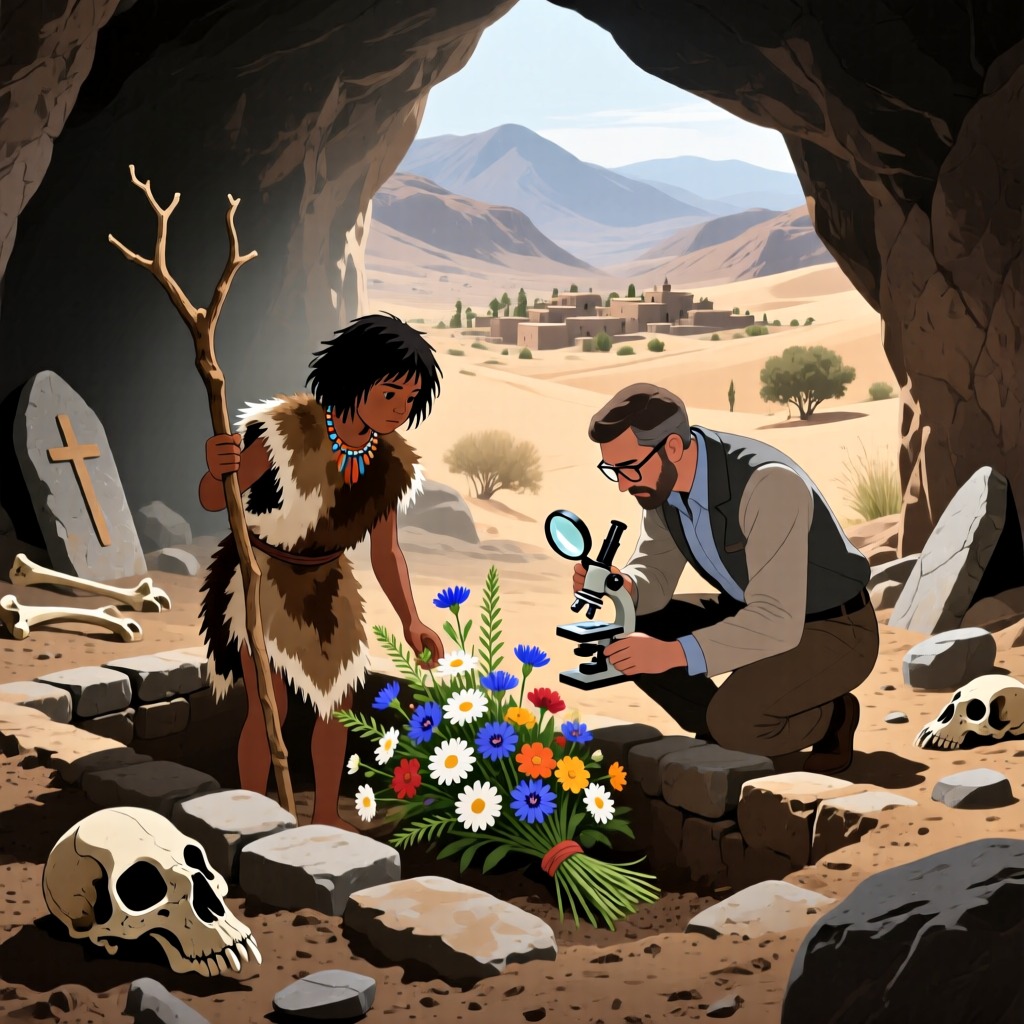
Sixty thousand years ago, in the heart of Europe, Neanderthals lived a harsh life, fighting daily for survival. However, archaeologists discovered a unique grave in a cave in Shanidar, northeastern Iraq, where a disabled individual was buried surrounded by flowers. These flowers not only reflect the Neanderthals' compassionate nature but also reveal their reverence for life and care for the deceased. Although the flowers have long since decayed, scientists have identified their species through microscopic examination. Among the eight types of flowers found, including Astragalus, cornflower, and hollyhock, it indicates that Neanderthals recognized the medicinal value of plants even in that era.
The Funeral of the Flower Child