

The phenomenon of spontaneous human combustion was first documented in medical reports from the 17th century, and today, there is a wealth of literature on the subject. Spontaneous human combustion refers to the occurrence of a person's body catching fire and burning without any external ignition source.
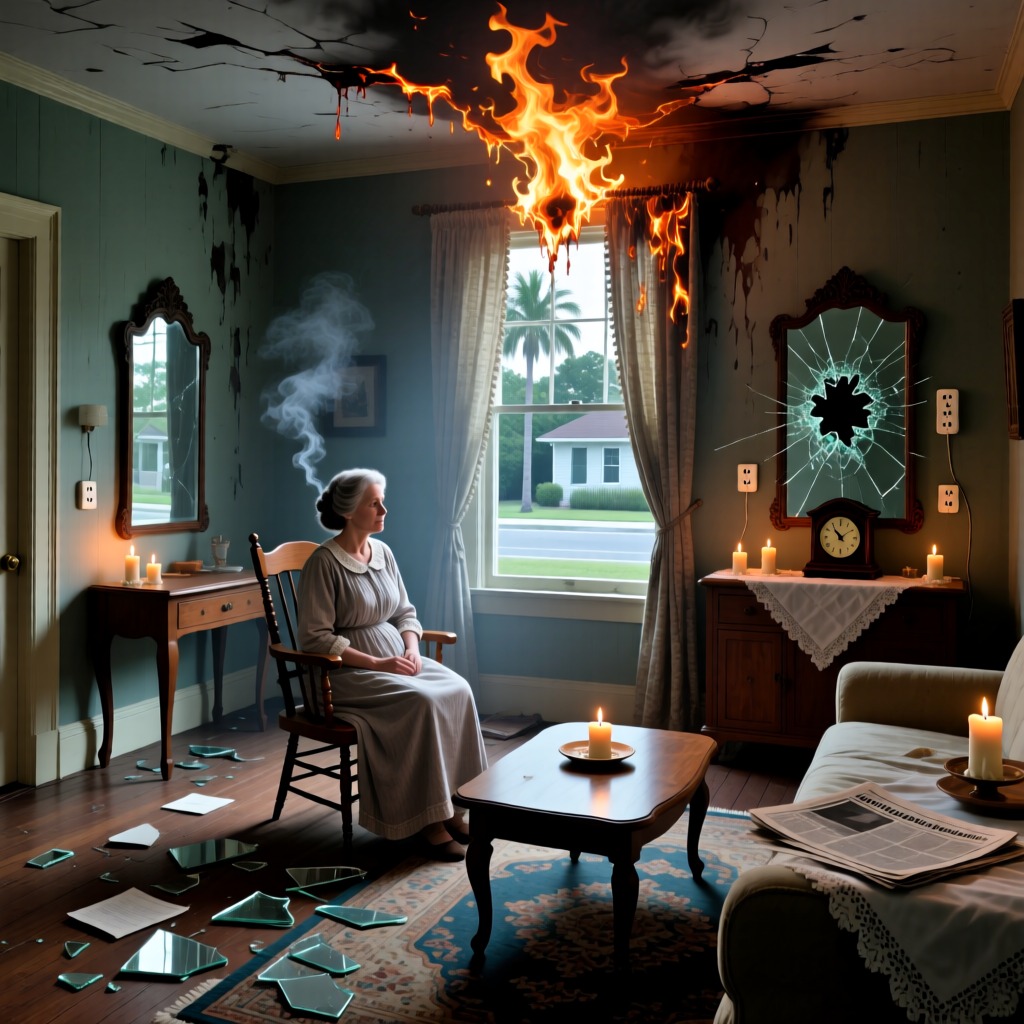
In 1951, in St. Petersburg, Florida, a woman named Mrs. Liza was found reduced to ashes in her home, while the house itself remained unscathed. The FBI, arson experts, fire department officials, and pathologists investigated the case for a year but were unable to unravel the mystery. Some peculiar phenomena were noted at the scene: the ceiling, curtains, and walls above one meter were covered in a foul-smelling soot, while there were no marks on the walls below one meter; the wall next to a chair had yellowed paint, but the carpet was unharmed; a distant mirror shattered due to heat, and a candle on the vanity melted, yet the wick remained intact; a plastic outlet melted, but the fuse did not blow, and the power outlet was undamaged; a clock stopped at 4:20 but continued to function when power was restored. Nearby flammable items like newspapers and tablecloths were untouched.
Many similar cases have been recorded worldwide, with various forms of combustion. Some victims suffered only minor injuries, while others were reduced to ashes, and in some instances, beds, chairs, and even clothing remained unburned. One alcoholic woman in Paris spontaneously combusted, leaving only her head and fingertips; the rest of her body turned to ash.
This phenomenon is perplexing, and while various theories have been proposed, there is a lack of sufficient physiological evidence to explain how the human body can spontaneously ignite and turn to ash.