
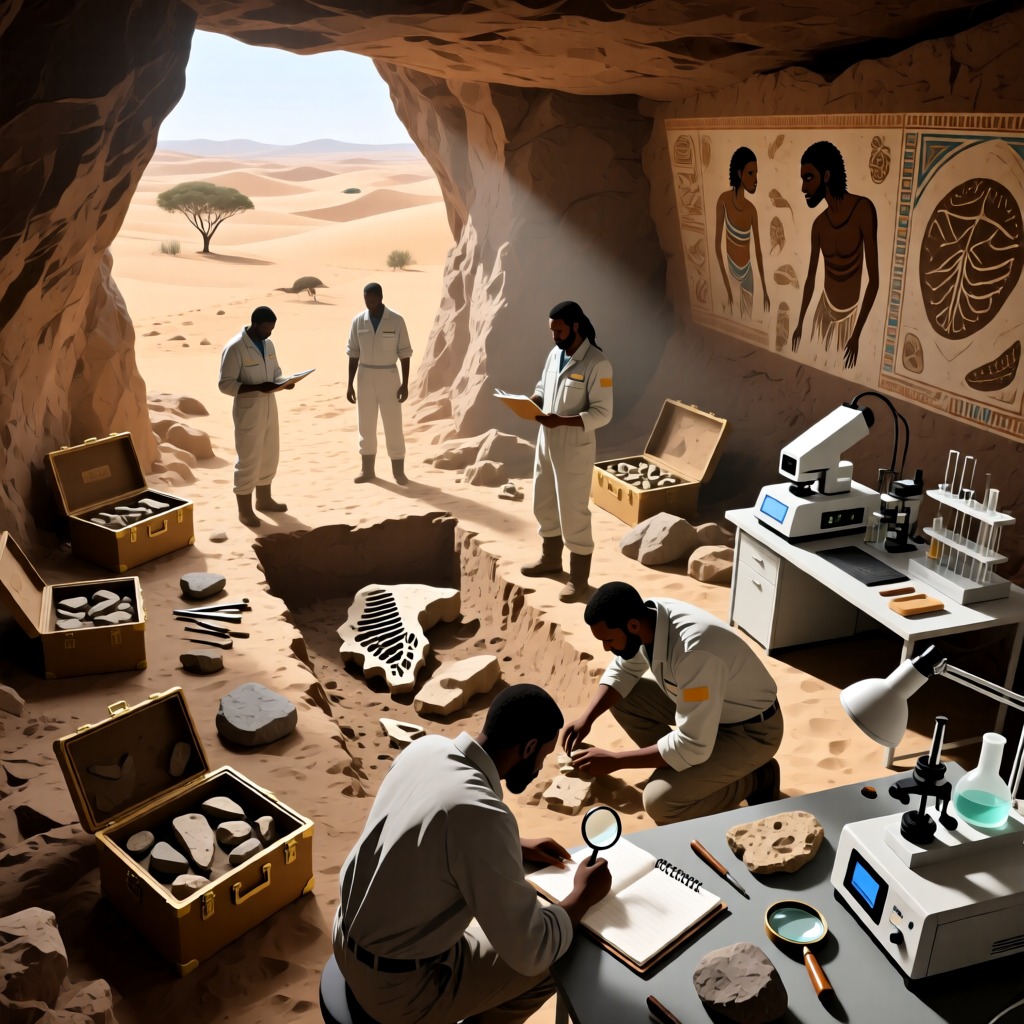

The mystery of modern human origins has intrigued scientists and researchers for years. Approximately 50,000 to 40,000 years ago, humans had developed physical characteristics very similar to those of modern humans, known as Homo sapiens. As the Ice Age receded and the climate warmed, humans expanded their habitats, spreading across almost every corner of the Earth. But how did modern humans originate, and who are considered their predecessors?
Modern humans exhibit distinct morphological features compared to early humans, such as a reduction in facial and anterior teeth, a less pronounced brow ridge, an increase in cranial height, and a brain capacity exceeding 1400 milliliters. It is believed that modern humans represent the final stage of human physical development.
There are two contrasting hypotheses regarding the origins of modern humans. One suggests that modern humans evolved from Homo erectus, leading to the multi-regional evolution hypothesis. The other posits that modern humans originated in Africa and then dispersed globally, known as the Out of Africa theory. Both hypotheses have supporting evidence, but the truth remains elusive.
Fossils of modern humans provide crucial clues. For instance, remains found on Mount Carmel in Israel date back to three times earlier than those of Cro-Magnon people and ancient Neanderthals. Additionally, skull fossils discovered in Ethiopia show anatomical features indicating they were precursors to modern humans.
Maps of modern human migration illustrate their distribution across various regions and their relationships with Homo erectus, Neanderthals, and others. While evidence from Africa is compelling, it is still insufficient to conclusively prove that modern humans originated from Africa.
The enigma of modern human origins remains unsolved, awaiting further archaeological evidence and in-depth research.