
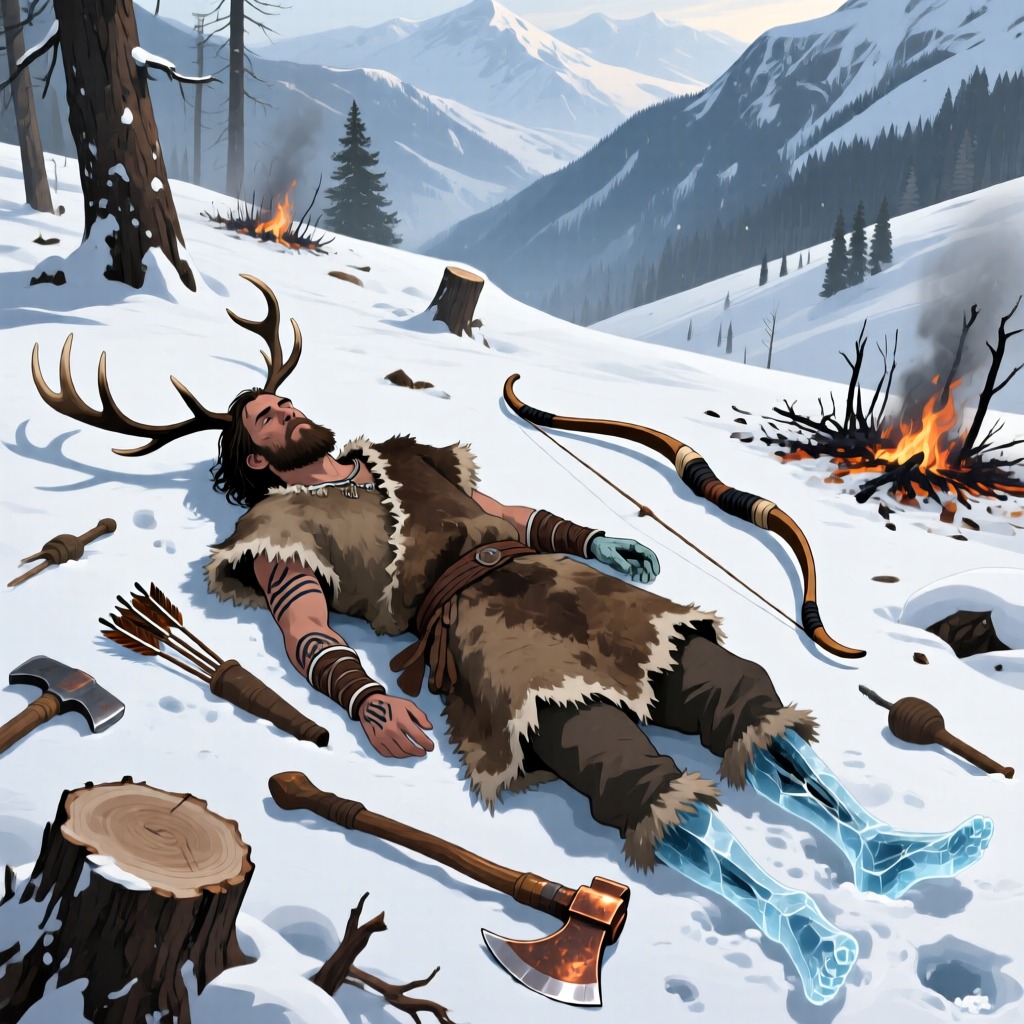

The Thousand-Year Ice Man, discovered in the southern Alps of Europe, is a well-preserved frozen body dating back 5,300 years. The Ice Man was found wearing a deerskin coat and a grass shawl, accompanied by a bow, arrows, a copper axe, and other tools. His skin, organs, and even eyes remain remarkably intact. Standing approximately 1.6 meters tall and weighing around 50 kilograms, he has a pierced right earlobe and is adorned with tattoos and ornaments. The tattoos appear to have special significance, and the method of their creation remains a mystery to this day.
Through physical examinations of the Ice Man, scientists have determined that he likely engaged in agriculture and herding, with a diet that included ground grain bread. His tools and artifacts provide insight into his lifestyle and skills. Notably, the horn bow and copper axe he carried are significant; the copper axe marks the advent of the metal age, while the horn bow highlights his passion for hunting. The Ice Man's life is shrouded in mystery, and his existence offers crucial clues to understanding Neolithic European society.