
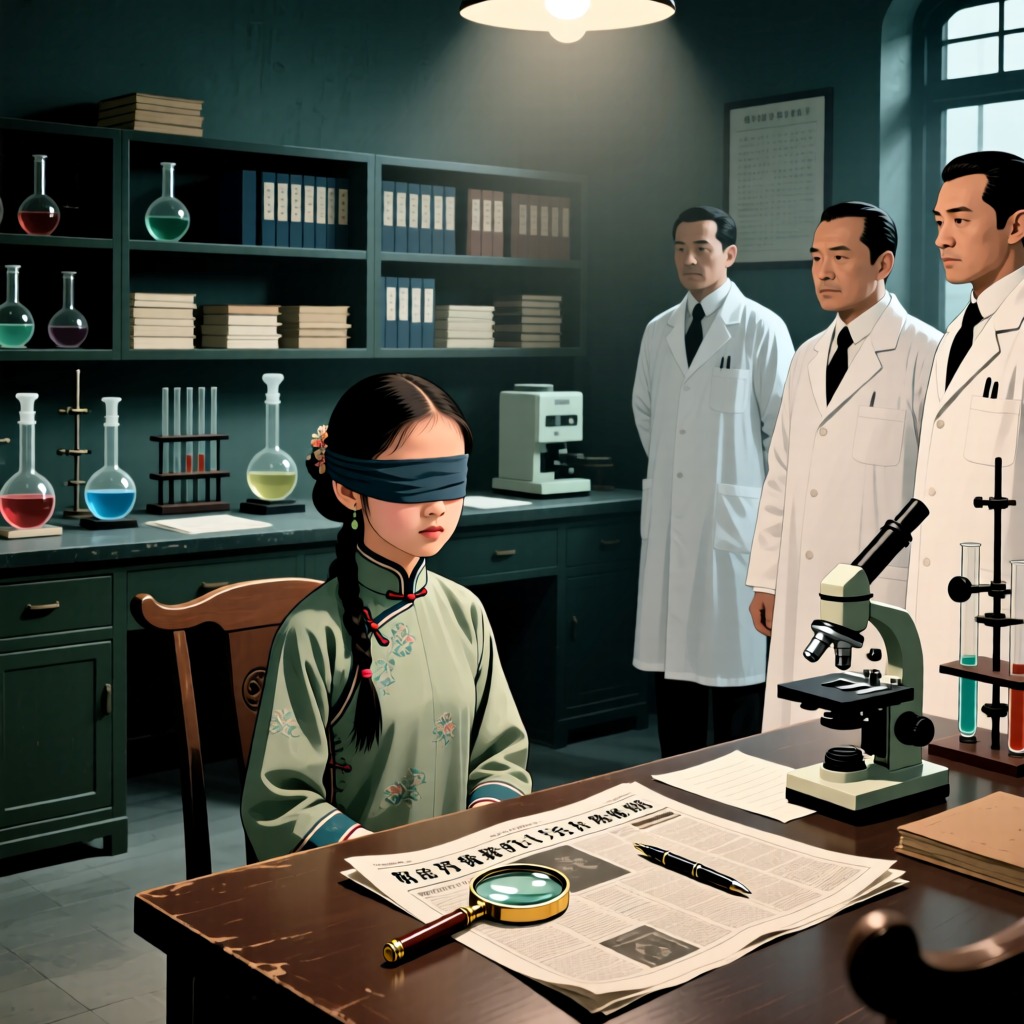

At just 14 years old, Margaret Fuchs spent her childhood in a small community in Enason, USA. Her father noticed that she exhibited extraordinary abilities while playing blindfold games. In 1960, Mr. Fuchs took her to undergo a series of tests conducted by medical experts. The results revealed that Margaret could read, distinguish colors, and identify objects while blindfolded, sparking great interest and confusion among the specialists.
Meanwhile, a report from Scotland mentioned a blind boy who, through training, was able to 'see' through his skin. At the Rudolf I School in Campshill, this boy learned to speak, sing, and recite poetry with the aid of special light exposure. Similarly, a child who was both deaf and blind could 'see' objects in a dark room and accurately mimic gestures and pick up small items.
These cases have ignited discussions about the limits of human senses. In 1957, Indian youth Vidhya Maikong published 'Faces of Perception,' recounting how he navigated the world using 'facial vision' after losing his sight. From Dr. Romein to Dr. Cohenig and Vidhya Maikong, an increasing number of facts suggest that humans may be able to perceive the world through unconventional means.