
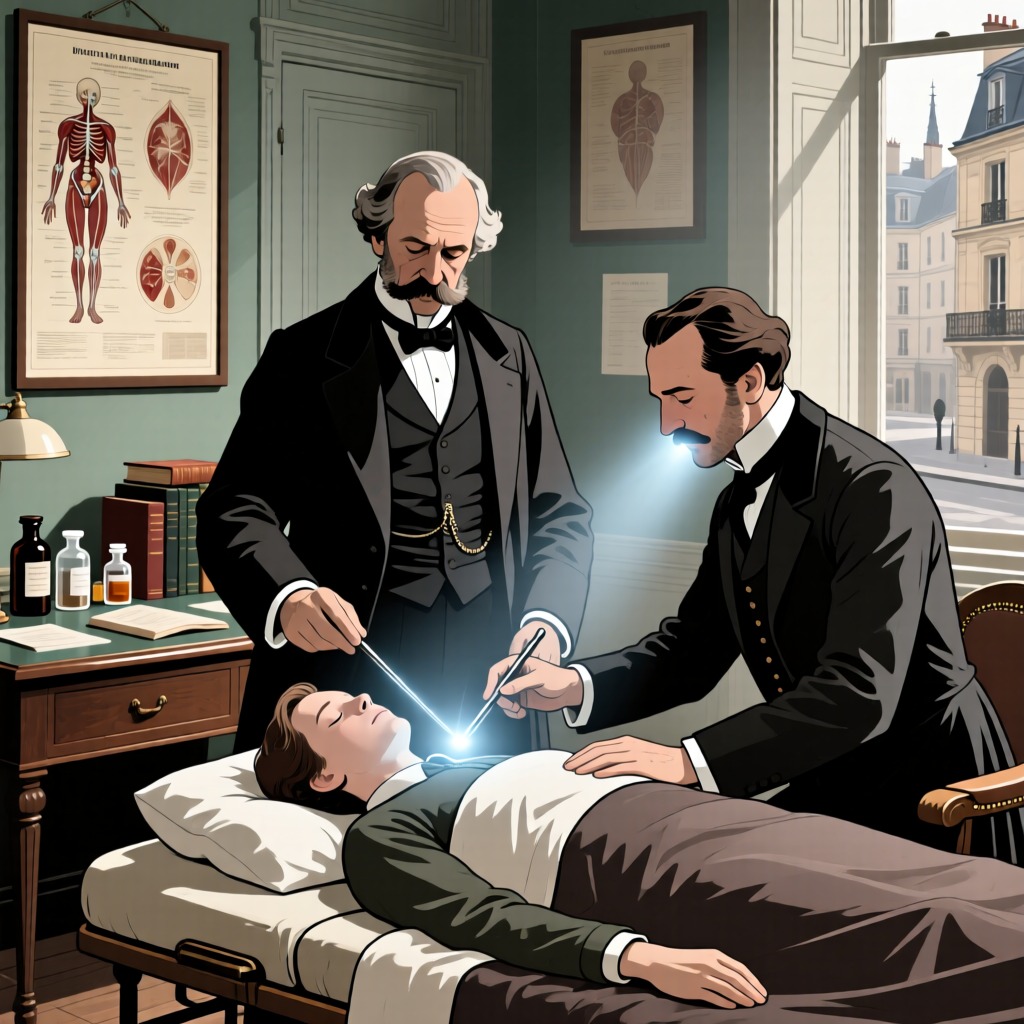

Hypnosis, a mysterious power, allows individuals to demonstrate incredible abilities while in a trance. Throughout history, it has been at the intersection of science and superstition. In ancient times, hypnosis was used for healing and experiencing spiritual realms. Egyptian diviners, ancient Greek oracles, and practitioners of Judaism and Catholicism have all employed this enigmatic skill. However, it wasn't until the 19th century that hypnosis began to gain recognition in the scientific community.
One of the prominent figures in the field of hypnosis was French psychologist Hippolyte Bernheim. He successfully treated many cases with hypnosis, particularly patients with aphasia. In one instance, his assistant was helping him conduct a hypnosis session, where Bernheim was intently guiding the patient into a hypnotic state.
With the rise of Mesmerism, hypnosis started to attract widespread attention. Although the medical community was initially skeptical, investigations by scientific committees confirmed its efficacy. Nevertheless, the mechanisms behind hypnosis remain a topic of debate among scientists. Some believe it is a form of localized sleep in the brain, while others argue it results from a separation of consciousness.
The phenomena associated with hypnosis are diverse, including drowsiness, altered sensations, catalepsy, illusions and hallucinations, enhanced memory, dissociation, and physiological changes. These phenomena conceal unresolved mysteries. Psychologists have proposed various theories in an attempt to unveil the secrets of hypnosis, but a definitive conclusion has yet to be reached.