
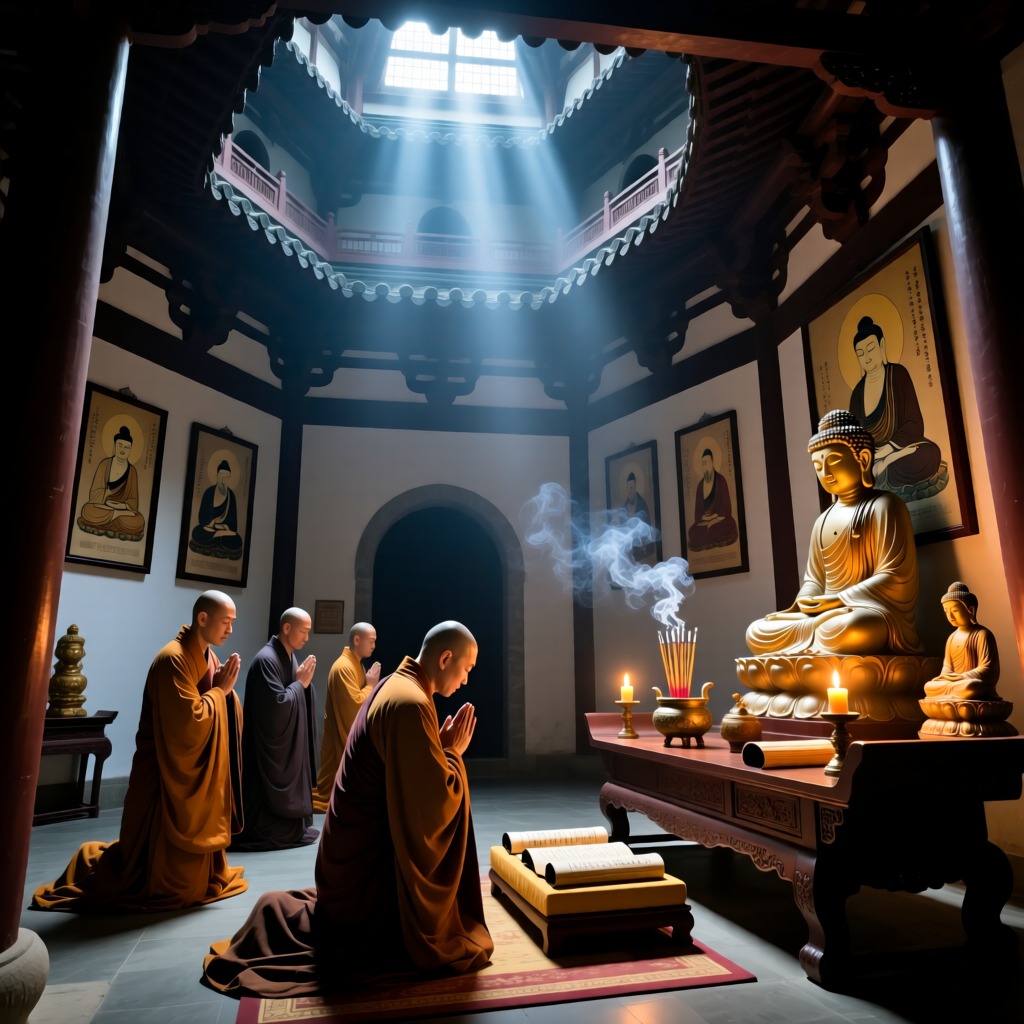

What are Buddhist relics? Throughout the history of Buddhism, this phenomenon has remained an unsolved mystery. One of the most famous cases is the discovery of the relics of Buddha Kasyapa in the Tiger Hill Pagoda in Suzhou, marking the first time Buddhist relics were found within a pagoda, which is of great significance.
According to legend, after the Buddha Shakyamuni passed away, his body was cremated, resulting in relics that were divided into three parts: one ascended to heaven, another entered the dragon palace, and the last remained on earth. The earthly portion was shared among eight countries, each building a pagoda to preserve it. Currently, the relics of the Buddha's finger and tooth are kept in Fufeng, Shaanxi Province, and Beijing.
However, how are these relics formed? For centuries, Buddhist scholars, along with medical and biological researchers, have been exploring this question. One theory suggests that relics are a result of Qigong practice, but historically, there has been no evidence in Chinese Qigong or Indian yoga that cremation produces relics. Another theory posits that relics are actually calcifications in the human body, particularly kidney stones or gallstones. A report from a Hong Kong newspaper mentioned that Master Baoxian had discovered around eighty to ninety relics after cremation, but this conclusion is also controversial, as it remains uncertain whether Baoxian had any stone-related illnesses.
Renowned traditional Chinese medicine practitioner Dong Jingcheng pointed out that some monks who practice Zen meditation without lying down may also not have relics upon death. Buddhist texts describe relics as consisting of bone, hair, and flesh, viewing them as the crystallization of the practices of morality, meditation, and wisdom. Master Sheng Yen from Taiwan believes that the formation of relics is related to the cultivation of these three practices, but it may also involve crystallization of bodily secretions, adding a layer of sanctity and mystery.
Currently, there is no reliable scientific explanation for the formation of relics, necessitating further collaborative research between the fields of medicine, biology, and Buddhism.
