
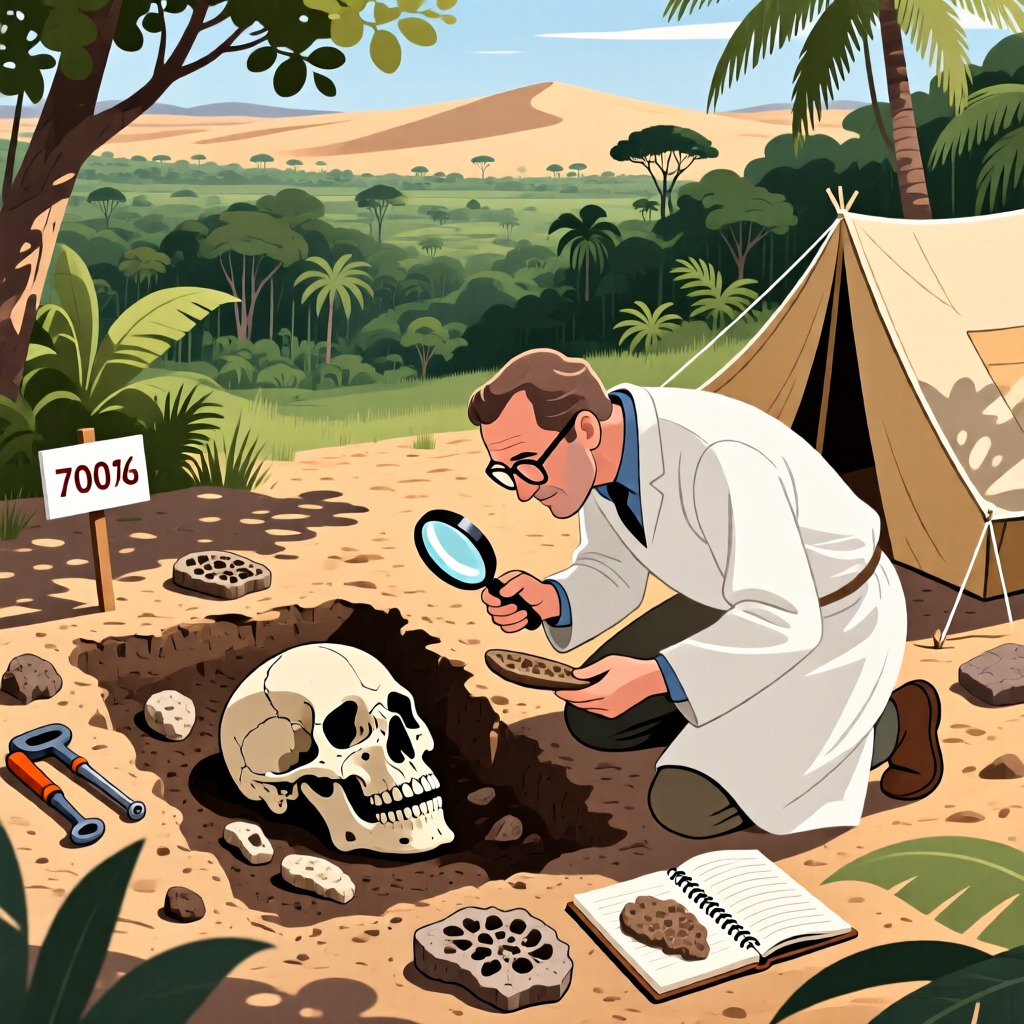

A remarkable discovery in the history of human evolution was made in July 2002 when a team of brave archaeologists revealed a shocking secret at an ancient site in central Africa's Chad: they found a prehistoric human skull dating back 7 million years. This skull is considered the oldest human skull ever discovered, pushing the timeline of human evolution back by nearly 2 million years. Scientists named it 'Toumai,' which means 'hope of life.'
The site where Toumai was found was once a dense forest, contrasting the previous belief that human evolution occurred in open grasslands. Led by French scientist Michel Brunet, the research team worked under harsh conditions for many years, ultimately discovering the fossil on July 19, 2001. Brunet and his team trekked through the deserts of Chad, facing extreme temperatures, landmines, and the threat of war, to achieve this groundbreaking find.
Toumai's skull reveals the complex relationship between human ancestors and apes. It features a pronounced brow ridge and a flat face, with a smaller brain capacity, yet its canine teeth are small and positioned similarly to those of modern humans. These characteristics have led scientists to rethink the pathways of human evolution. The discovery of Toumai not only fills a gap in the early stages of human evolution but also sparks new discussions about the origins and development of humanity.