
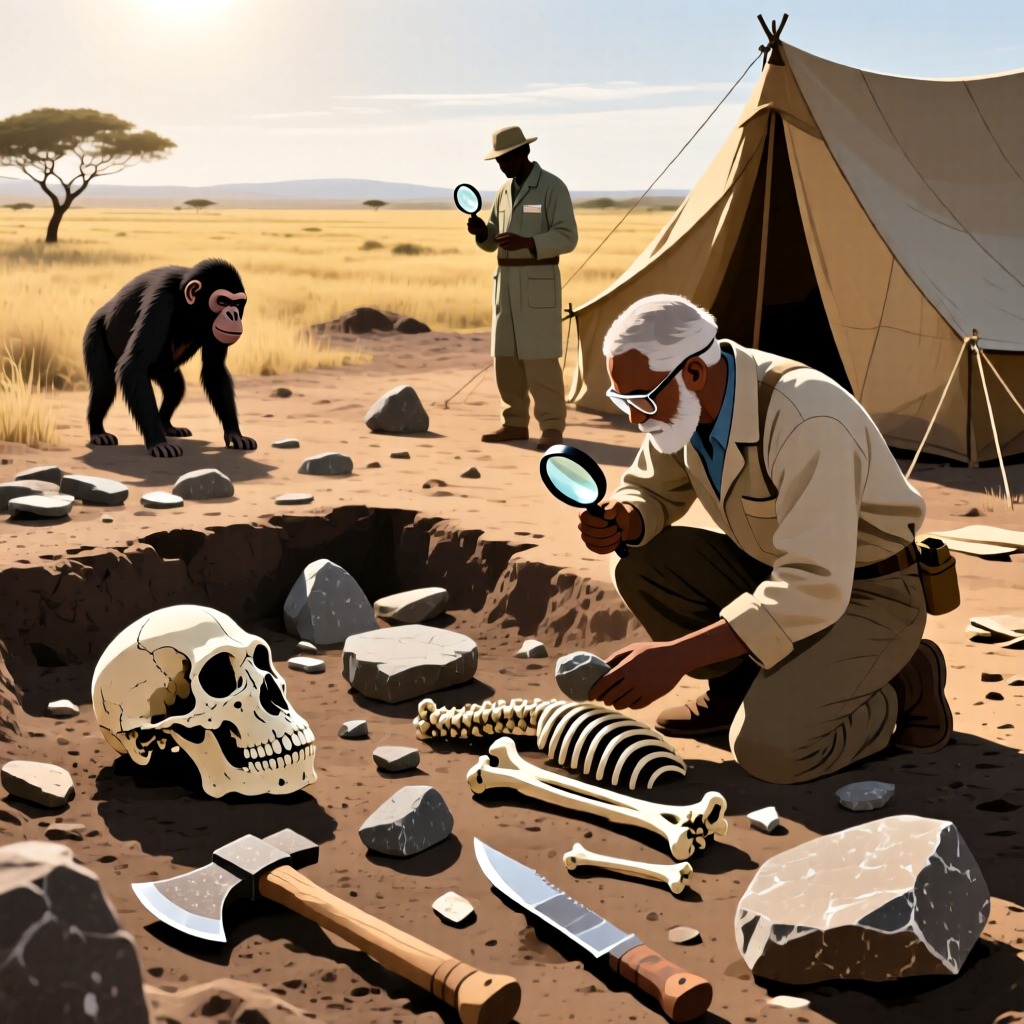

The genetic diversity of Africans reveals an important mystery: Did humans really originate in Africa? Sana Dzhiskov from the University of Pennsylvania discovered through DNA analysis that the genetic information of Africans is extremely rich, suggesting that human evolution may have occurred much earlier in this region compared to others. This finding supports the hypothesis that humans originated in Africa, but it has also sparked a series of debates regarding the location of human origins.
Archaeological evidence indicates that the earliest traces of humans appeared in East Africa. In 1924, South African anthropologist Raymond Dart discovered the skull of Australopithecus, which is considered a key milestone in human evolution. Subsequent significant discoveries, such as those of Homo habilis and robust Australopithecus, further corroborated this view. However, research by Soviet archaeologists presented a different perspective, as they found tools similar to East African stone tools in the Lena River region of Siberia, questioning the possibility of Africa being the sole origin of humanity.
The discovery of the Lufeng ape in China also adds more complexity to this historical narrative. Scholars believe that these ancient apes may represent the initial stages of independent human evolution, further supporting the theory of a diversified origin of humanity.
Despite the abundance of evidence, the exact location of human origins remains a mystery, necessitating further interdisciplinary research to unravel it.