
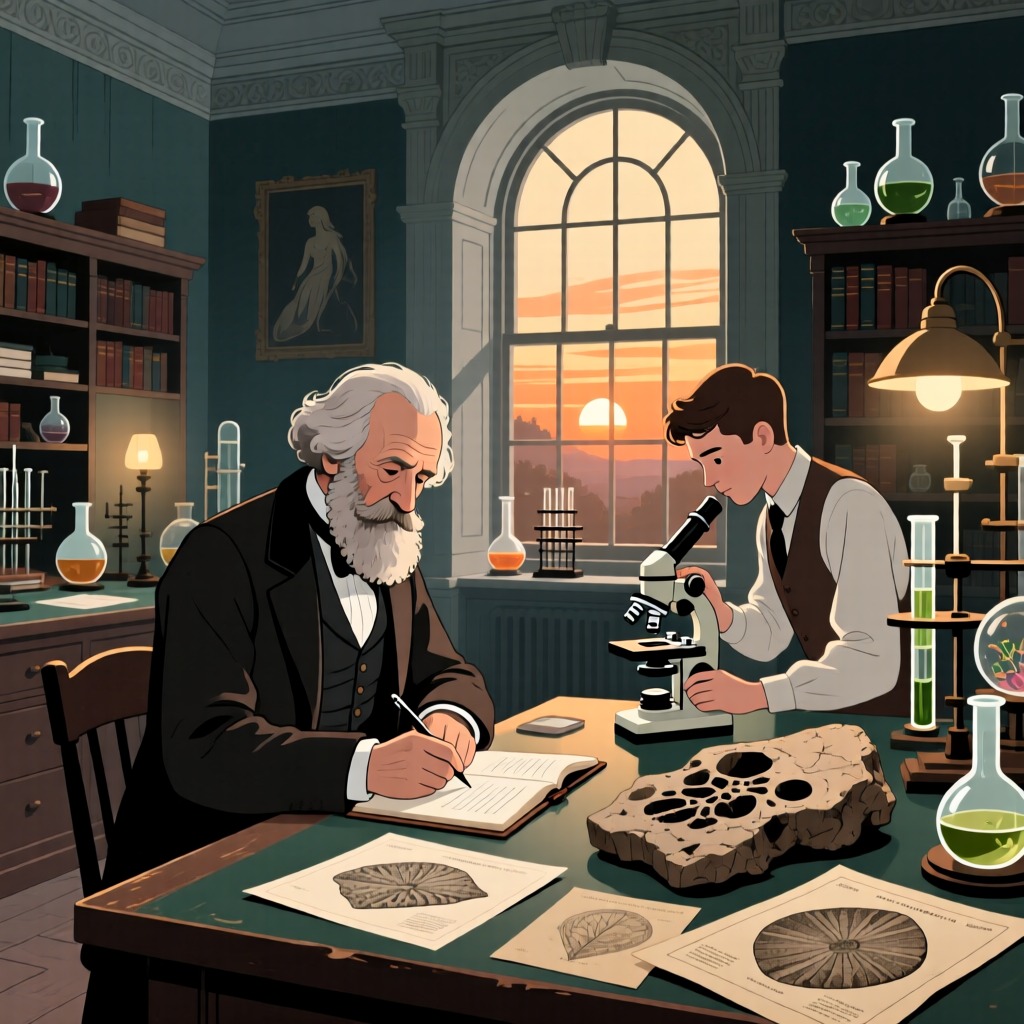

Do you know where we humans come from? This question has puzzled people since ancient times. In the past, myths and legends were used to answer this mystery. In China, the myth of Nuwa molding humans from clay is widely known; in Egypt, humans are believed to be creations summoned by the gods. In Germanic mythology, humans were created by the god Odin and other deities. In Christian culture, it is commonly believed that God created Adam and Eve in His own image.
In the 19th century, Charles Darwin introduced the theory of evolution, providing a new clue in the search for human origins. Darwin proposed that humans evolved from ancient apes over millions of years. This theory sparked significant reactions in the scientific community. Although evolution plays a crucial role in the study of human origins, it also faces numerous challenges. For instance, the discovery of ancient human bones in Tanzania and footprints in Antelope Springs, Utah, seem to contradict the evolutionary perspective.
As time progresses, scientists continue to propose new ideas to unravel the mystery of human origins. Biologist David Deamer from the University of California, Santa Cruz, suggests that life may have originated in the vast universe. His experiments indicate that even under extreme cosmic conditions, cell membranes can maintain "vitality," suggesting that the origin of life may not be limited to Earth.
Faced with these hypotheses and mysteries, the origin of humanity remains an unsolved enigma. We look forward to more scientific discoveries in the future that can help us unveil this mysterious veil.