
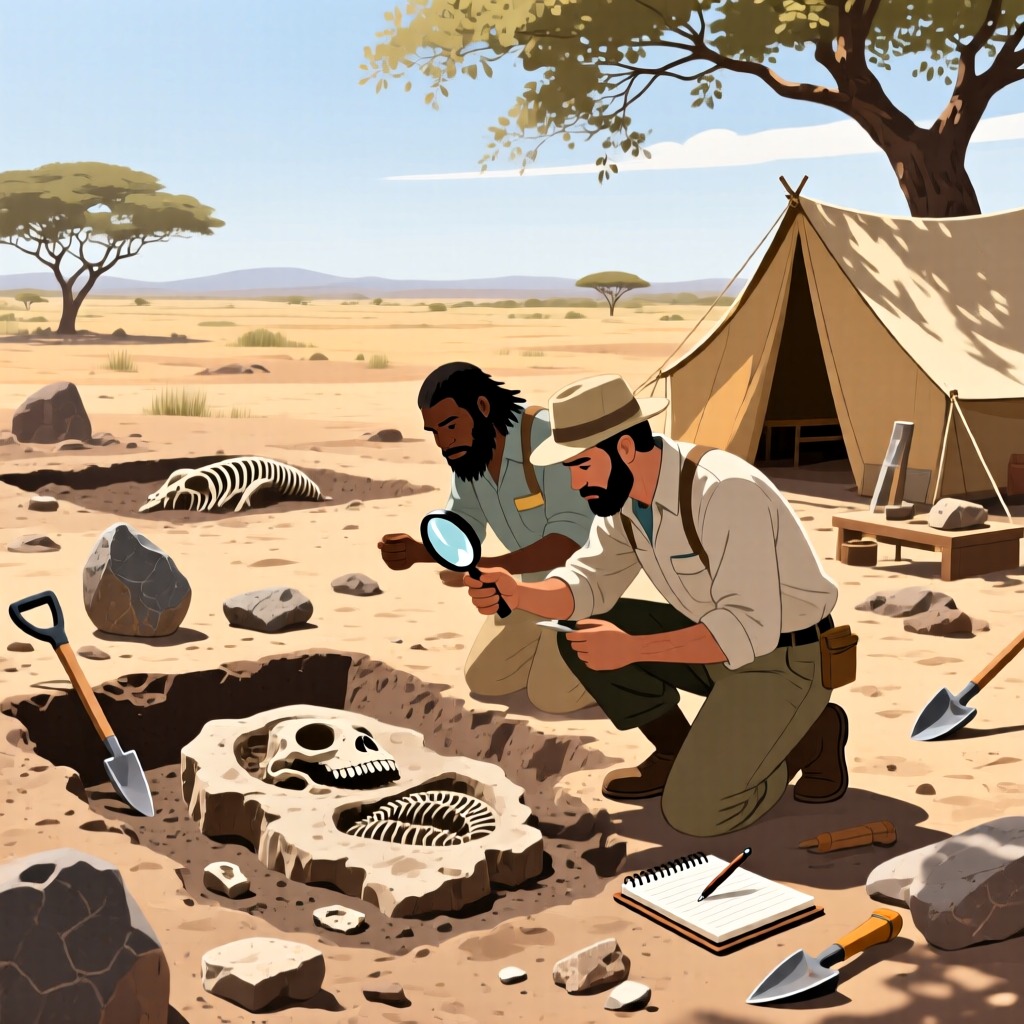

The mystery of human ancestors has puzzled scholars since humanity entered into civilized society. It wasn't until the 19th century, when Darwin proposed the theory of evolution, that a scientific answer to this question began to emerge. Darwin believed that humans gradually evolved from ancient apes, but the specific evolutionary path remains an unsolved mystery to this day.
Among the many ancient human fossils, Australopithecus africanus, robust Australopithecus, Paranthropus boisei, and Australopithecus afarensis are particularly noteworthy. Australopithecus africanus was first discovered by South African anatomist Raymond Dart and is considered a key species linking ancient apes to humans. The discovery of Australopithecus afarensis sparked a new wave of discussion, with some arguing that it is a direct ancestor of humans, while others believe that the exact identity of our direct ancestor has yet to be fully determined.
Despite this, there is a general consensus in the academic community that our direct ancestors likely exist among Australopithecus africanus or Australopithecus afarensis, but which one it is still requires more fossil evidence to support. As new fossils continue to be discovered, the mystery of human ancestors may eventually be unraveled.