
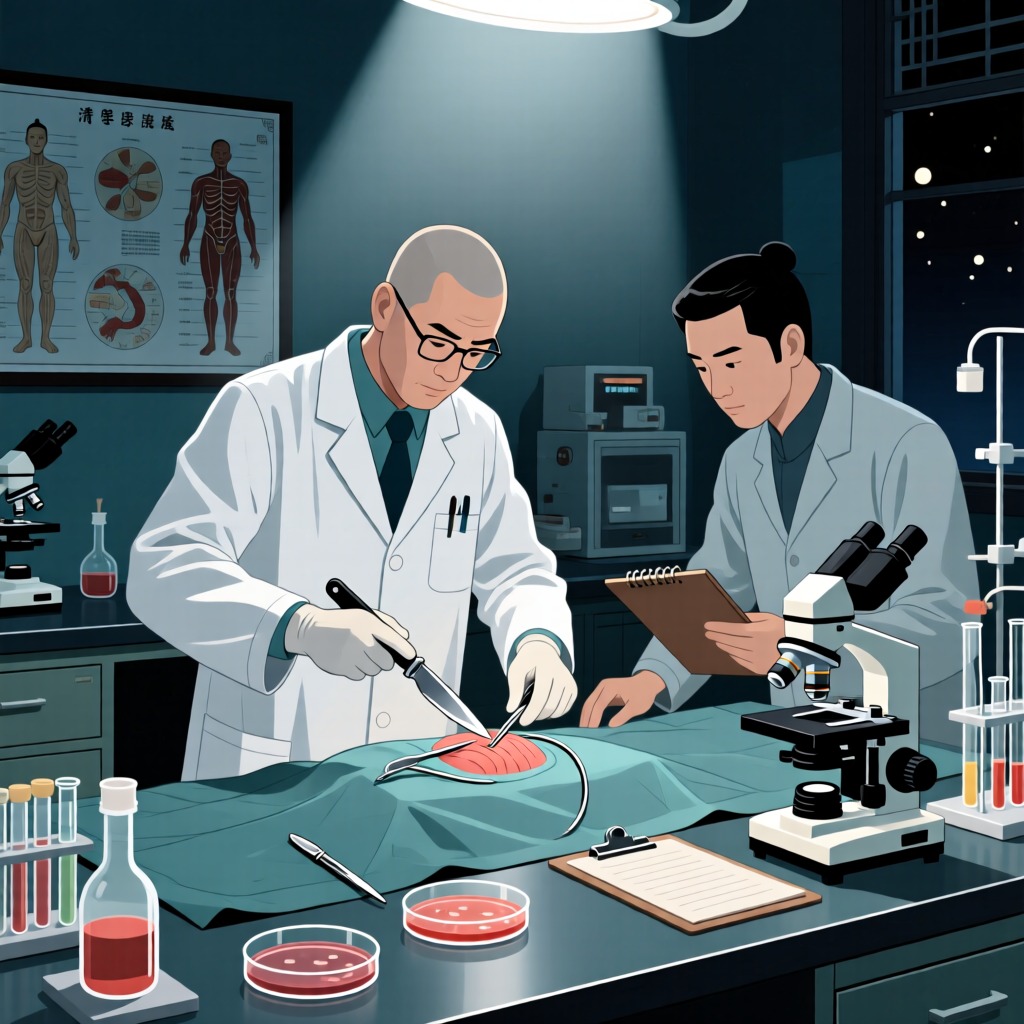

The mystery of human head transplantation has intrigued humanity for centuries, from the "head transplant" concept in the Qing Dynasty novel "Strange Tales from a Chinese Studio" to contemporary medical research. This topic is not merely a fantasy found in science fiction but represents a significant challenge in the medical field. In ancient literature, head transplantation appeared to be a form of magic, but in the context of modern science, it has sparked widespread interest and discussion among medical professionals.
As early as the 1980s, American scientist Robert White proposed the idea of human brain transplantation and began experimenting on animals. While these experiments yielded preliminary results, they also revealed numerous challenges. For instance, in head transplant experiments on monkeys, despite the monkeys surviving for about two weeks, complex neural connection issues persisted. Soviet scientists also successfully connected a two-headed dog, but coordination between the two heads remained fraught with difficulties.
Medical experts suggest that brain transplantation is more feasible than heart or kidney transplants because the body's automatic defense mechanisms typically do not attack the brain. However, the regeneration of the central nervous system remains a significant obstacle. Once the central nervous system is severed, some bodily functions cannot be restored, making the realization of "head transplantation" exceptionally challenging. Nevertheless, the medical community has made some progress in central nervous system regeneration, offering hope for the future of "head transplantation."
If "head transplantation" were to become a reality, it would raise a series of legal and ethical questions. For example, how would the issue of identity be resolved after the procedure? Would it belong to the original body owner or the owner of the transplanted head? These questions would need to be legally defined.